
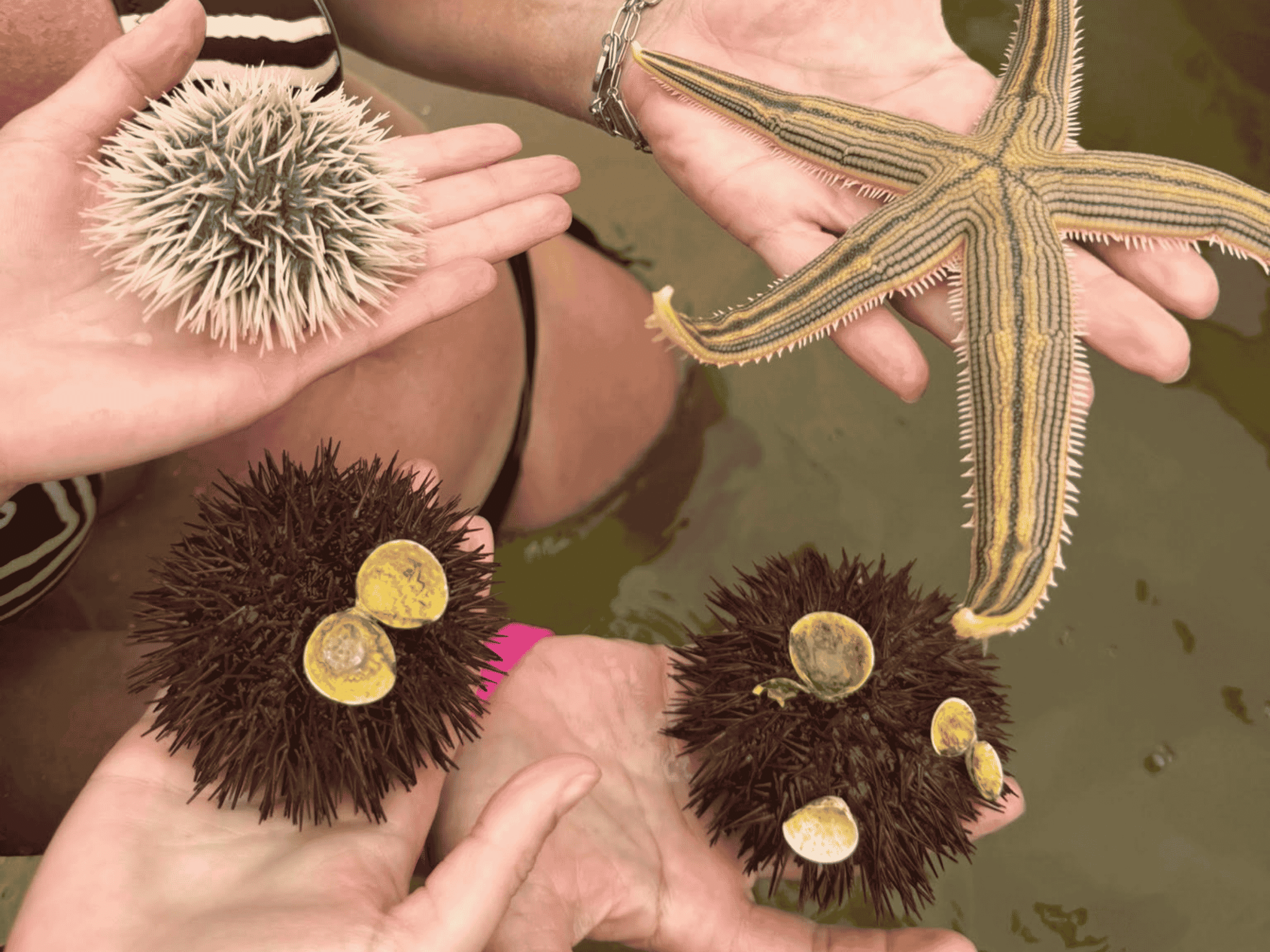
Sea urchins are one of those animals that look almost too strange to be real. Spiny, slow-moving, and often tucked into rocky crevices or seagrass beds, sea urchins in Panama City Beach are easy to miss until you know where to look. At Flippin’ Awesome Adventures, Critter Corner is where we slow down and shine a light on the smaller, often misunderstood residents of our local waters, guided by Captain Chris and his 15 years of marine biology experience. Today, the spotlight is on sea urchins in Panama City Beach.
Sea urchins are close relatives of sand dollars, sea biscuits, and sea stars, all part of a group of animals called echinoderms. Where a sand dollar evolved a flat shape for burrowing in sand, sea urchins kept their spines long and their bodies round, making them better suited for clinging to rocks, jetties, and seagrass rather than burying into the seafloor.
Sea Urchins in Panama City Beach
What Is a Sea Urchin?
Sea urchins are spiny, round-bodied echinoderms that move slowly across the seafloor using hundreds of tiny tube feet hidden beneath their spines. Like their flatter cousins the sand dollars, sea urchins have a hard internal skeleton called a test, but instead of being smooth and flat, a sea urchin’s test is round and covered in moveable spines that act as both protection and a tool for movement.
Most sea urchins are grazers, slowly scraping algae off rocks, jetties, and seagrass using a specialized mouth structure on their underside. They typically avoid open, sandy areas in favor of structure they can cling to, which is why they’re spotted less often than sand dollars or stingrays. That said, we regularly find sea urchins on our Flippin’ Awesome Adventures trips while exploring the seagrass beds and shallow waters of St. Andrews Bay, giving guests a chance to see these fascinating animals up close in their natural habitat.
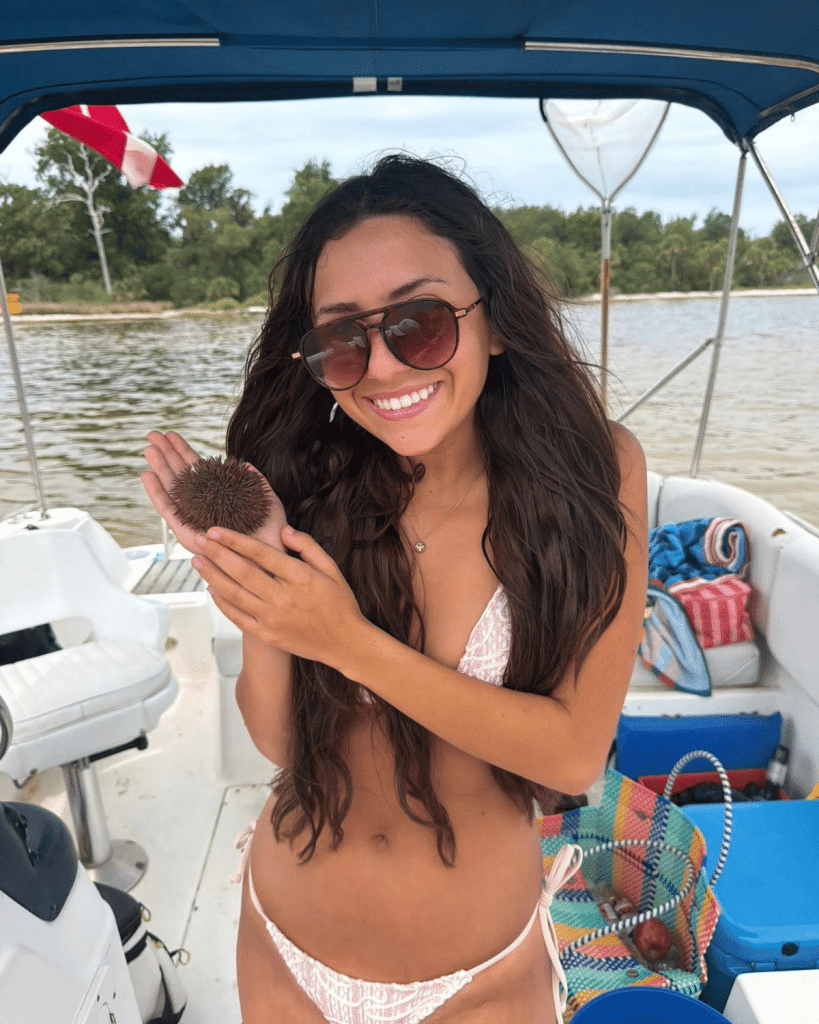
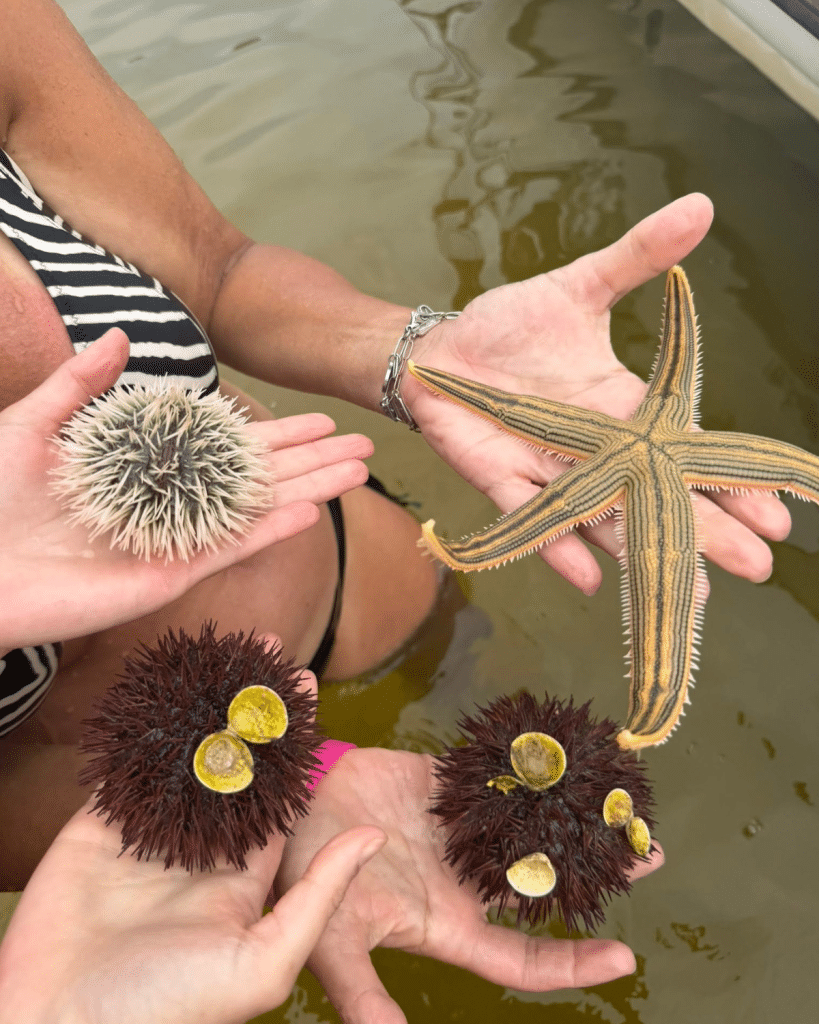
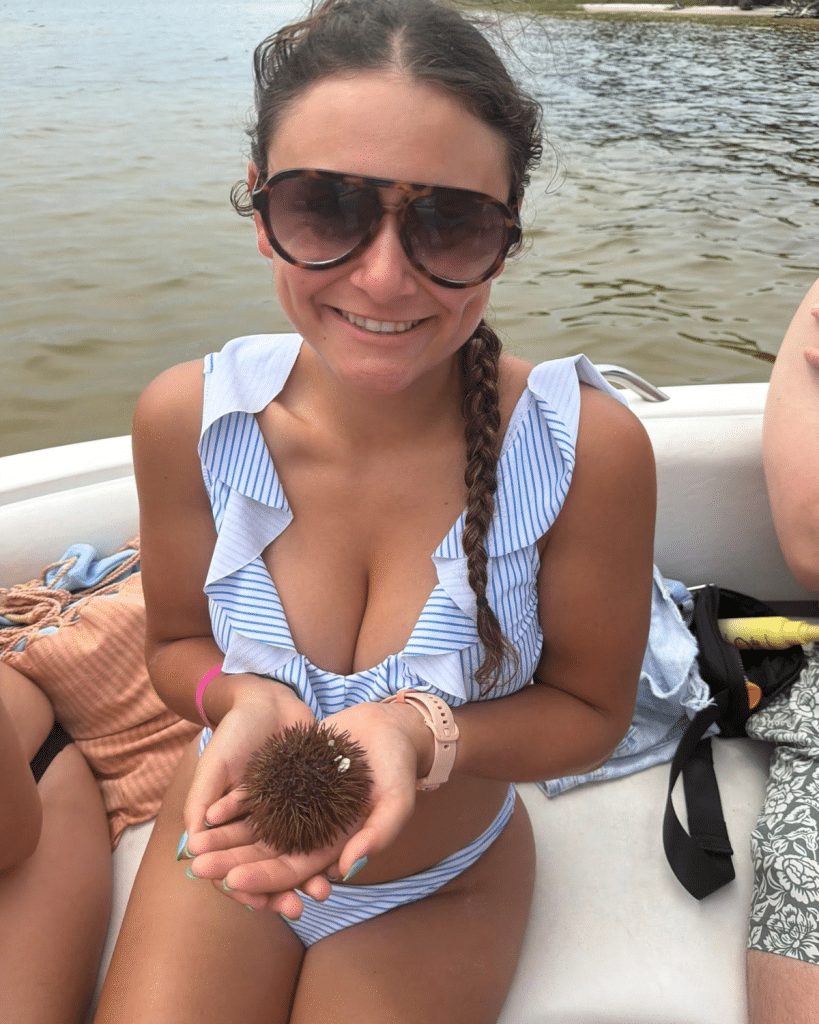
Types of Sea Urchins in Panama City Beach
A few species are most commonly encountered in the waters around Panama City Beach.
Variegated Sea Urchins
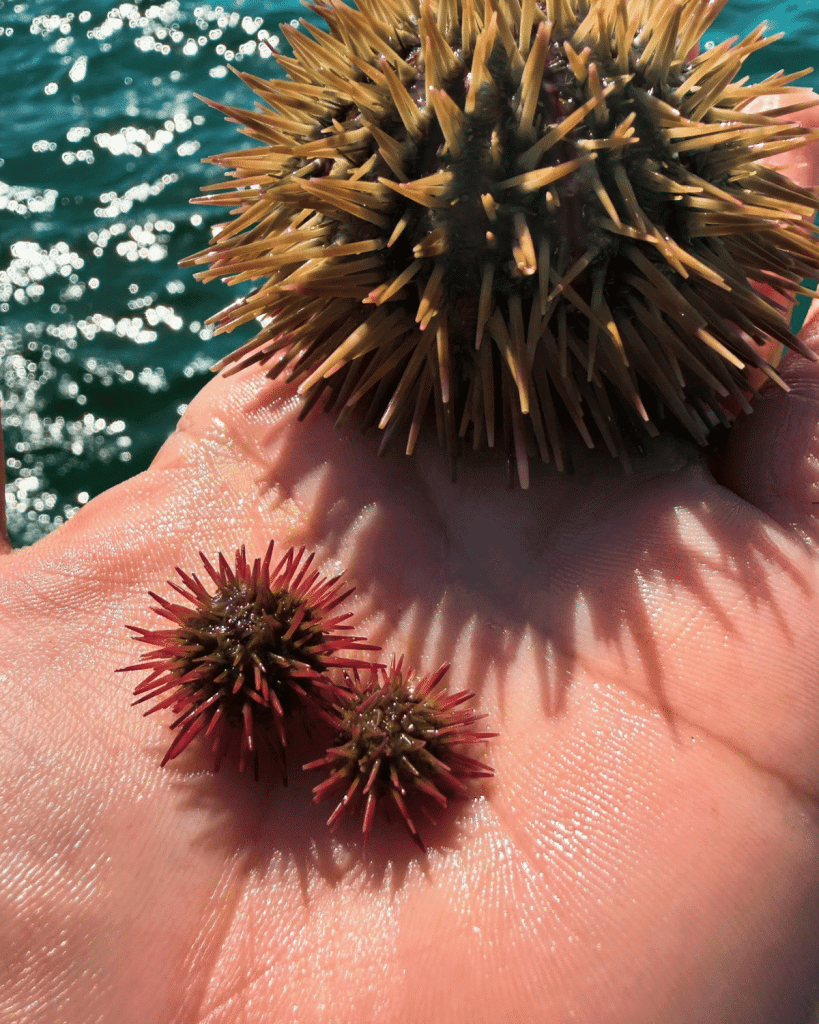
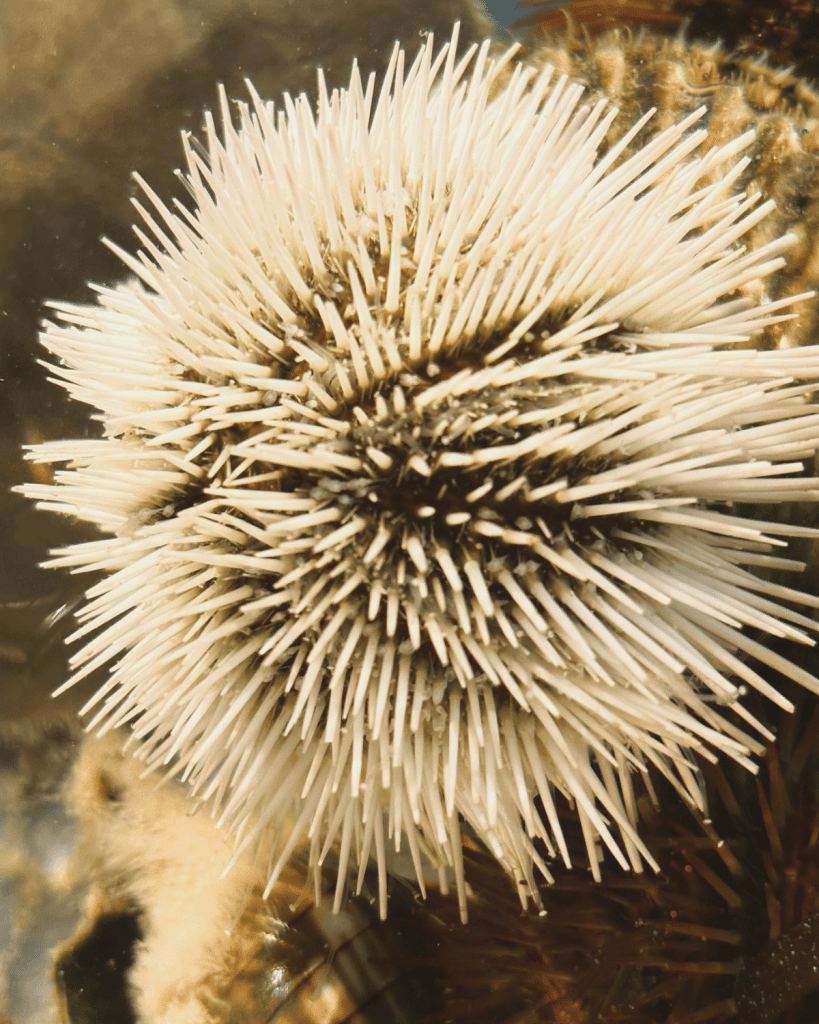
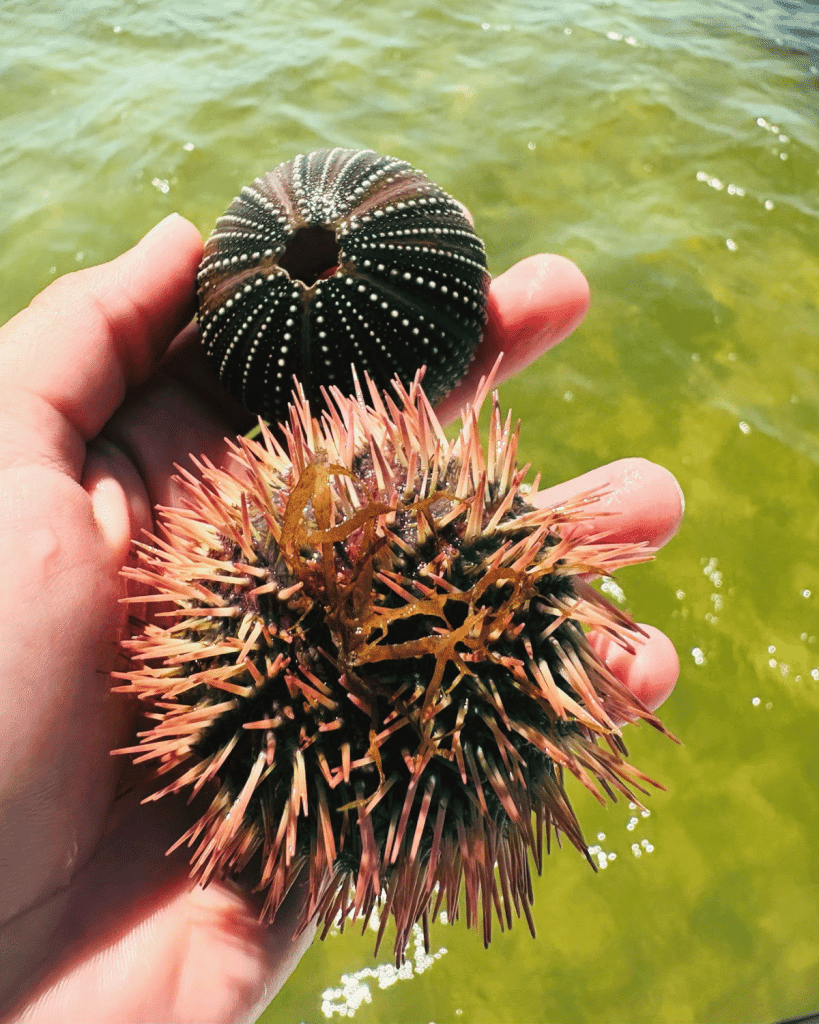
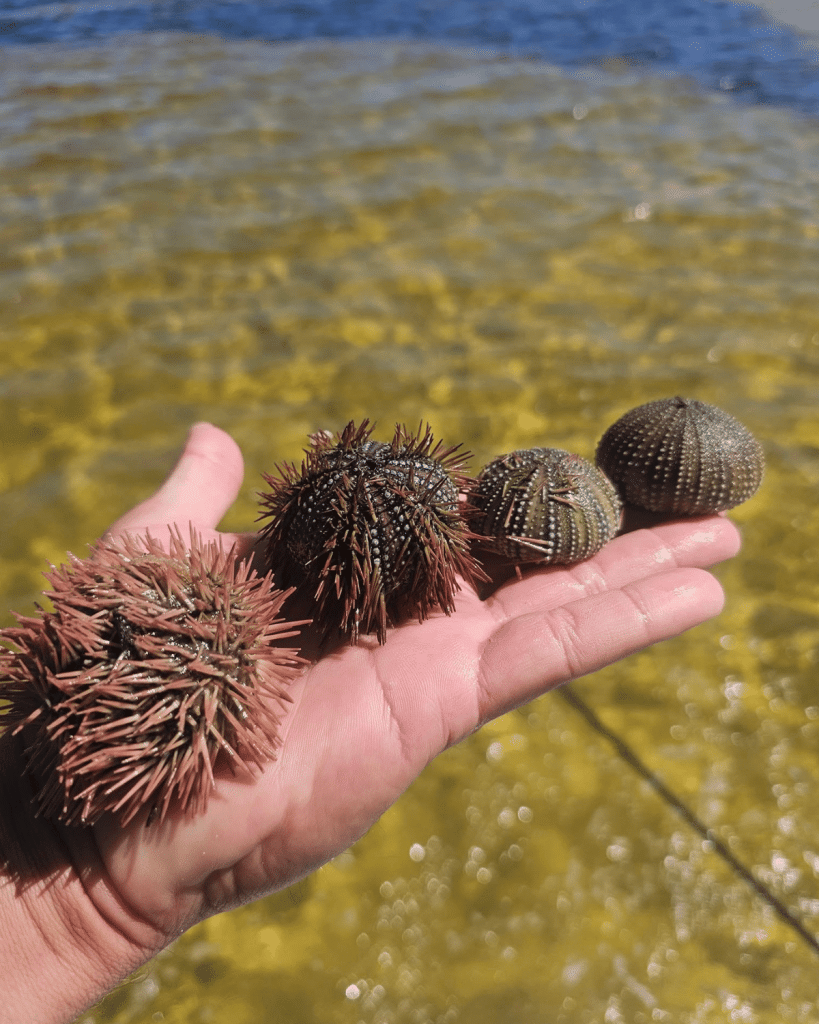
Variegated sea urchins are one of the most common urchins found along sea grass beds, jetties, and rocky structures in the area. Their spines are typically a mix of white, tan, and brown banding, which gives them a mottled, patchy appearance that makes them easy to identify once you know what to look for.
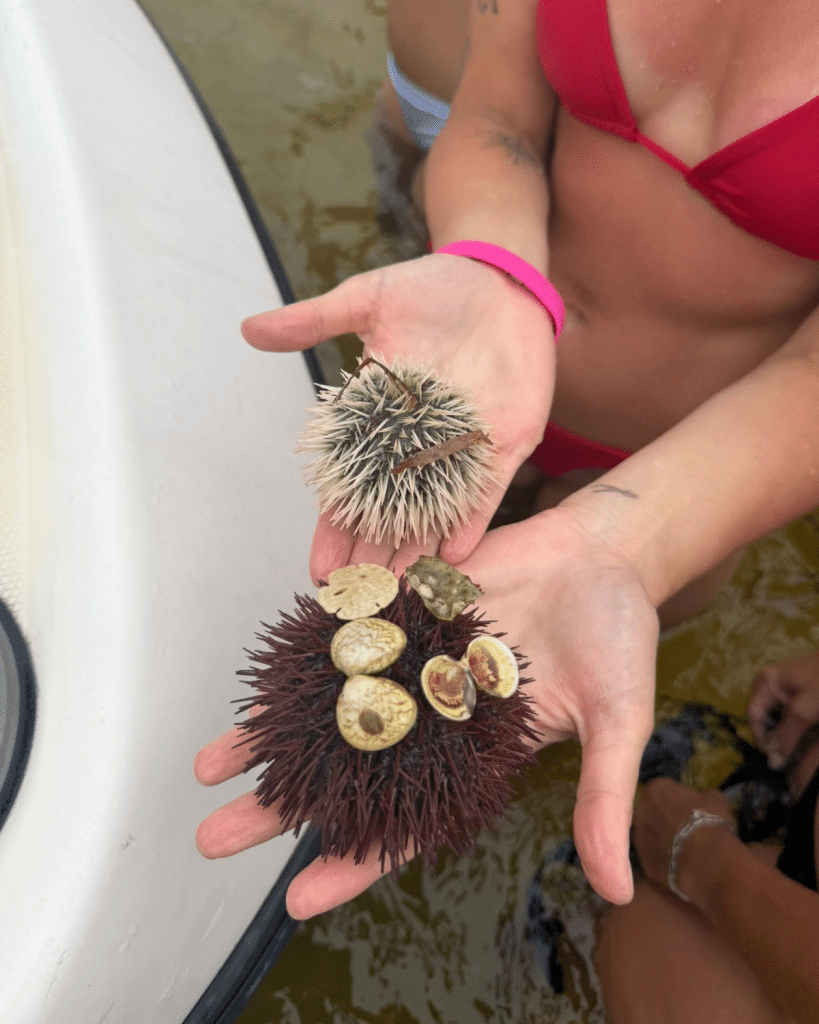
Variegated sea urchins are also known for a behavior that often gets them nicknamed the decorator urchin or decorated sea urchin. Using their tube feet, they will actively gather shell fragments, bits of algae, seagrass, and other small debris and hold it against their spines. This is not random clutter. It is a deliberate form of camouflage and sun protection, helping the urchin blend into its surroundings and shield itself from intense sunlight in shallow water. If you ever spot a sea urchin in Panama City Beach that looks like it is wearing a little pile of shell pieces, you are most likely looking at a variegated sea urchin in the middle of decorating itself.
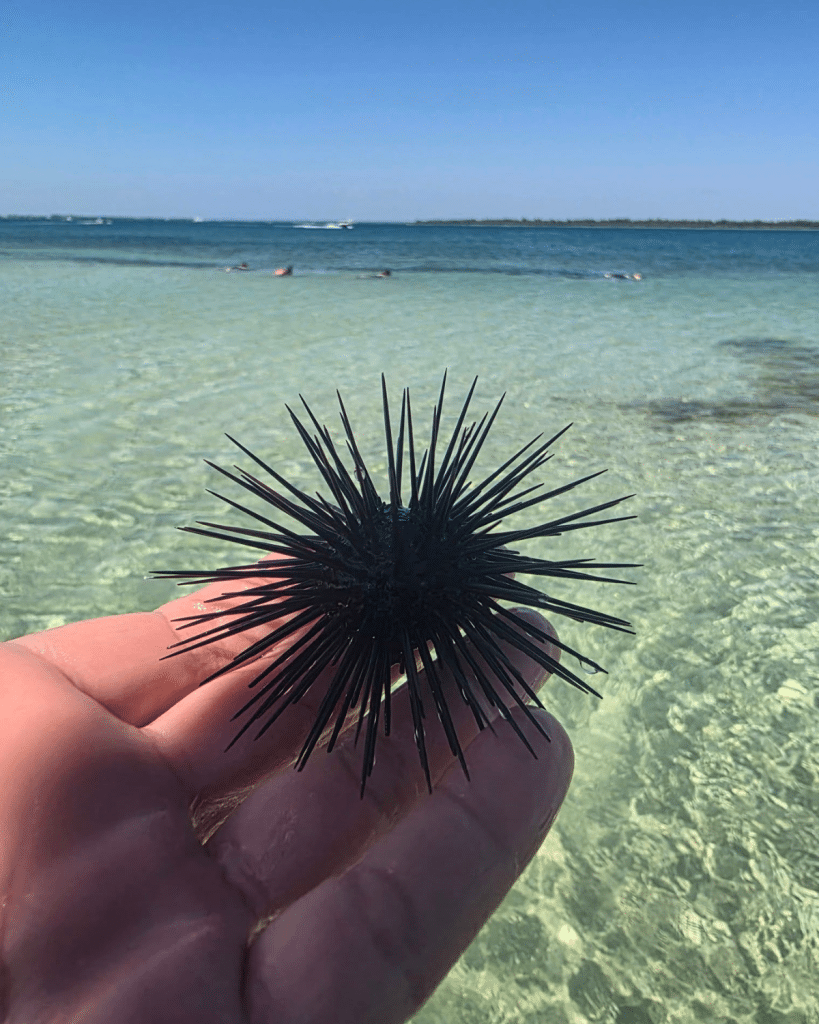
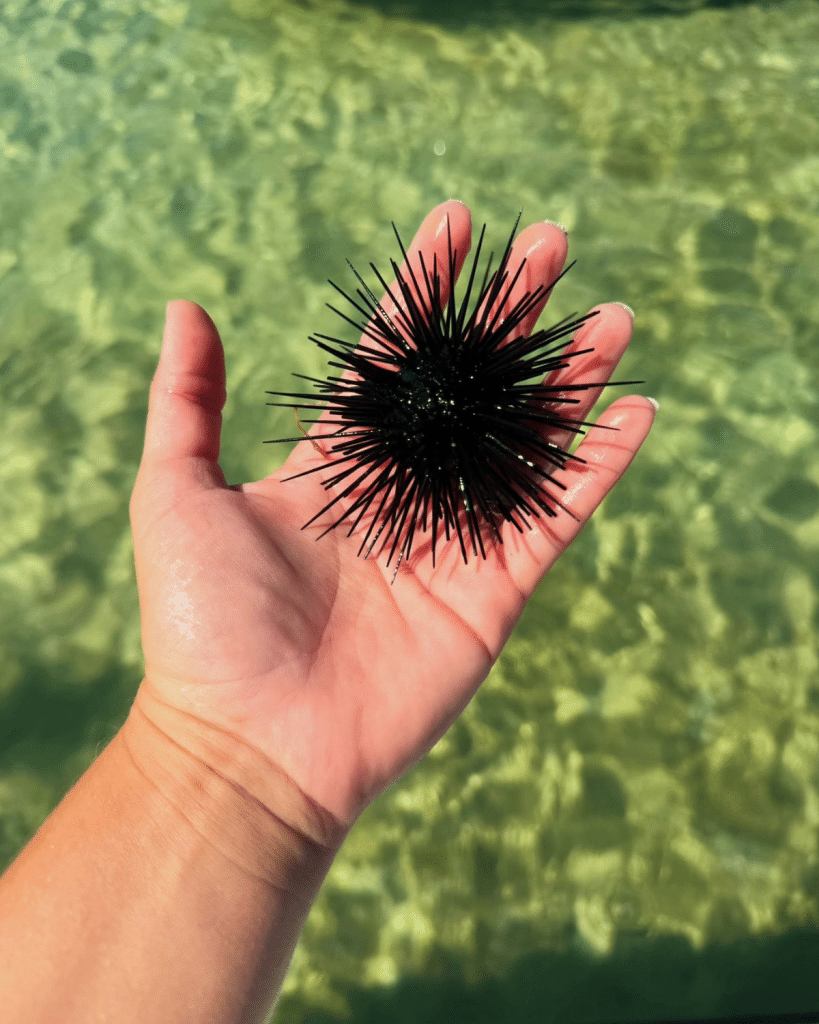
Long-Spined Sea Urchins
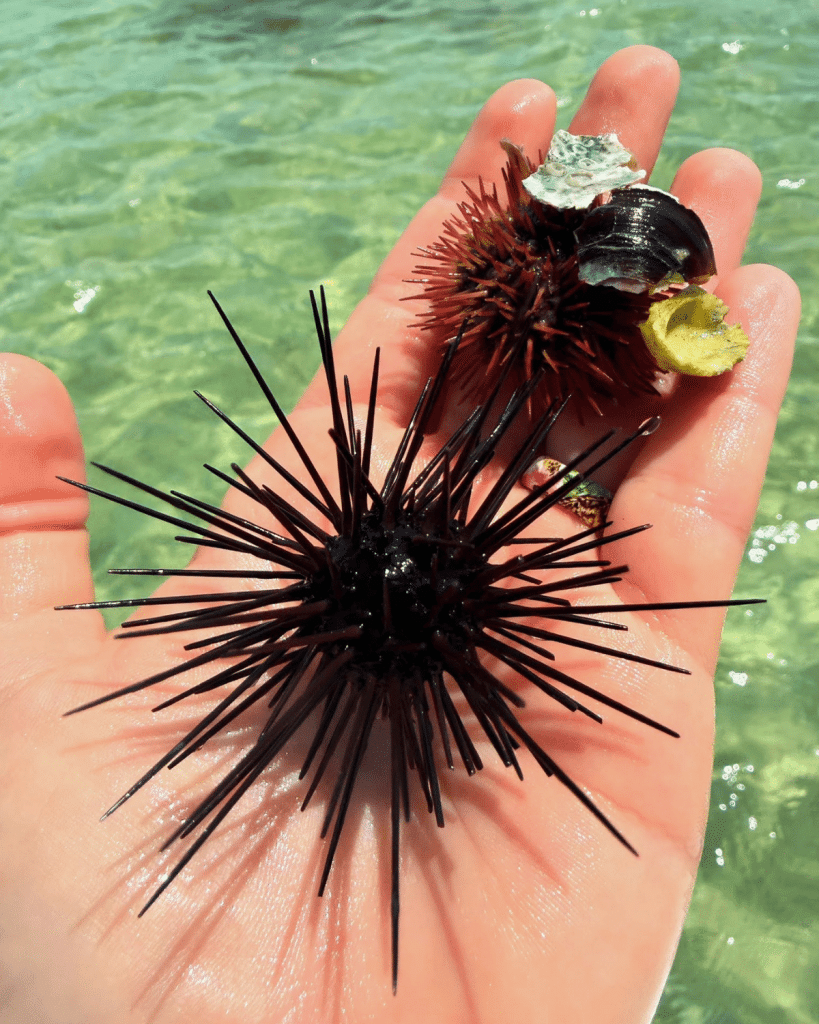
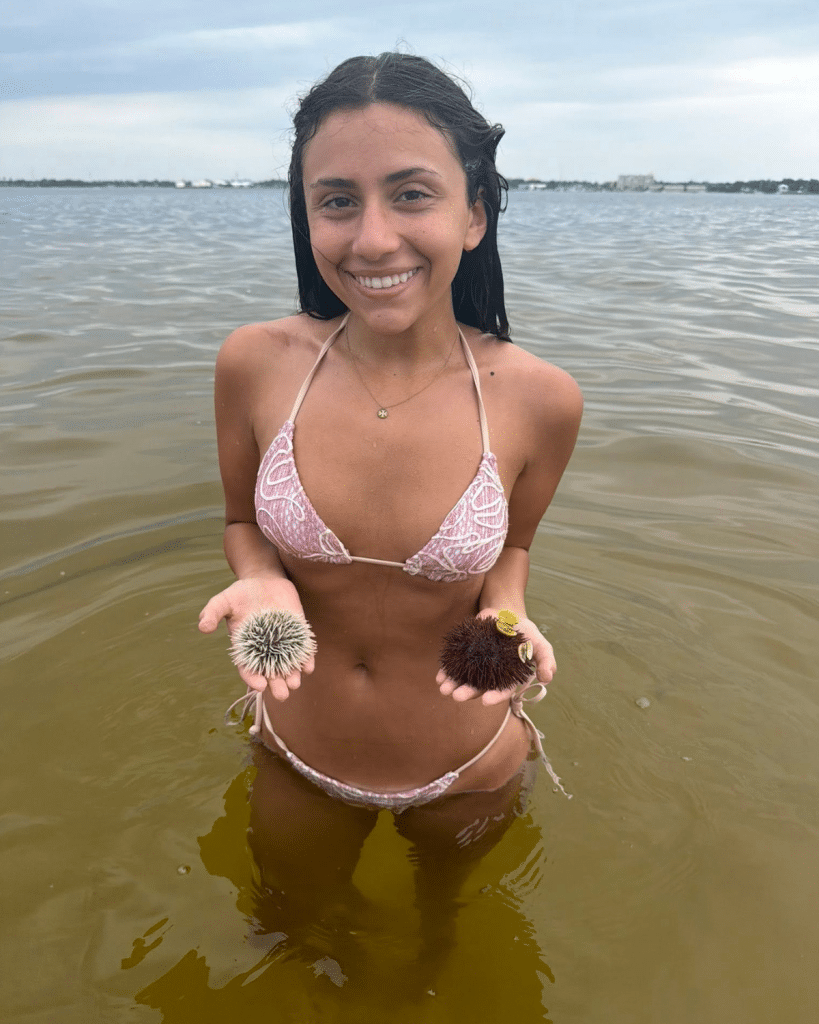
Long-spined sea urchins stand out for their dramatically long, thin, dark spines, which can be significantly longer than the urchin’s actual body. These spines are sharp and more likely to cause a puncture if stepped on, so they are worth knowing how to identify on sight.
Sea Biscuits
While not technically a sea urchin, sea biscuits are a closely related cousin worth mentioning here, since they are often found in the same habitats and confused for one another. Sea biscuits have short, fuzzy spines similar to a sand dollar’s, but a thicker, more rounded body shape.
Sea Urchin Skeletons: A Souvenir You Can Keep
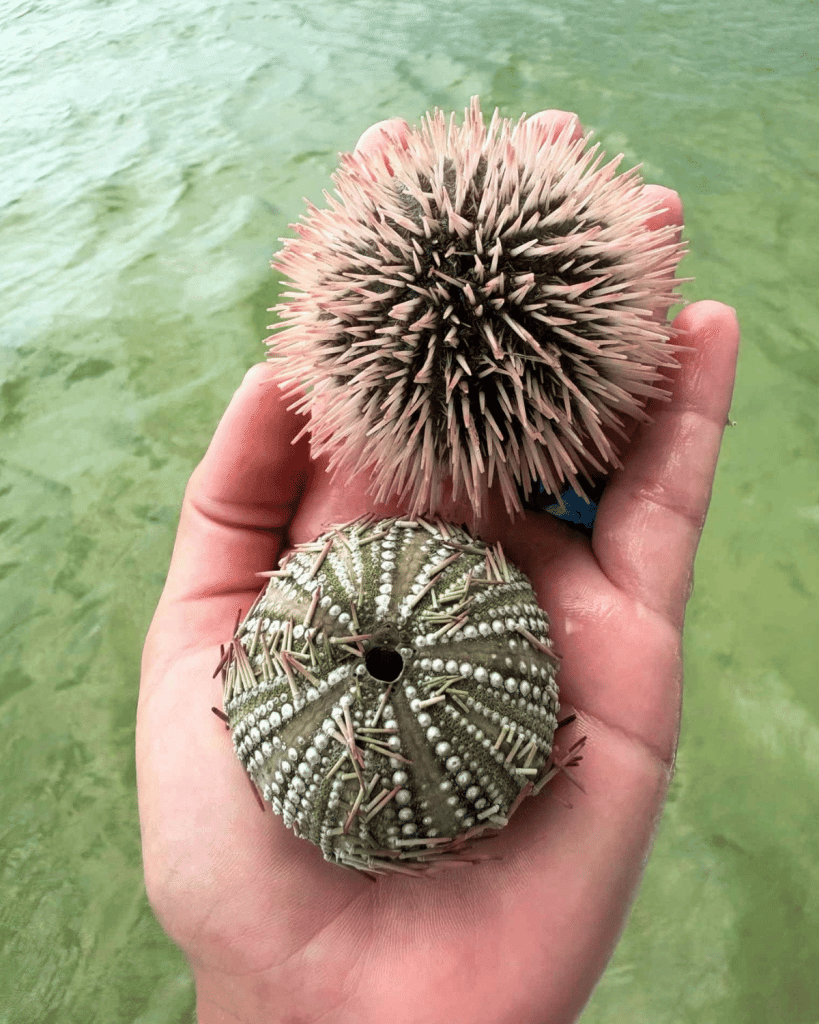
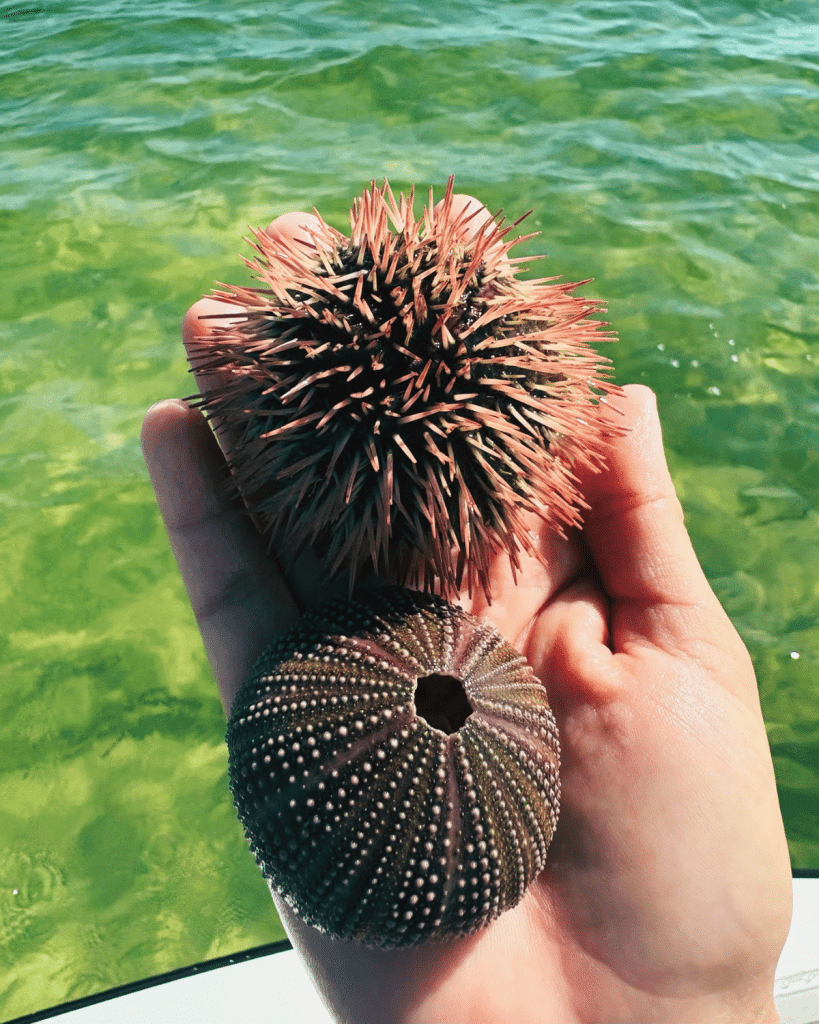
Just like sand dollars, sea urchins leave behind a hard internal skeleton called a test once they die and their spines and soft tissue break down. A sea urchin test is round and lightweight with a delicate pattern of small bumps where the spines used to attach.
Unlike a live sea urchin, an empty test poses no risk and is completely safe to collect and bring home. These skeletons are fragile, so they are usually found intact only in calmer areas protected from heavy wave action, like seagrass beds or the base of jetties. If you come across a bare, spineless test lying on the sand or tucked among rocks, it has already completed its natural life cycle, and picking it up does not affect a living animal in any way.
A simple way to remember the difference: if it still has spines attached, whether long or short, treat it as a living animal and leave it where it is. If it is just the bare, hollow shell with no spines left at all, it is a skeleton and safe to take as a souvenir.
Where to Find Sea Urchins in Panama City Beach
Sea urchins favor structure over open sand, which means a few specific spots tend to be more productive than the average stretch of beach.
- Jetties and rock structures: The rocks along jetties near St. Andrews State Park are a reliable place to spot sea urchins clinging to the surface.
- Seagrass beds: Shallow seagrass areas in St. Andrews Bay provide both food and shelter for sea urchins.
- Reefs and submerged structure: Snorkeling near submerged structure or natural reef areas often turns up sea urchins tucked into crevices.
Unlike sand dollars, sea urchins are not something you typically find washed up loose on dry sand, since their preferred habitat is structure-based rather than open sandy flats.
Are Sea Urchins Dangerous?
Sea urchins are not aggressive, and they have no interest in interacting with people. Their main defense is simply staying still and relying on their spines to discourage anything from stepping on or grabbing them. The risk with sea urchins comes from accidental contact by stepping on it, not from the animal seeking you out.
Natural Predators of Sea Urchins
Sea urchins may be covered in spines, but they are far from untouchable in the wild. A number of Gulf Coast species have adapted ways to get past those defenses.
- Sea stars: Sea stars are slow but persistent predators capable of overpowering a sea urchin and feeding on it over time.
- Triggerfish: Triggerfish have strong, specialized teeth that allow them to flip a sea urchin over and attack its less protected underside.
- Pufferfish: Similar to the triggerfish, pufferfish have also learned to target a sea urchin’s mouth area, which has far fewer spines than the rest of its body.
- Some species of crabs: Crabs with strong claws can crack into a sea urchin’s test, particularly when the urchin is young or has a thinner shell.
- Sea otters (outside the Gulf): While not found in Panama City Beach waters, sea otters are one of the most well-known sea urchin predators along the Pacific Coast, and their absence in some ecosystems has even led to urchin overpopulation.
This pressure from predators is part of why sea urchins rely so heavily on their spines, their tendency to wedge into crevices, and in the case of variegated sea urchins, their decorating behavior, all of which make them harder to spot and harder to attack.
Fun Facts About Sea Urchins
- They have no eyes, but they can still sense light: Sea urchins use light-sensitive cells spread across their bodies to detect light and shadow, essentially turning their whole body into a basic eye.
- Their mouths have a name of their own: Aristotle’s lantern is the sea urchin’s intricate five-toothed jaw apparatus, named after Aristotle, who gave the first detailed description of it over 2,300 years ago in his book History of Animals.
- Spines do double duty: Beyond defense, sea urchins use their spines to help wedge themselves into rock crevices and resist being swept away by currents.
- Slow and steady: Sea urchins move using tiny, suction-cupped tube feet, covering only a short distance over the course of a day.
- Ancient lineage: Echinoderms like sea urchins have been around for more than 450 million years, long before most modern marine life appeared.
- Important grazers: By feeding on algae, sea urchins help keep reef and rock structures from becoming overgrown, playing an important role in the local ecosystem.
See Sea Urchins and More with Flippin’ Awesome Adventures
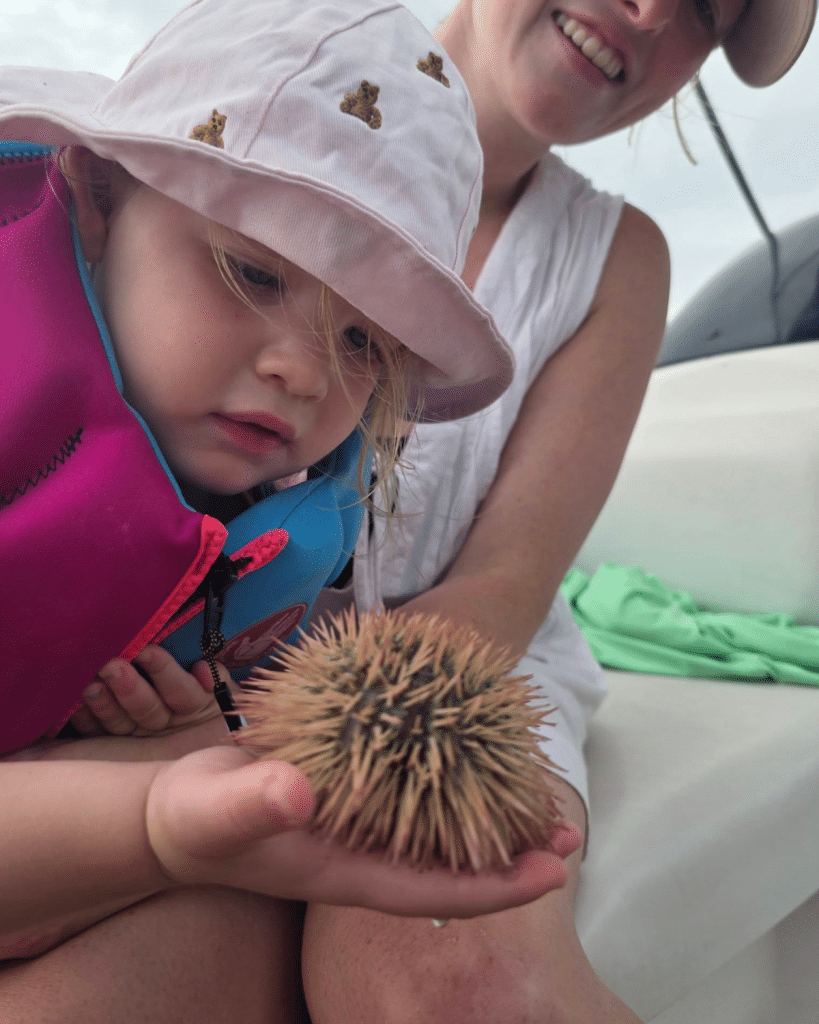
Sea urchins, sand dollars, stingrays, and dolphins are just a few of the residents waiting to be discovered around St. Andrews Bay. Led by marine biologist Captain Chris, our trips with Flippin’ Awesome Adventures highlight responsible wildlife viewing and teach guests how to safely observe marine life, including sea urchins, without disturbing the ecosystem they depend on.
Ready to experience Flippin’ Awesome Adventures for yourself? Join Captain Chris, a marine biologist with over 15 years of experience studying marine ecosystems around the world, on a private excursion through St. Andrews Bay. We specialize in hands-on learning and respectful, educational wildlife viewing that turns a simple beach day into a story worth telling.
Book your Flippin’ Awesome Adventure today and discover sea urchins, dolphins, and the wonders of Shell Island for yourself.
Frequently Asked Questions
Are there sea urchins in Panama City Beach?
Yes, sea urchins in Panama City Beach are commonly found around jetties, rocky structure, and seagrass beds, particularly near St. Andrews State Park.
What types of sea urchins are found in Panama City Beach?
The most commonly found sea urchins in Panama City Beach are variegated sea urchins and long-spined sea urchins, both of which favor rocky structure and seagrass over open sandy areas.
Are sea urchins in Panama City Beach dangerous?
Sea urchins are not aggressive and pose little risk if left undisturbed. The main danger comes from accidentally stepping on or touching their spines, which can puncture skin and cause a stinging sensation.
Where is the best place to find sea urchins in Panama City Beach?
Jetties, rocky structures, and seagrass beds near St. Andrews State Park or the bay waters are some of the best places to find sea urchins in Panama City Beach.
Can you keep sea urchin skeletons in Panama City Beach?
Yes, sea urchin skeletons, known as tests, are safe to collect once the spines and soft tissue are gone. An empty test poses no sting risk and is a completely safe souvenir to bring home.
Why do some sea urchins have shells and debris stuck to them?
Variegated sea urchins, sometimes called decorator or decorated sea urchins, use their tube feet to gather shell fragments and bits of algae and hold them against their spines for camouflage and sun protection.
What animals eat sea urchins in Panama City Beach?
Sea stars, triggerfish, certain crabs, and some other fish species are natural predators of sea urchins in Panama City Beach, often targeting the urchin’s underside or mouth area where spines offer less protection.
Are sea urchins related to sand dollars?
Yes, sea urchins and sand dollars are both echinoderms, a group of marine animals that also includes sea biscuits and sea stars. Sea urchins kept their long spines and round shape, while sand dollars evolved a flatter body for burrowing in sand.