
Ever wondered if there are stingrays in Panama City Beach gliding along the sandy bottom while you wade in the surf? The answer is yes, and they are one of the most common (and most misunderstood) animals you will encounter in St. Andrews Bay. At Flippin’ Awesome Adventures, Critter Corner is where we slow down and shine a spotlight on the smaller, often overlooked residents of our local waters, guided by Captain Chris and his 15 years of marine biology experience. Today, the spotlight is on stingrays in Panama City Beach.
Stingrays have a reputation problem. Most people picture a dangerous animal lurking under the sand, ready to strike. In reality, stingrays in Panama City Beach are calm, curious, and easy to coexist with once you understand how they behave. They have been gliding through Gulf Coast waters for millions of years, long before anyone built a beach chair on the sand above them.
In this Critter Corner: Stingrays in Panama City Beach
Are There Stingrays in Panama City Beach?
Yes, stingrays in Panama City Beach are present year-round, and St. Andrews Bay is one of their favorite neighborhoods. The bay offers exactly what stingrays look for: shallow, sandy flats, warm water, and plenty of small crustaceans and mollusks to dig up and eat.
On most Flippin’ Awesome Adventures trips, we spot at least one stingray cruising along the bottom or resting half-buried in the sand near Shell Island. Captain Chris knows the flats they prefer and the times of day they tend to be most active, which means guests get a close, safe look at one of the bay’s most graceful swimmers.
Stingrays are not aggressive animals. They would much rather glide away from you than confront you, and most encounters end with the stingray disappearing into the sand before anyone even realizes it was there.
Best Beaches to See Stingrays in Panama City Beach
If you want to look for stingrays on your own, a few spots in the area consistently offer good visibility and shallow water where stingrays like to feed.
- Shell Island: The sandy flats around Shell Island are one of the most reliable places to spot stingrays, especially in calm, shallow water close to shore.
- St. Andrews State Park: The protected cove inside the park has clear, gentle water that makes it easier to spot stingrays moving along the bottom.
- Bayside Beaches in Panama City: Shallow, sandy patches here are popular feeding grounds for smaller stingray species.
Wherever you go, the same rule applies. Stingrays blend into the sand almost perfectly, so moving slowly and watching where you step matters more than which beach you choose.
Types of Stingrays in Panama City Beach
Several species of stingrays call the Gulf Coast home, and St. Andrews Bay sees a healthy mix of them throughout the year.
Southern Stingrays
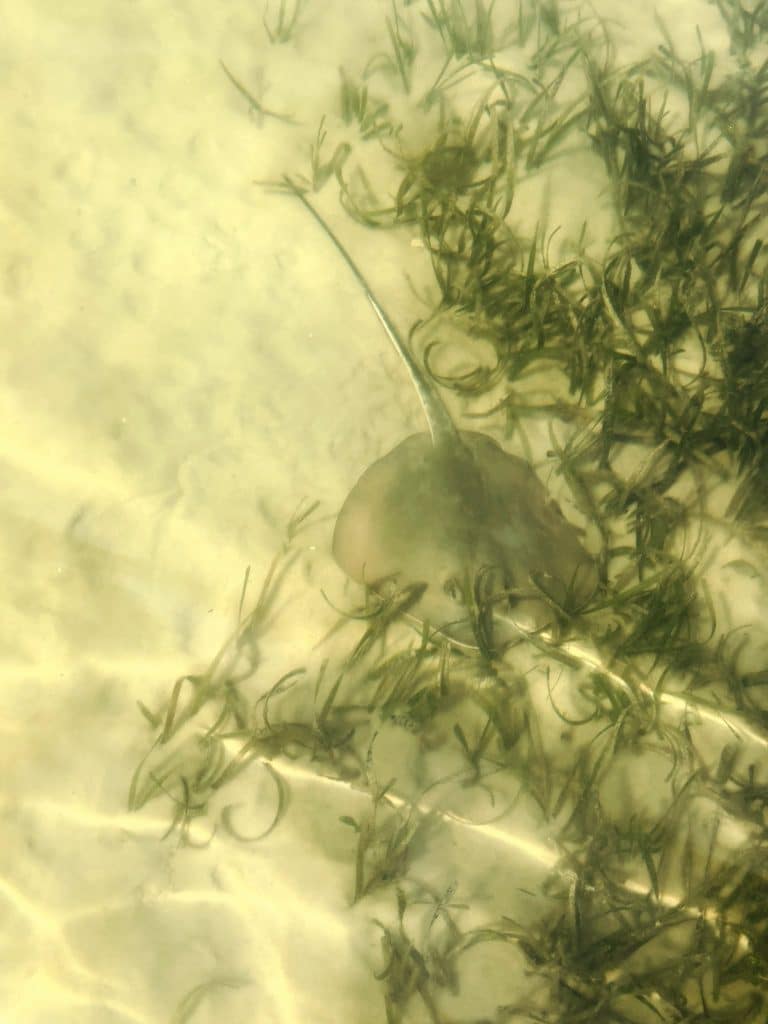
- Southern stingrays are the most commonly seen stingrays in Panama City Beach. They have a flat, diamond-shaped body and can grow to about 5 feet across, though most seen in the bay are smaller.
- They are bottom feeders, using electroreceptors in their snouts to locate buried clams, worms, and small crustaceans hidden in the sand.
- Their coloring, usually a sandy gray or brown, makes them nearly invisible when resting on the seafloor.
Cownose Rays
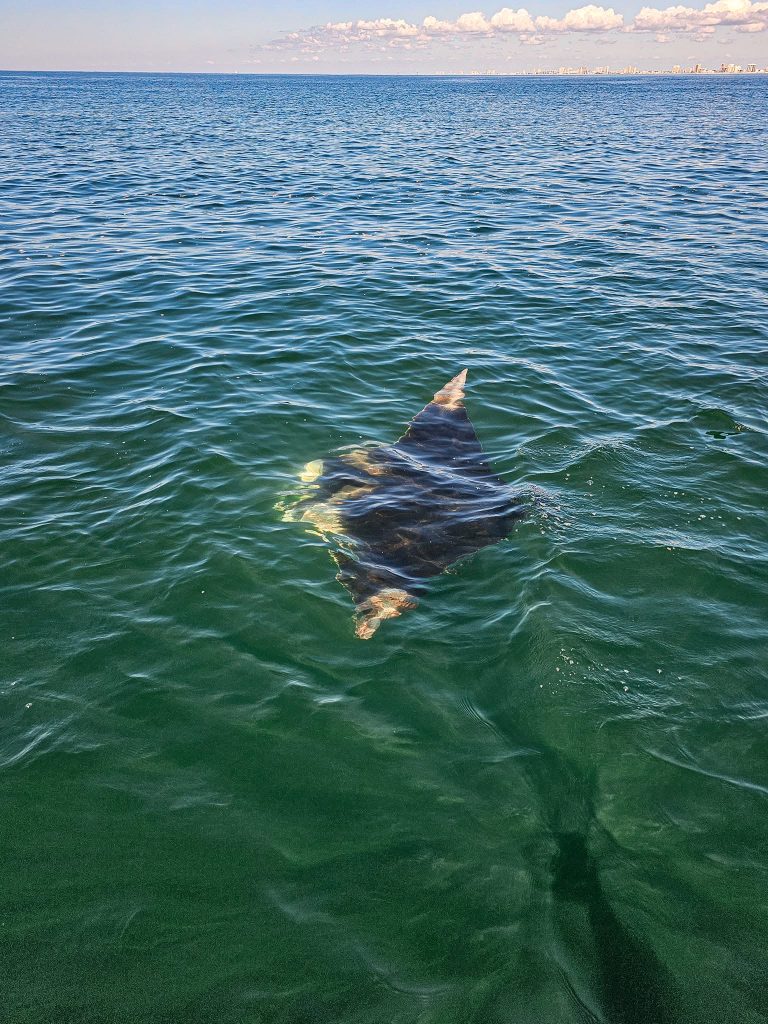
- Cownose rays are easy to recognize thanks to their distinctive double-lobed head, which gives them a shape similar to a cow’s nose, hence the name.
- Unlike southern stingrays, cownose rays often travel in large groups called fever, and seeing dozens of them moving through the bay together is a memorable sight.
- They are strong swimmers and tend to stay slightly higher in the water column than bottom-dwelling species.
Spotted Eagle Rays
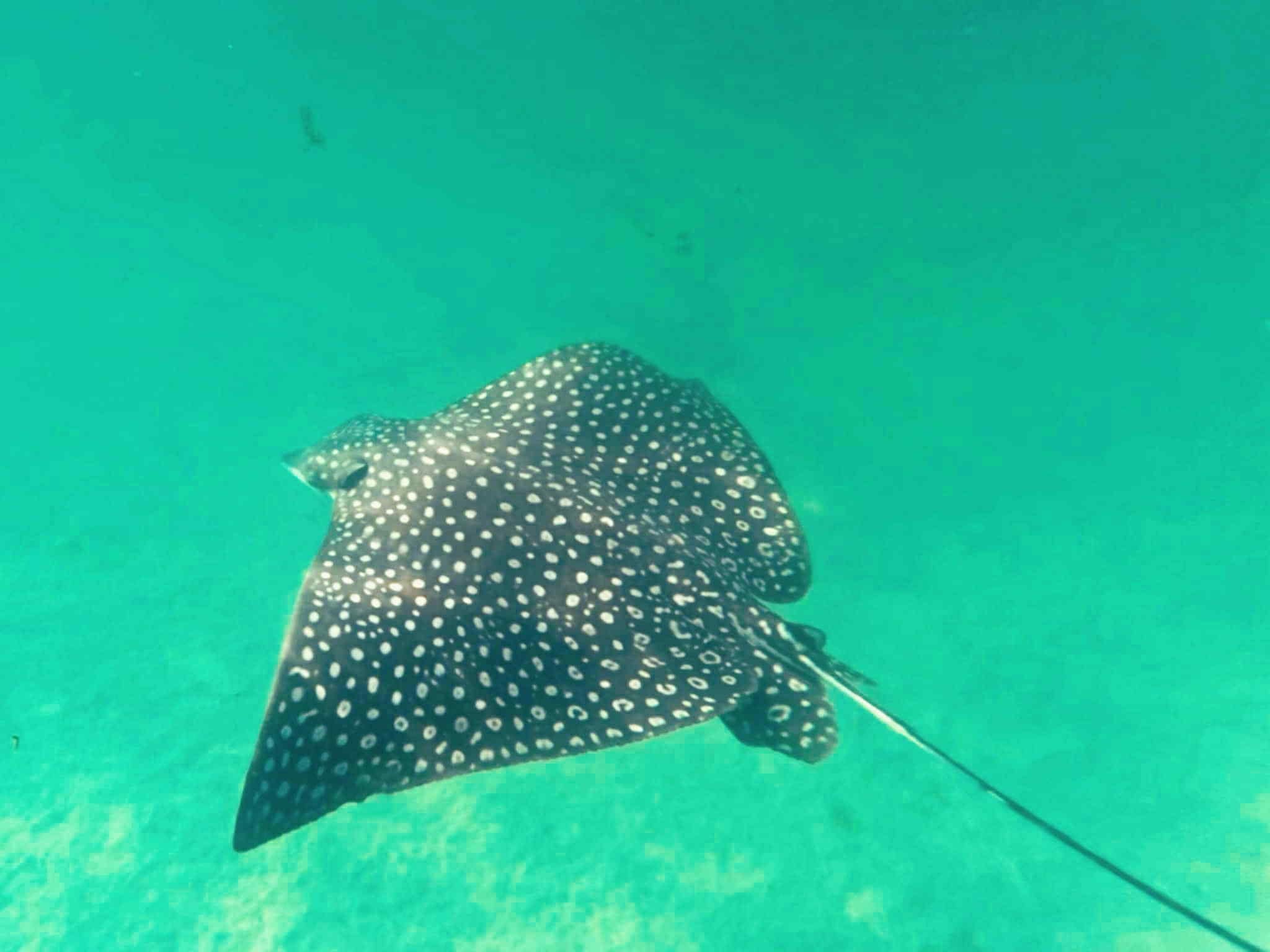
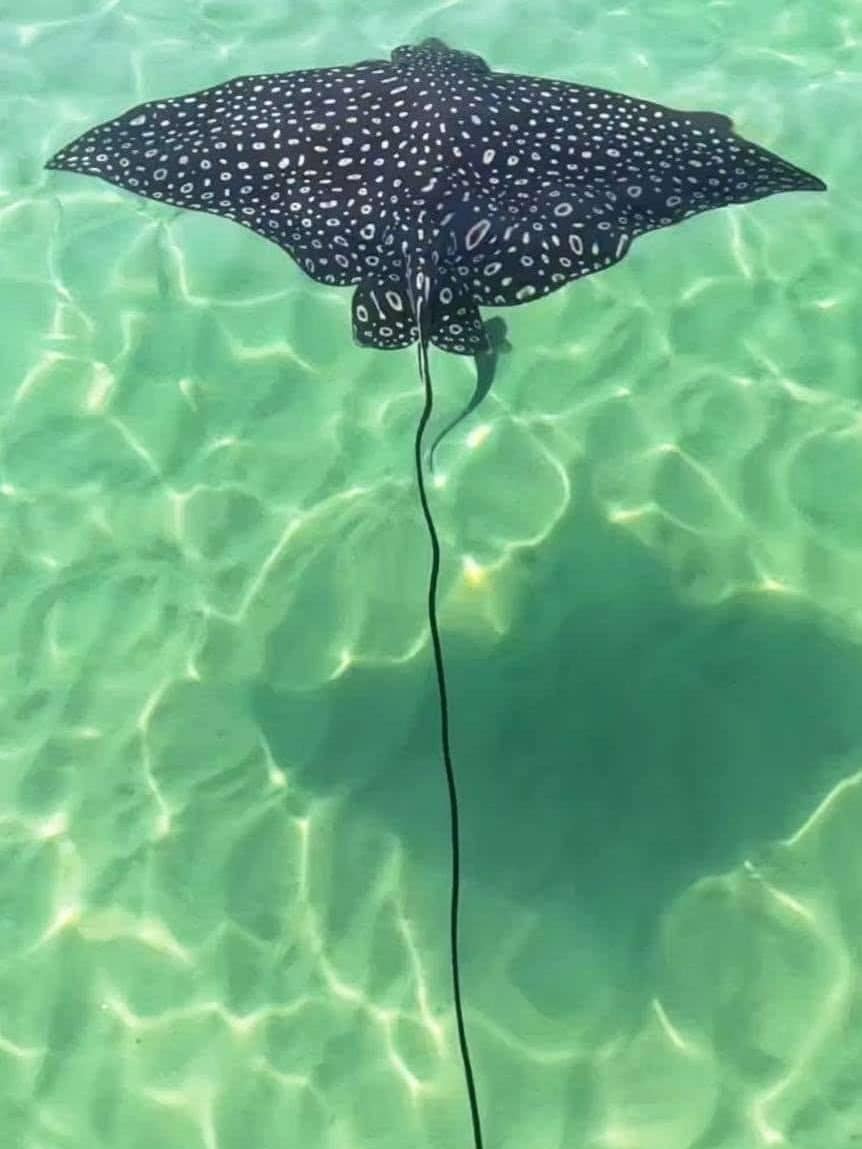
- Spotted eagle rays are some of the most striking rays in Gulf waters, easily identified by the distinct pattern of white or pale spots scattered across their dark, almost black backs, paired with pointed, wing-like pectoral fins and a triangular body shape.
- They are known for their impressive swimming speed and occasionally leap above the surface of the water, which makes them a favorite spotting for guests on the water.
- Spotted eagle rays tend to prefer slightly deeper water than southern stingrays, though they do venture into the shallower flats around Shell Island to feed.
Atlantic Stingrays
Smaller and more common in brackish water, Atlantic stingrays are frequently found near the mouths of bays and estuaries. They are one of the smallest stingray species in the area, often only reaching about 18 inches across, and are commonly seen by waders in shallow water close to shore.
Swimming with Stingrays in Panama City Beach
When people search for swimming with stingrays in Panama City Beach, they are usually picturing a staged encounter, but the reality is simpler and just as exciting. If you are in the local water around Panama City Beach, you are swimming with stingrays whether you realize it or not. They are part of the everyday ecosystem in St. Andrews Bay, not an animal you have to seek out in a separate, controlled setting.
On a Flippin’ Awesome Adventures trip, stingray sightings usually happen in one of two ways. Guests often spot them while leaning over the boat and scanning the clear water for wildlife like sea turtles and jellyfish, watching a stingray glide just beneath the surface. During the snorkeling portion of the trip, it is common to see one drift past in the distance as it moves along the sandy bottom.
If you want an even closer, more hands-on look, a lot of our guests pair their trip with other water activities during their stay. Clear bottom kayak excursions, like the Glow Float tours, give you a different vantage point and a great chance to see stingrays moving beneath you. If you brought a paddle board along on your trip, the shallow flats near shore are another easy place to spot one gliding by as you paddle.
However you encounter them, the same rule applies. Stingrays are calm, non-confrontational animals, and a little patience and awareness goes a long way toward a great sighting.
Fun Facts About Stingrays
- Built-in metal detectors: Stingrays use electroreceptors called ampullae of Lorenzini to detect the faint electrical signals of prey buried under the sand.
- No bones about it: Stingrays are cartilaginous fish, meaning their skeletons are made of cartilage instead of bone, just like sharks.
- Stackable swimmers: Cownose rays migrate in massive groups, sometimes numbering in the thousands, as they move along the Gulf Coast.
- Gentle giants in disguise: Despite their flat, alien-like appearance, stingrays are generally calm and prefer avoiding confrontation over defending themselves.
- Live births: Most stingray species give birth to live young rather than laying eggs, with litters typically ranging from two to six pups.
- Camouflage experts: A resting stingray can kick up a thin layer of sand over its body, making it almost impossible to spot until it moves.
How to Safely Share the Water with Stingrays
1. Do the Stingray Shuffle
Shuffling your feet along the sandy bottom instead of taking normal steps lets stingrays feel the vibration and move away before you ever make contact.
2. Keep a Respectful Distance
Stingrays are wild animals going about their day, not attractions to approach. Observing from a distance, whether from the boat, while snorkeling, or while wading, keeps the experience safe and stress-free for everyone involved.
3. Avoid Sudden Movements
Stingrays react to sudden motion the same way most wild animals do, by retreating or feeling threatened. Moving calmly and predictably in the water helps stingrays stay relaxed and continue about their normal behavior nearby.
4. Never Pick Up a Stingray by the Tail
A stingray’s barb is located near the base of its tail, so handling should always be guided by someone trained in safe marine animal handling.
Meet Stingrays with Flippin’ Awesome Adventures
Stingrays, dolphins, and the chance to swim in some of the clearest water on the Gulf Coast, what more could you ask for? Led by marine biologist Captain Chris, our trips ensure responsible viewing and safe handling of all marine life, including stingrays in Panama City Beach. His years of hands-on experience allow him to spot stingrays from a safe distance and guide guests through respectful, low-impact encounters that protect both the animal and the swimmer.
Ready to experience Flippin’ Awesome Adventures for yourself? Join Captain Chris, a marine biologist with over 15 years of experience studying marine ecosystems around the world, on a private excursion through St. Andrews Bay. We specialize in hands-on encounters and safe, educational wildlife viewing that turns a simple beach day into a story worth telling.
Book your Flippin’ Awesome Adventure today and see stingrays, dolphins, and the wonders of Shell Island for yourself.
Frequently Asked Questions About Stingrays in Panama City Beach
Are there stingrays in Panama City Beach?
Yes, stingrays in Panama City Beach are present year-round in St. Andrews Bay. Southern stingrays, cownose rays, eagle rays, and Atlantic stingrays are all commonly found in the shallow, sandy flats around the area.
What types of stingrays are in Panama City Beach?
The most common types of stingrays in Panama City Beach are southern stingrays, cownose rays, eagle rays, and Atlantic stingrays. Southern stingrays are the most frequently spotted, while cownose rays are known for traveling in large groups.
Is it safe to swim with stingrays in Panama City Beach?
Stingrays are a normal part of the local ecosystem, so swimming in the waters around Panama City Beach often means sharing the water with them whether you see them or not. Stingrays prefer to avoid confrontation, and using slow, predictable movements like the stingray shuffle greatly reduces the chance of an accidental sting.
What are the best beaches to see stingrays in Panama City Beach?
Shell Island, St. Andrews State Park, and the bayside beaches in Panama City, like Asbell Park, are some of the best beaches to see stingrays in Panama City Beach, thanks to their calm, sandy bottoms that stingrays favor for feeding.
Can you touch stingrays in Panama City Beach?
Touching or handling stingrays is not recommended, as they are wild animals that should be observed rather than approached. On a guided excursion with Flippin’ Awesome Adventures, Captain Chris helps guests safely spot and observe stingrays from a respectful distance.