
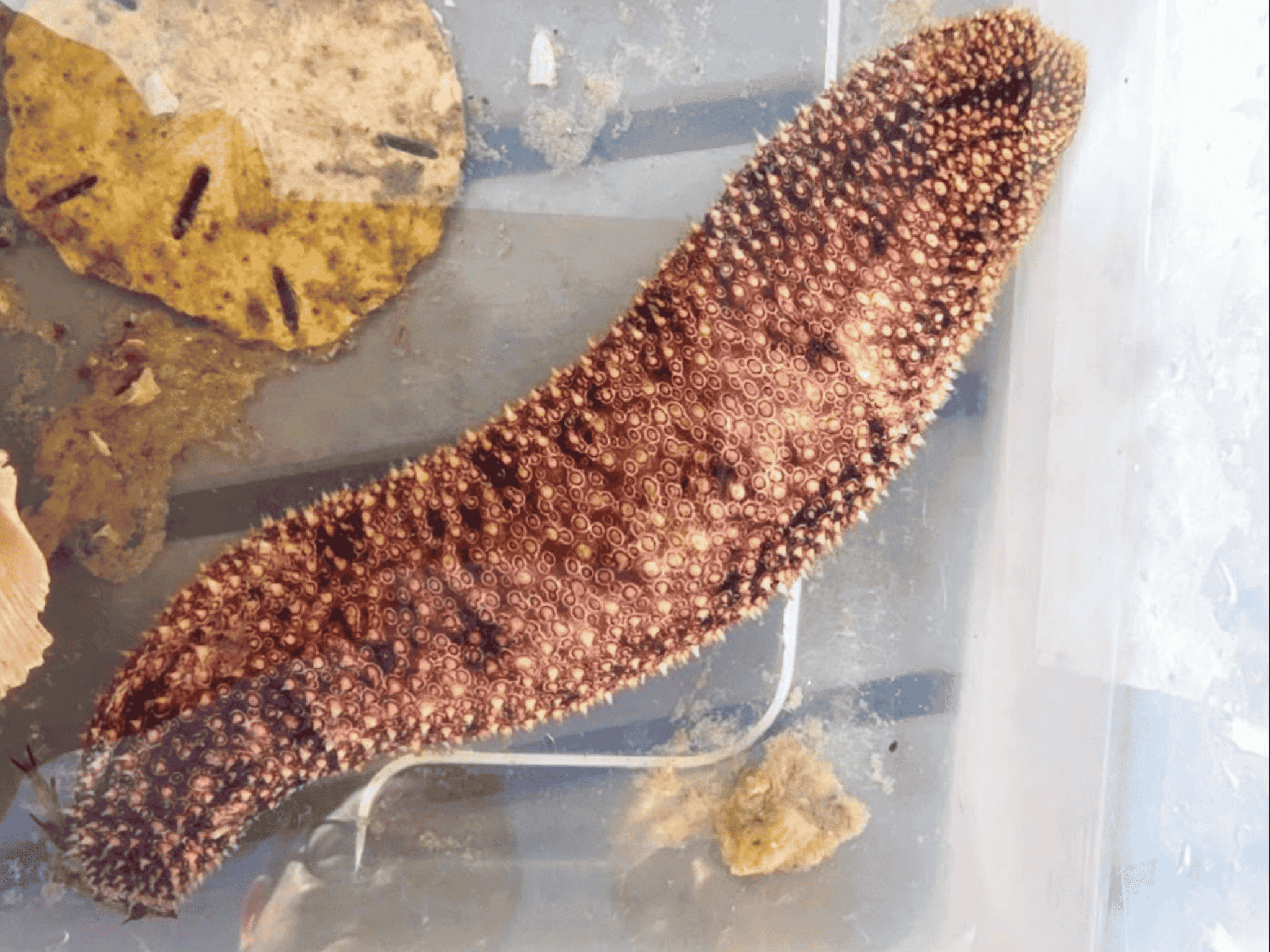
Some critters get all the attention. Dolphins, sea turtles, stingrays, they’re the headliners. Sea cucumbers, on the other hand, are the quiet, unassuming residents of St. Andrews Bay that most people walk right past without a second look. At Flippin’ Awesome Adventures, Critter Corner is where we slow down and shine a light on the smaller, often overlooked residents of our local waters, guided by Captain Chris and his 15 years of marine biology experience. Today’s spotlight is on one of Capt. Chris and Capt. Sierra’s personal favorites: sea cucumbers in Panama City Beach.
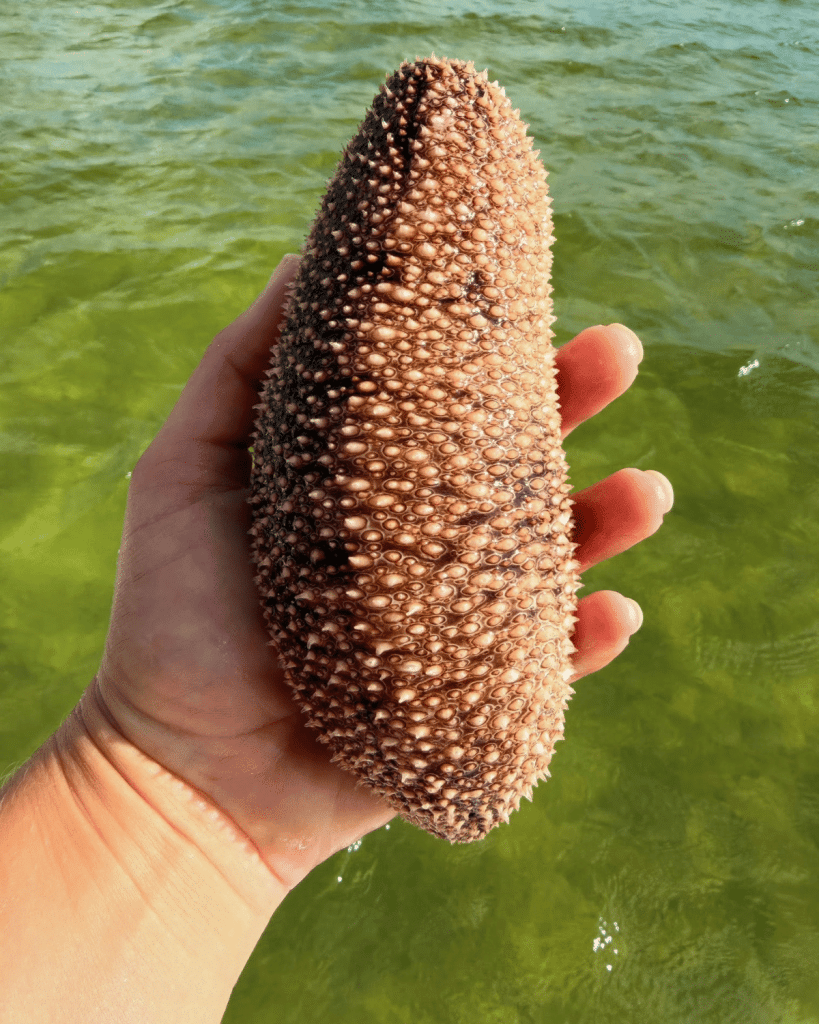
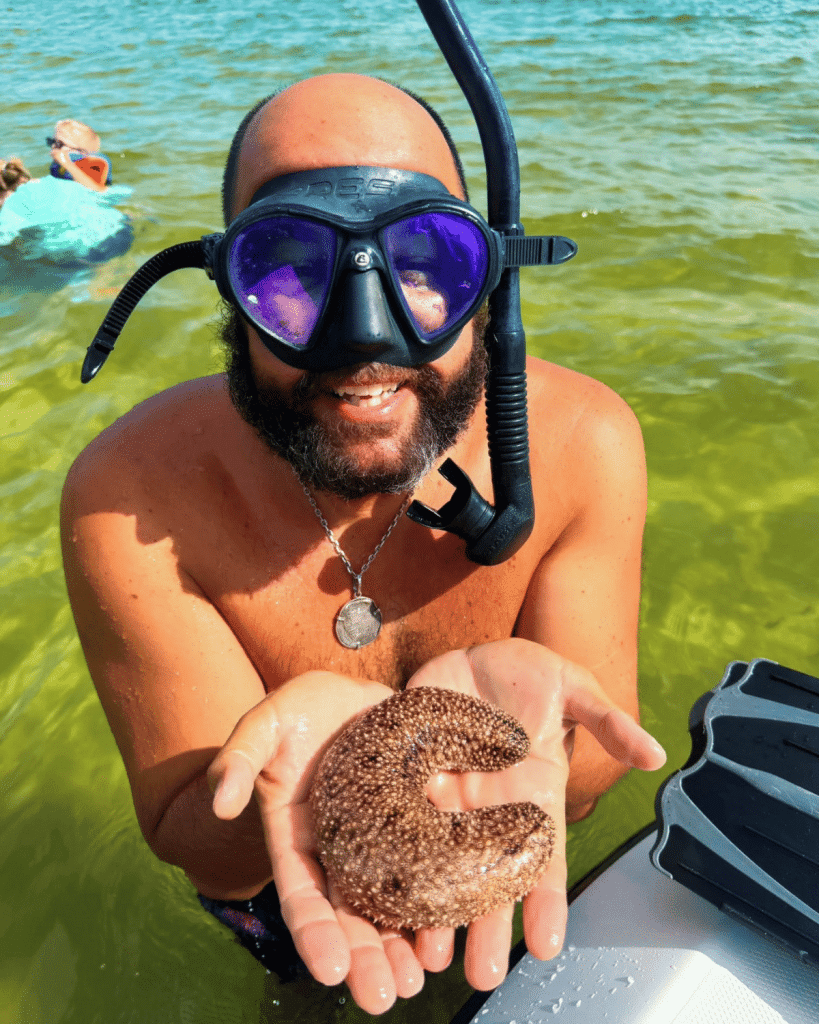
This one is a little more personal than most. Captain Chris and Captain Sierra regularly find the same princeps sea cucumber tucked into the same general area of the bay, and they have affectionately named her Kiwi. Spotting Kiwi has become one of those small, satisfying moments on a trip, the kind of detail you only notice when you slow down and really look at what is living beneath the surface.
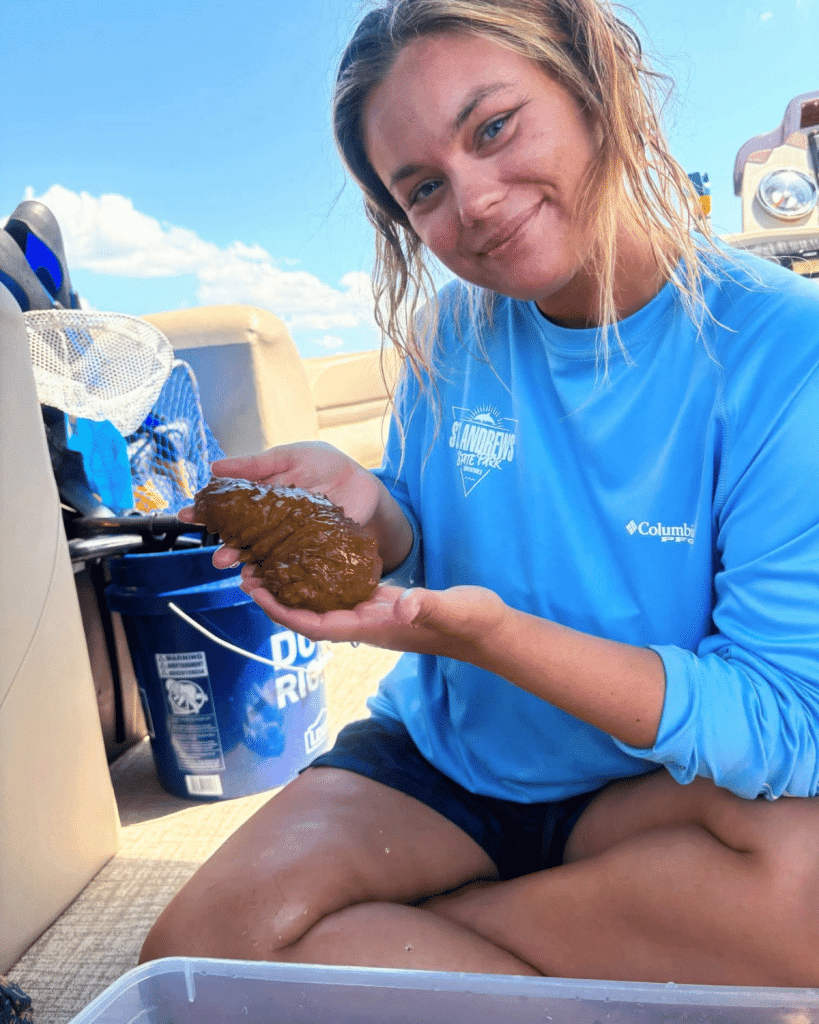
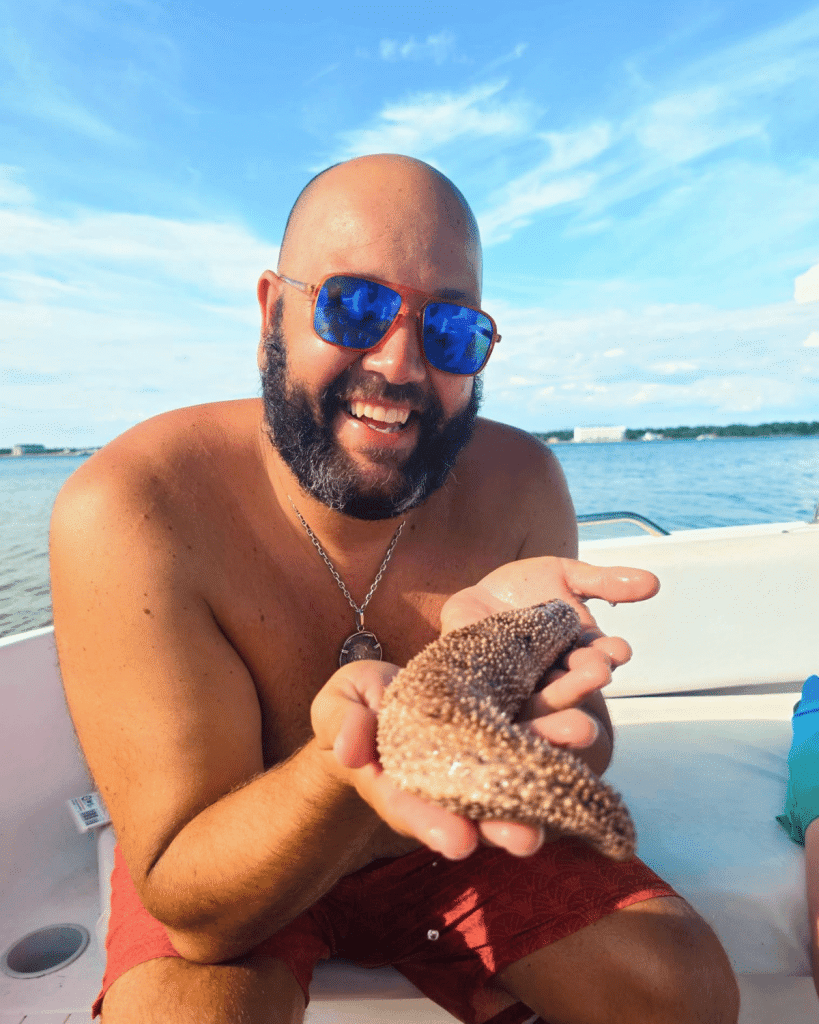
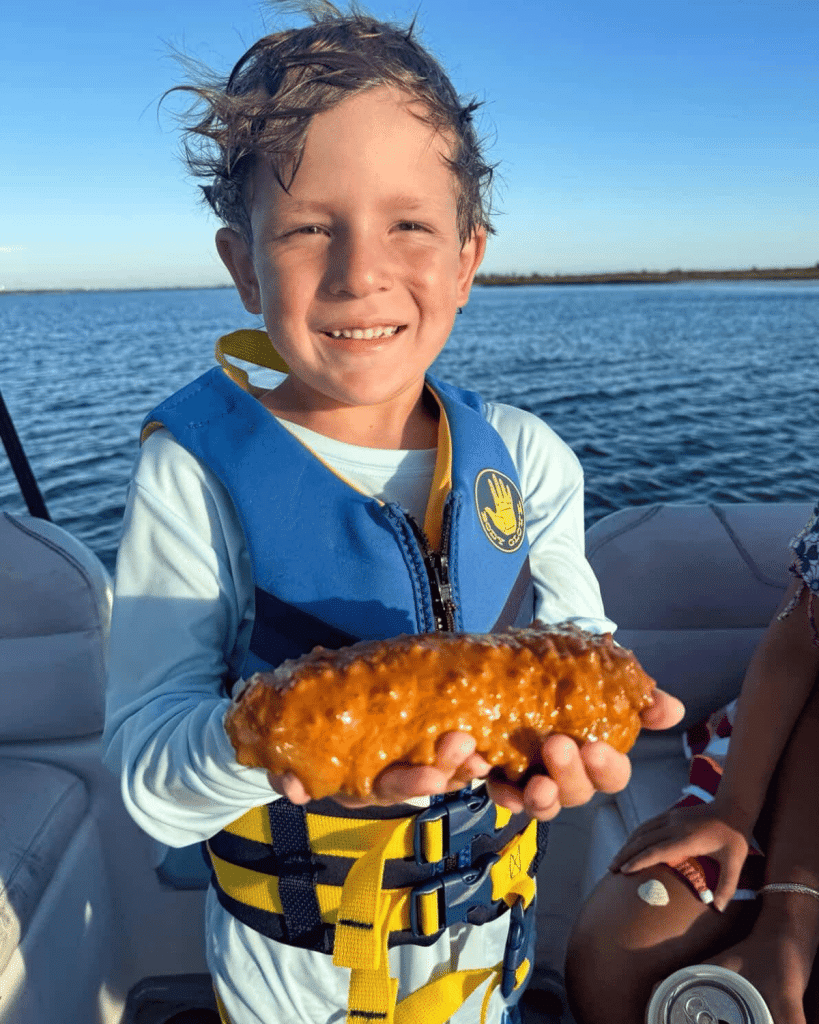
Sea Cucumbers in Panama City Beach
What Is a Sea Cucumber?
Sea cucumbers are soft-bodied marine animals related to sea stars, sand dollars, and sea urchins, all part of the echinoderm family. Unlike their spiny relatives, sea cucumbers have a soft, flexible, elongated body that more closely resembles, well, a cucumber. They move slowly along the seafloor, using tiny tube feet to crawl across sand and seagrass while feeding on organic material around them.
Sea cucumbers are filter feeders and detritivores, meaning they consume tiny particles of decaying organic matter and recycle it back into the ecosystem. They are not flashy swimmers or dramatic predators. Their value comes from what they do quietly, day after day, on the bottom of the bay.
Beneath that soft exterior, sea cucumbers have a body plan that is more complex than it looks. They have a simple but complete digestive system that runs the length of their body, taking in sediment and organic material at one end and processing it through to the other. Many species also have a ring of tentacle-like structures around their mouth, used to sweep food particles toward their digestive tract or to actively burrow into sand and mud. Their skin contains tiny, calcified structures called ossicles, which provide a small amount of internal support without the rigid test found in sea urchins or sand dollars. This is part of why a sea cucumber feels firm but flexible rather than hard or brittle when you see one resting on the seafloor.
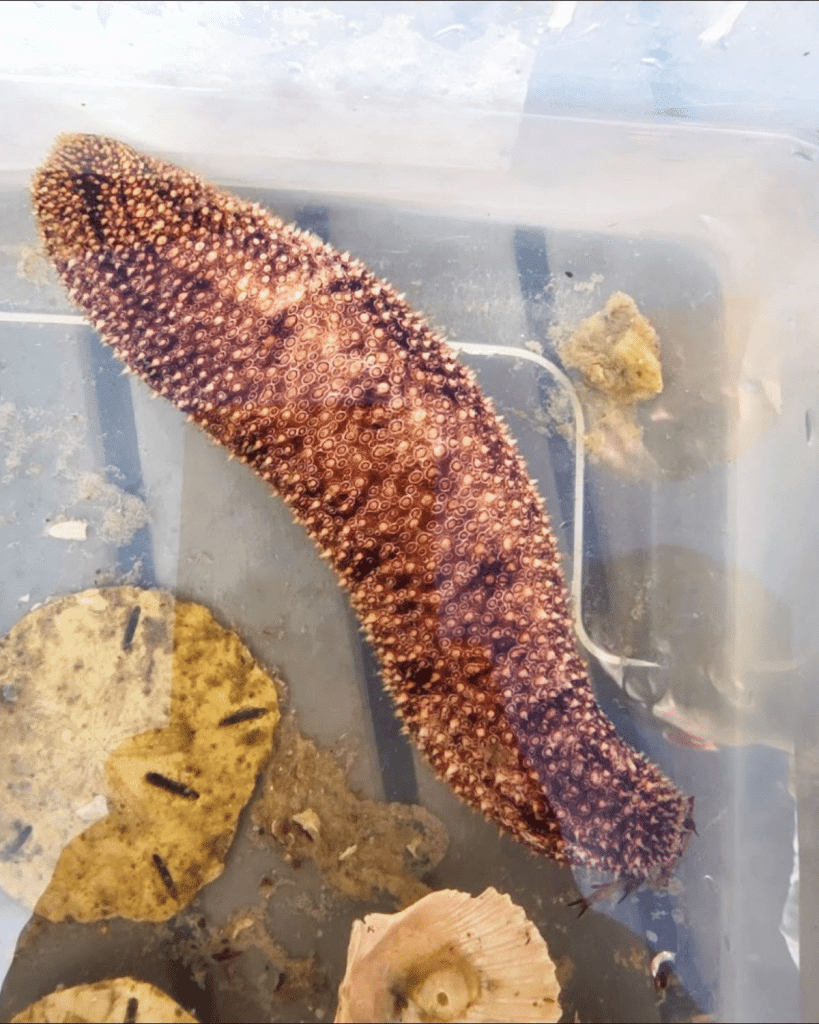
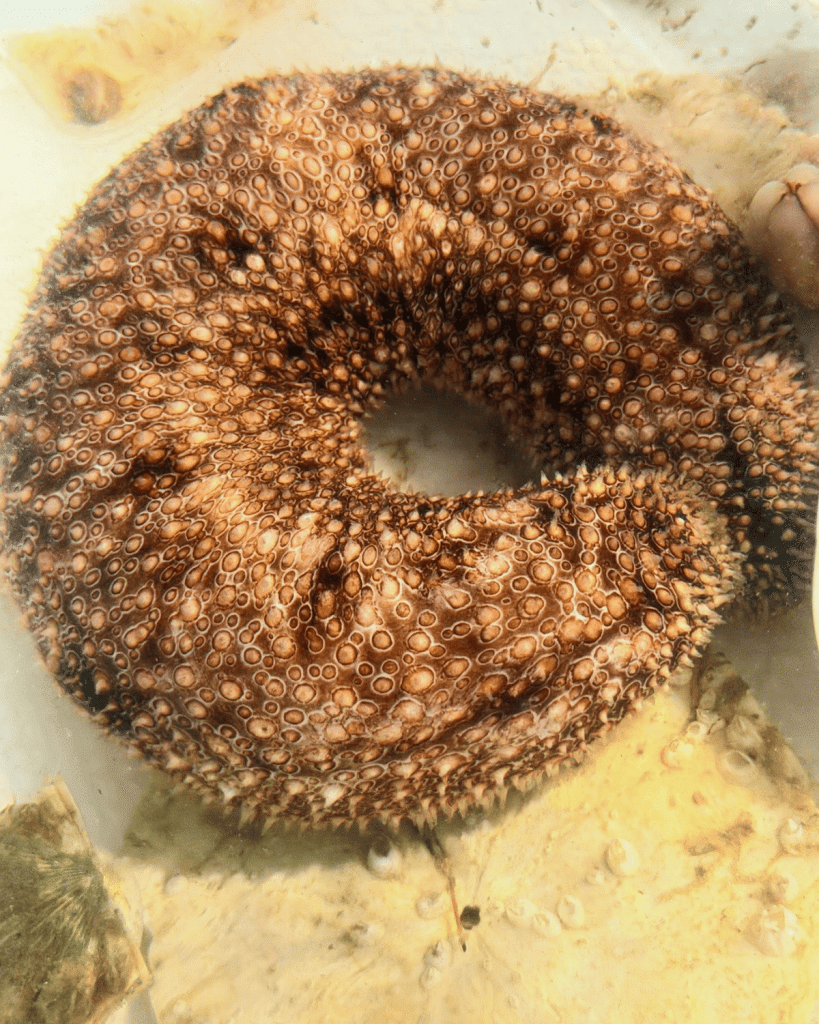
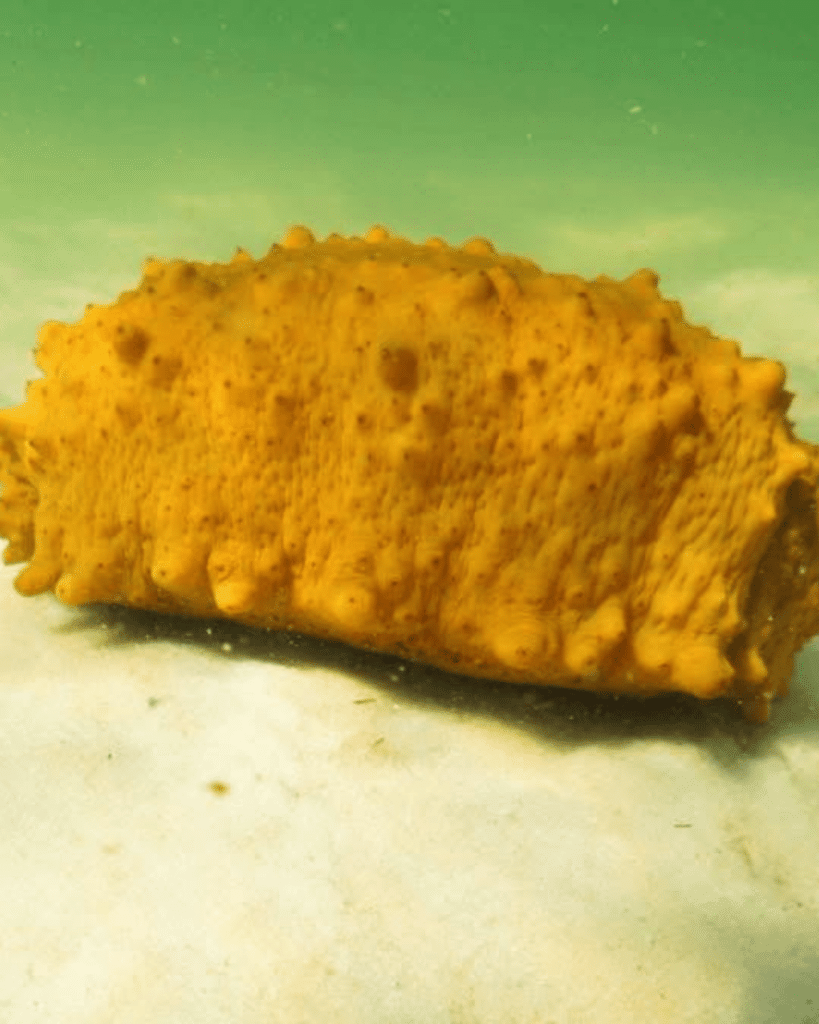
Sea Cucumber Diversity in the Gulf
While Kiwi is a princeps sea cucumber, she is far from the only species found along the Florida Panhandle. The Gulf is home to a range of sea cucumber species, each adapted to slightly different habitats and feeding strategies. Some prefer to bury almost entirely beneath the sand, leaving only a small portion exposed to feed, while others stay more visible along seagrass. Coloration and texture vary widely between species as well, from smooth and pale to the slightly fuzzy, mottled appearance princeps sea cucumbers are known for. This diversity is part of why having a marine biologist on board matters. Identifying which species you are looking at, and understanding its particular habits, takes more than a passing glance.
Meet Kiwi: Our Local Princeps Sea Cucumber
Princeps sea cucumbers, sometimes called furry sea cucumbers because of their slightly textured skin, are one of the species found in St. Andrews Bay. They tend to stay in a fairly consistent area once settled, which is exactly how Kiwi earned her name and her local fame on Flippin’ Awesome Adventures trips.
Capt. Chris and Capt. Sierra have found the same princeps sea cucumber in roughly the same stretch of the bay on multiple trips. Sea cucumbers are not animals that travel far or fast, so returning to find a familiar individual is more common than you might think. .
Recognizing an individual sea cucumber takes a trained eye. Unlike a dolphin with a distinctive dorsal fin or a sea turtle with a unique shell pattern, sea cucumbers do not have obvious markings that make them easy to identify at a glance. Capt. Chris and Capt. Sierra rely on a combination of location, size, and subtle texture details to confirm that the sea cucumber they are looking at is, in fact, Kiwi and not simply another princeps sea cucumber nearby. It is a small example of the kind of close, ongoing observation that comes from spending years on the same stretch of water.
Guests sometimes ask why a sea cucumber would get a name at all when there are so many more dramatic animals to focus on. The answer comes back to the heart of what Critter Corner is about. Every animal in St. Andrews Bay, no matter how small or slow-moving, has a role to play and a story worth telling. Kiwi just happens to be one we get to revisit again and again.
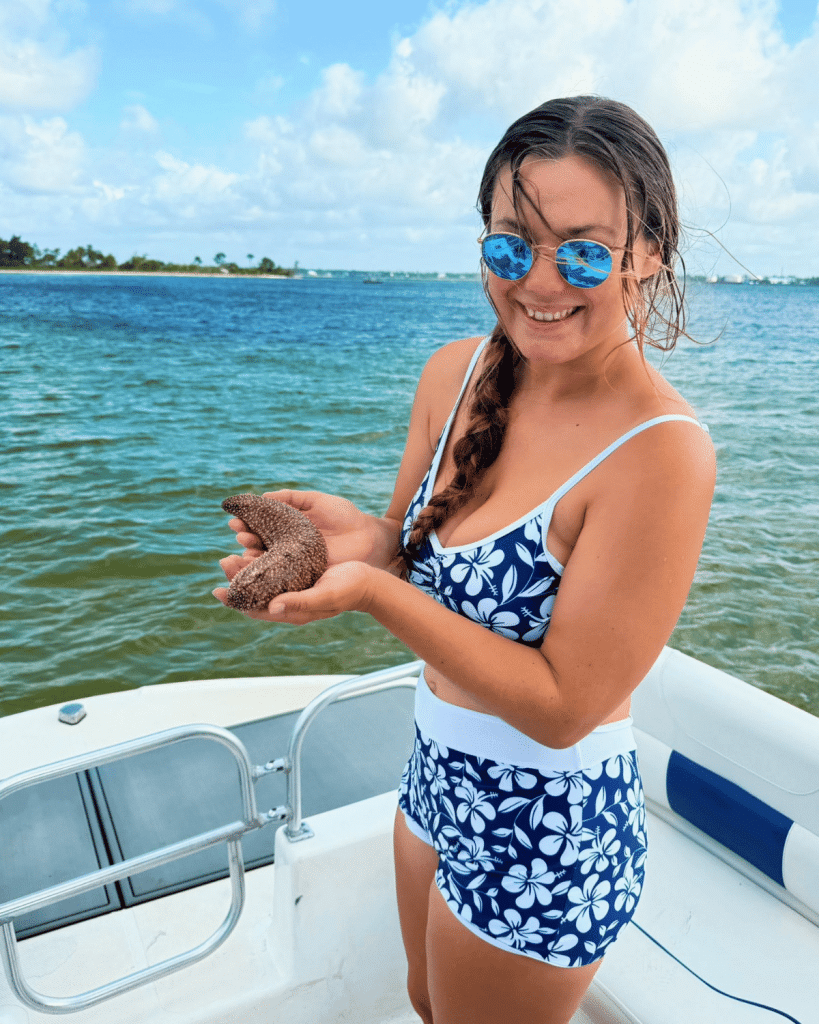
Where to Find Sea Cucumbers in Panama City Beach
Sea cucumbers favor calm, sheltered areas with sandy or seagrass-covered bottoms, which makes parts of St. Andrews Bay ideal habitat.
- Seagrass beds: Shallow seagrass areas provide both food and cover for sea cucumbers.
- Calm, sheltered flats: Sea cucumbers prefer slower-moving water away from heavy wave action.
- Near Shell Island: The protected waters around Shell Island offer the kind of calm, sandy bottom sea cucumbers settle into.
Spotting one takes a slower pace than spotting a dolphin or a stingray. Sea cucumbers blend into the bottom and barely move, so a careful, patient look is usually what it takes.
How Sea Cucumbers Help the Ecosystem
Sea cucumbers play a role that is easy to underestimate. As they move across the seafloor, they consume decaying organic material and sediment, processing it through their digestive system and releasing cleaner, more nutrient-balanced sand and detritus behind them.
This process helps keep the seafloor healthy, supports the breakdown of organic waste, and contributes to nutrient cycling throughout the bay. Sea cucumbers are sometimes described as the cleanup crew of the seafloor, and that description fits. They are not the most exciting animal to watch, but the ecosystem depends on the work they do.
Researchers studying coastal ecosystems have found that areas with healthy sea cucumber populations often show improved sediment quality compared to areas where they are absent. As sea cucumbers process sand and organic debris through their digestive systems, they break down larger particles into finer material and help release locked-in nutrients back into the water column, where they become available to algae, seagrass, and the smaller organisms further up the food chain. In a sense, sea cucumbers act as a slow, steady recycling system running constantly beneath the surface, long before anyone notices the results.
This kind of ecological role is easy to overlook because it doesn’t produce a dramatic moment the way a breaching dolphin or a feeding stingray does. But a bay without sea cucumbers and other detritivores would slowly accumulate more waste and see slower nutrient turnover, which would eventually affect the seagrass beds and the animals that depend on them. Kiwi and every other sea cucumber in St. Andrews Bay are doing this work continuously, whether anyone is watching or not.
Fun Facts About Sea Cucumbers
- They breathe through an unusual location: Many sea cucumbers take in oxygenated water through their rear end using a structure called a respiratory tree.
- A defense mechanism like no other: Some species of sea cucumber can expel a portion of their internal organs as a defense tactic against predators, then regenerate them later.
- Slow movers by design: Sea cucumbers rarely travel far, often staying within a small home range for extended periods, which is part of why Kiwi keeps showing up in the same general area.
- Texture tells a story: Princeps sea cucumbers have a slightly fuzzy or furry texture, which helps distinguish them from smoother species.
- Ancient relatives: Like sea urchins and sand dollars, sea cucumbers belong to a lineage of animals that has existed for hundreds of millions of years.
- Recycling specialists: A single sea cucumber can process a significant amount of sand and sediment over its lifetime, contributing to a cleaner seafloor.
How to Respectfully Observe Sea Cucumbers in Panama City Beach
1. Look, Don’t Touch
Sea cucumbers are delicate, soft-bodied animals, and handling them can cause stress or injury if you don’t know what you’re doing, so observing from a short distance is best. As a marine biologist, Capt. Chris handles all marine life safely.
2. Move Slowly Through Their Habitat
If you are wading or snorkeling through seagrass, moving slowly helps avoid accidentally stepping on or disturbing a sea cucumber resting on the bottom.
3. Appreciate the Quiet Ones
Sea cucumbers will never put on the kind of show a dolphin or a stingray does, but taking a moment to notice them adds a whole new layer to understanding the bay’s ecosystem.
See Sea Cucumbers and More with Flippin’ Awesome Adventures
Sea cucumbers, sand dollars, sea stars, and dolphins are just a few of the residents waiting to be discovered around St. Andrews Bay. Led by marine biologists Capt. Chris and Capt. Sierra, our trips highlight the smaller, often overlooked animals right alongside the headline-grabbing wildlife, including the chance to spot a familiar face like Kiwi.
Ready to experience Flippin’ Awesome Adventures for yourself? Join our marine biologist-led crew on a private excursion through St. Andrews Bay. We specialize in hands-on learning and respectful, educational wildlife viewing that turns a simple beach day into a story worth telling.
Book your Flippin’ Awesome Adventure today and discover sea cucumbers, dolphins, and the wonders of Shell Island for yourself.
Frequently Asked Questions About Sea Cucumbers in Panama City Beach
Are there sea cucumbers in Panama City Beach?
Yes, sea cucumbers in Panama City Beach are commonly found in seagrass beds and calm, sheltered flats throughout St. Andrews Bay.
What is a princeps sea cucumber?
A princeps sea cucumber, sometimes called a furry sea cucumber, is a species found in St. Andrews Bay known for its slightly textured skin and tendency to stay within a consistent home range.
Who is Kiwi the sea cucumber?
Kiwi is a local princeps sea cucumber regularly found by Capt. Chris and Capt. Sierra in the same general area of St. Andrews Bay during Flippin’ Awesome Adventures trips.
What do sea cucumbers eat?
Sea cucumbers feed on decaying organic material and sediment along the seafloor, helping recycle nutrients back into the ecosystem.
Are sea cucumbers safe to touch?
Sea cucumbers should be observed rather than handled, since their soft bodies can be easily stressed or injured by contact.