
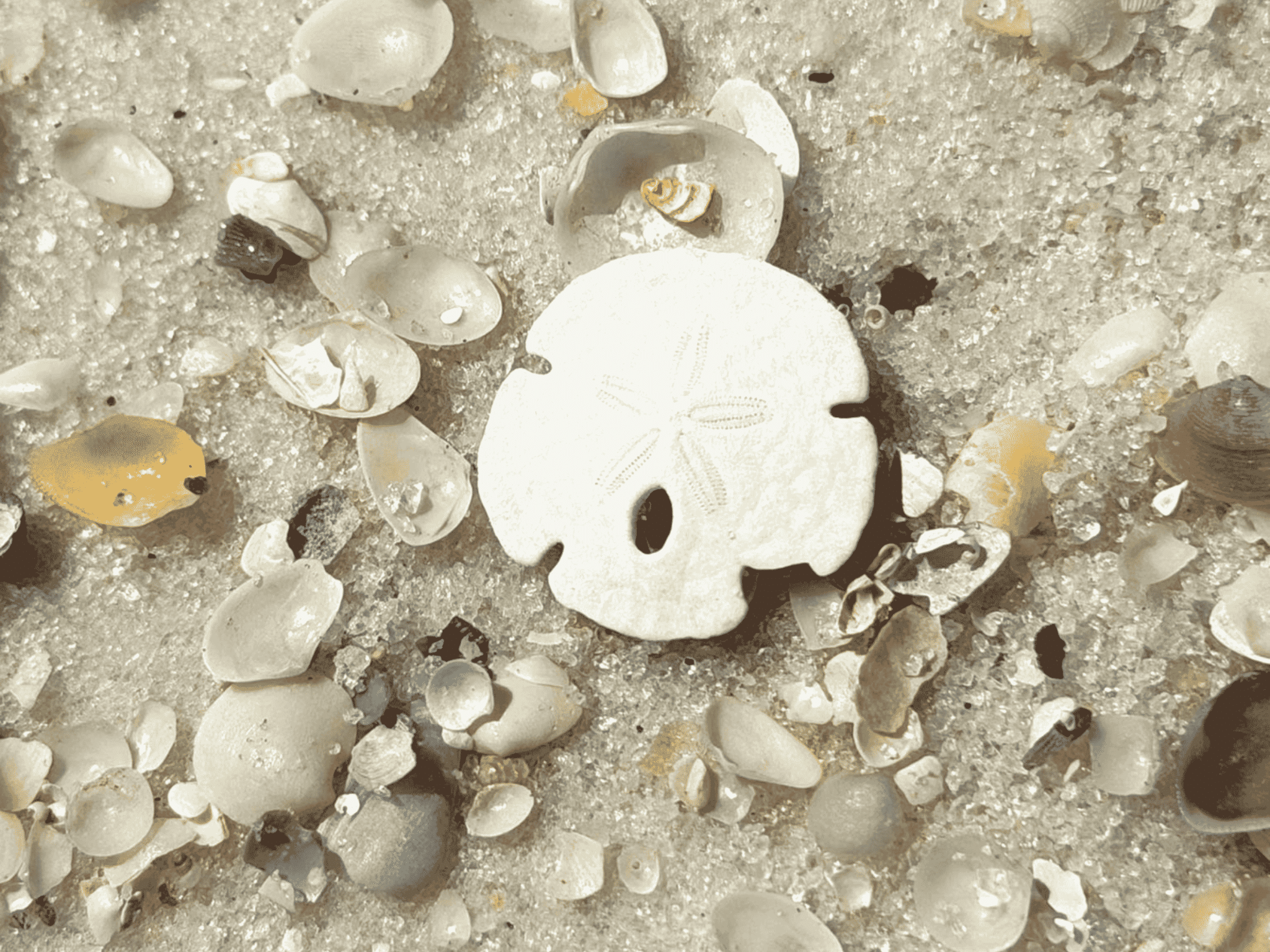
Few souvenirs feel as classically “beach vacation” as a sand dollar, and Panama City Beach is one of the best places on the Gulf Coast to find them. But before you add one to your bag, there is something every visitor should know: sand dollars are living animals, and the ones you should take home are not the ones still alive in the sand. At Flippin’ Awesome Adventures, Critter Corner is where we slow down and shine a light on the smaller, often misunderstood residents of our local waters, guided by Captain Chris and his 15 years of marine biology experience. Today, the spotlight is on sand dollars in Panama City Beach.
Sand dollars are quiet, slow-moving animals that spend most of their lives partially buried in sand, filtering tiny food particles out of the water around them. They are easy to overlook until you know what to look for, and once you do, they show up almost everywhere along the Gulf Coast shoreline.
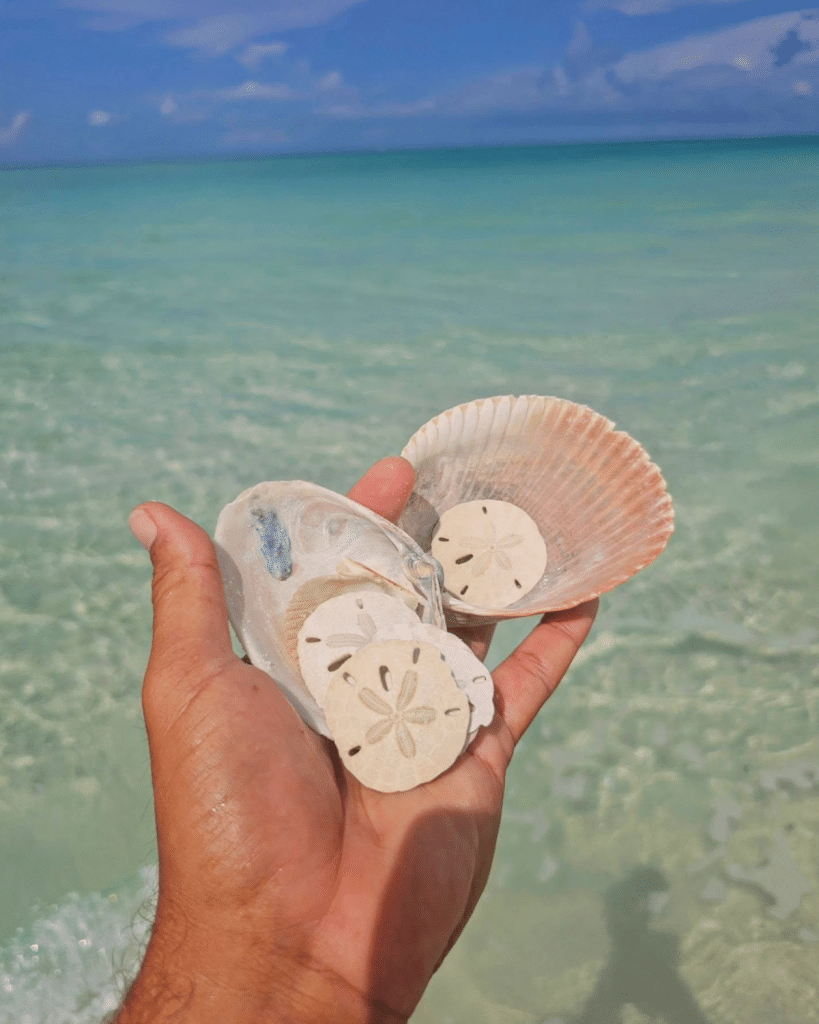
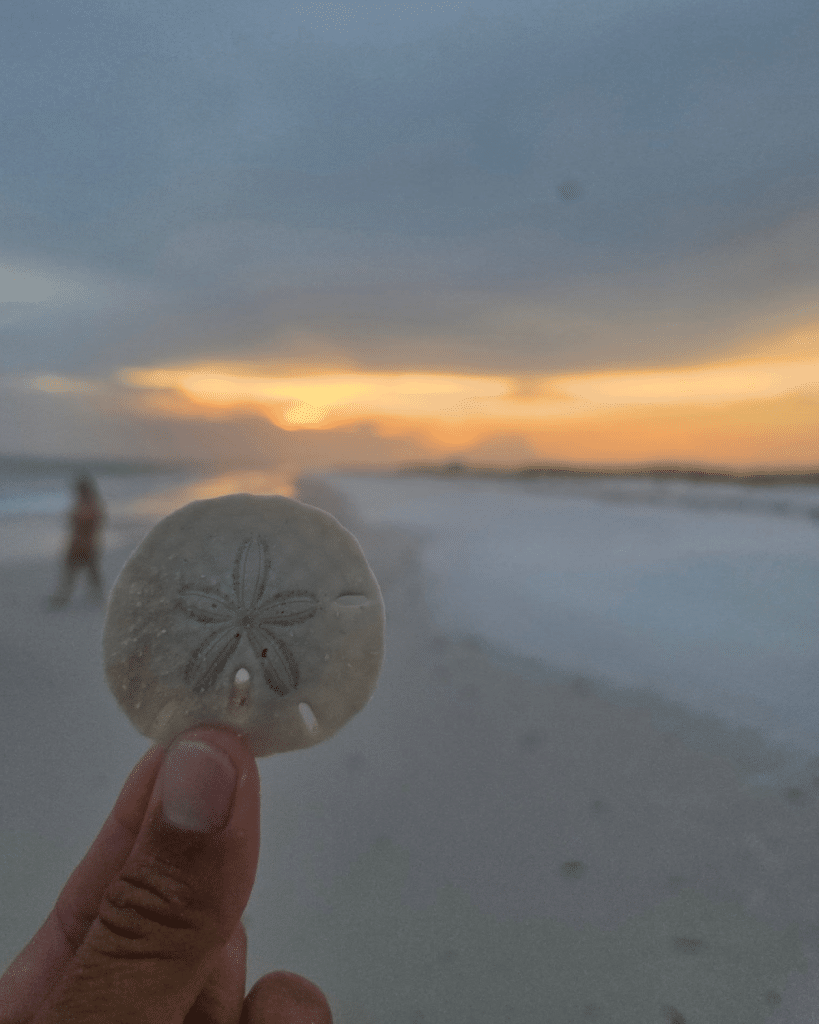
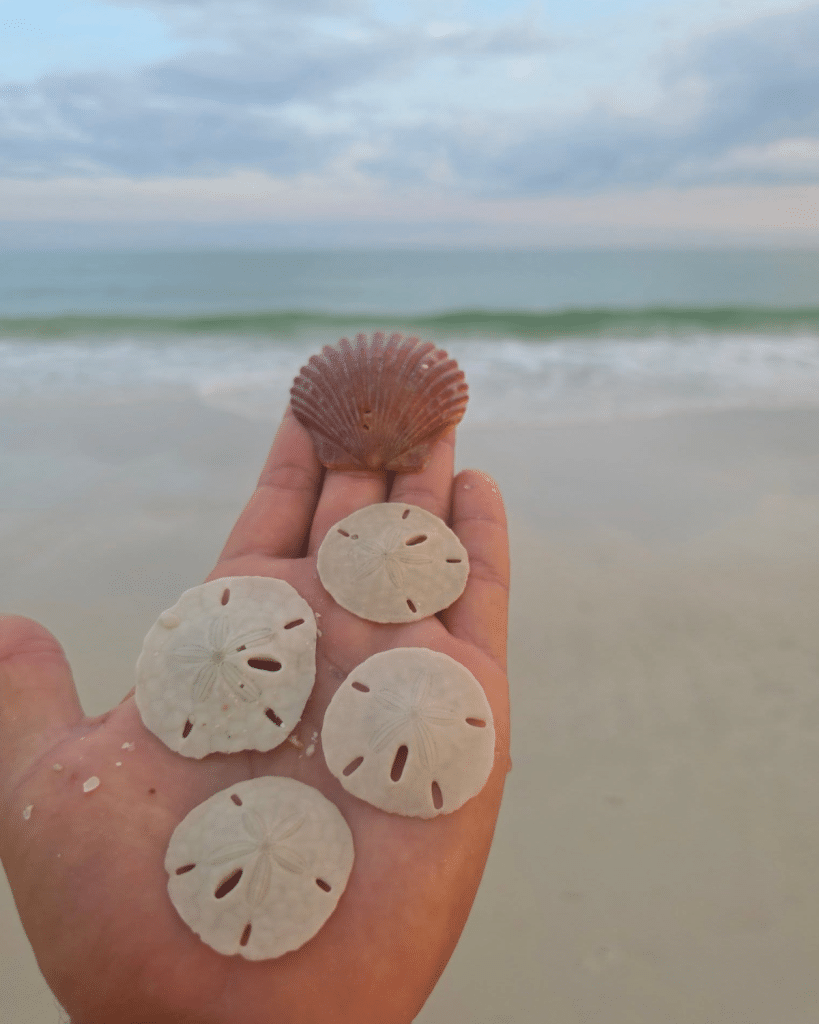
In This Critter Corner: Sand Dollars in Panama City Beach
What Is a Sand Dollar?
Sand dollars belong to a group of marine animals called echinoderms, which means they are close relatives of sea biscuits, sea urchins, and sea stars. All of these animals share a few key traits, including a body built around radial symmetry, a hard internal skeleton called a test, and tiny tube feet used for moving and feeding.
What sets sand dollars apart visually is their flat, round shape, which is built for life just under the surface of sandy seafloor. While a sea urchin is covered in long, sharp spines, a sand dollar’s spines are short, soft, and velvety, which is part of why a living sand dollar looks so different from the bleached white shell most people picture.
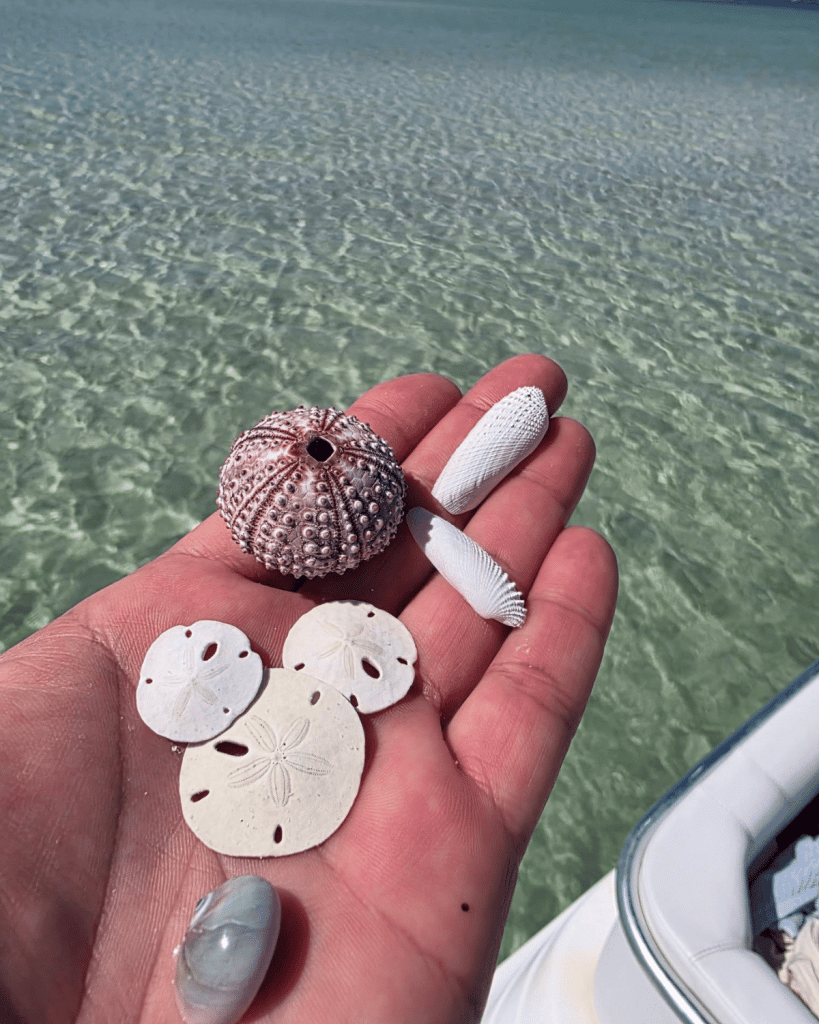
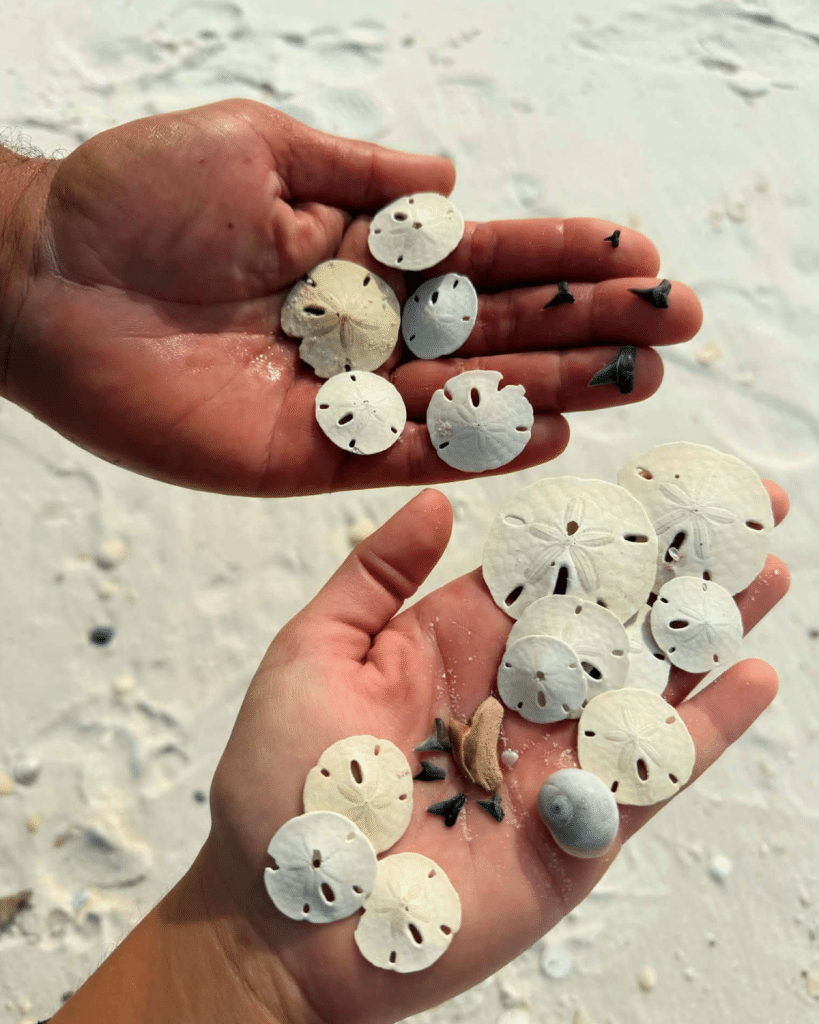
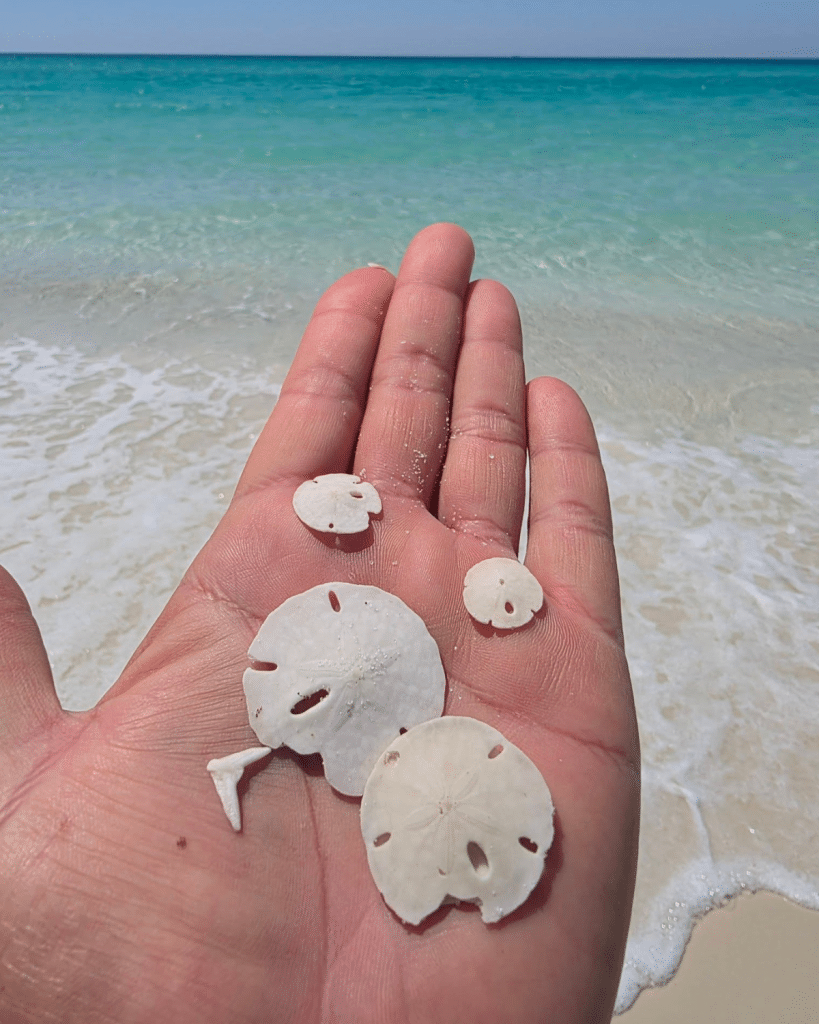
Live Sand Dollars vs Dead Sand Dollars
This is the single most important thing to understand about sand dollars before picking one up off the beach or out of shallow water.
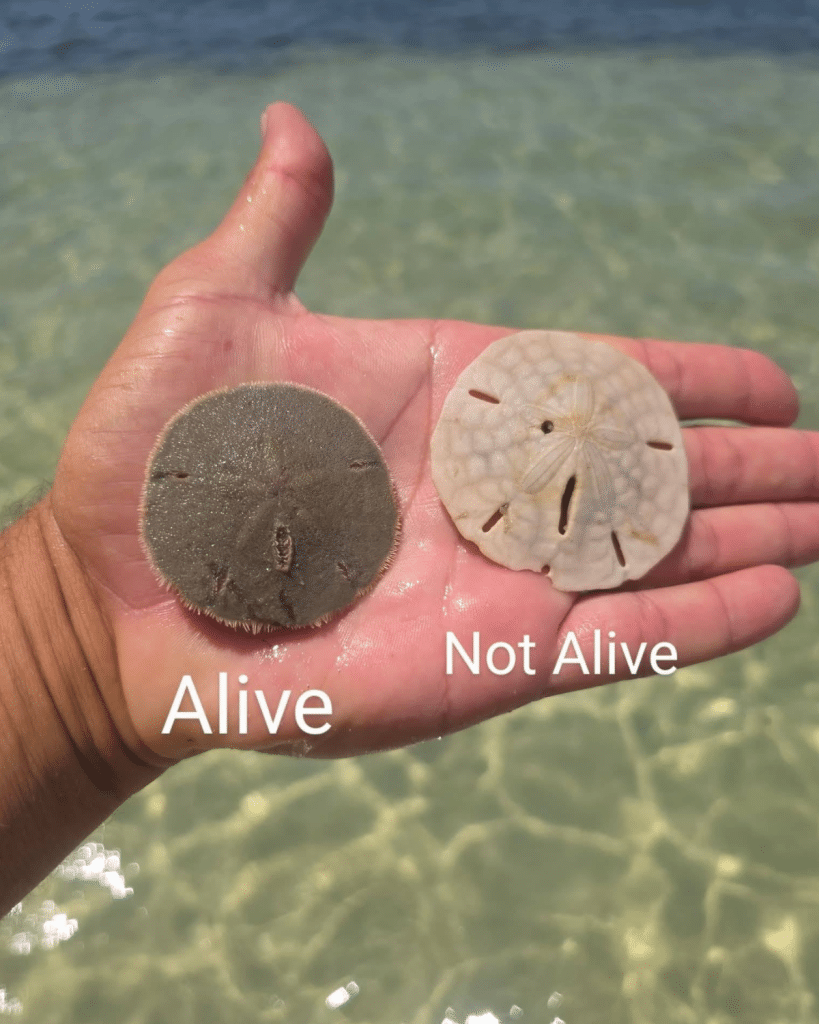
A living sand dollar is:
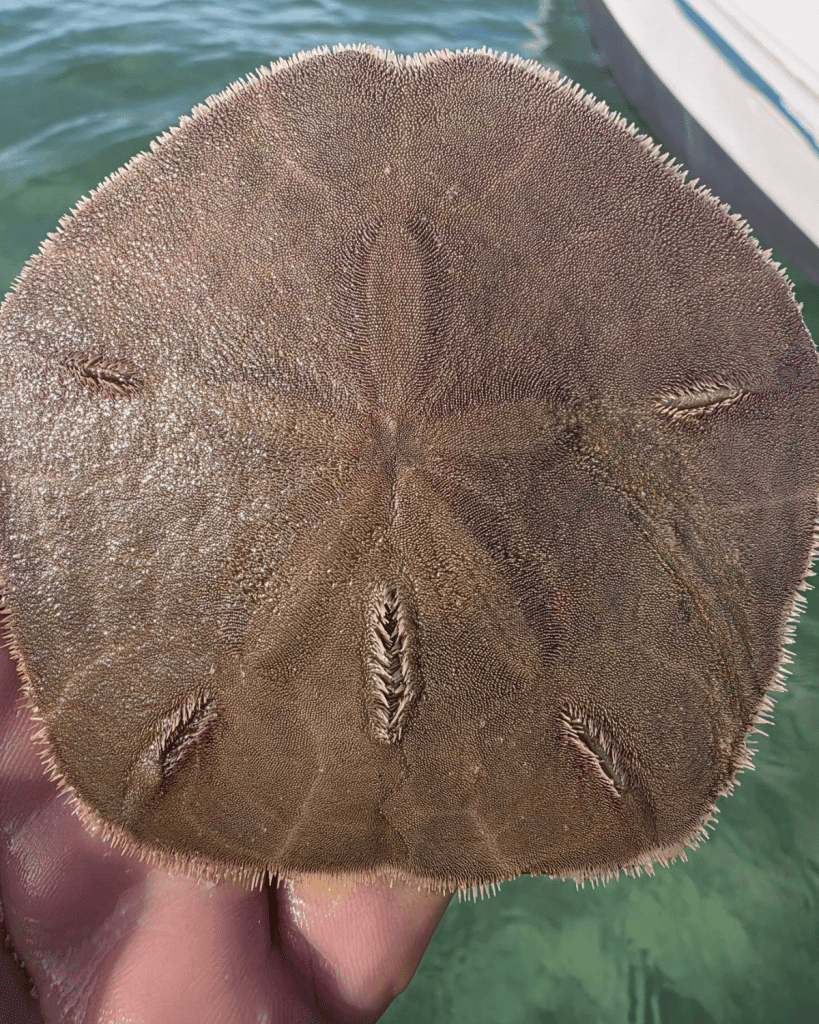
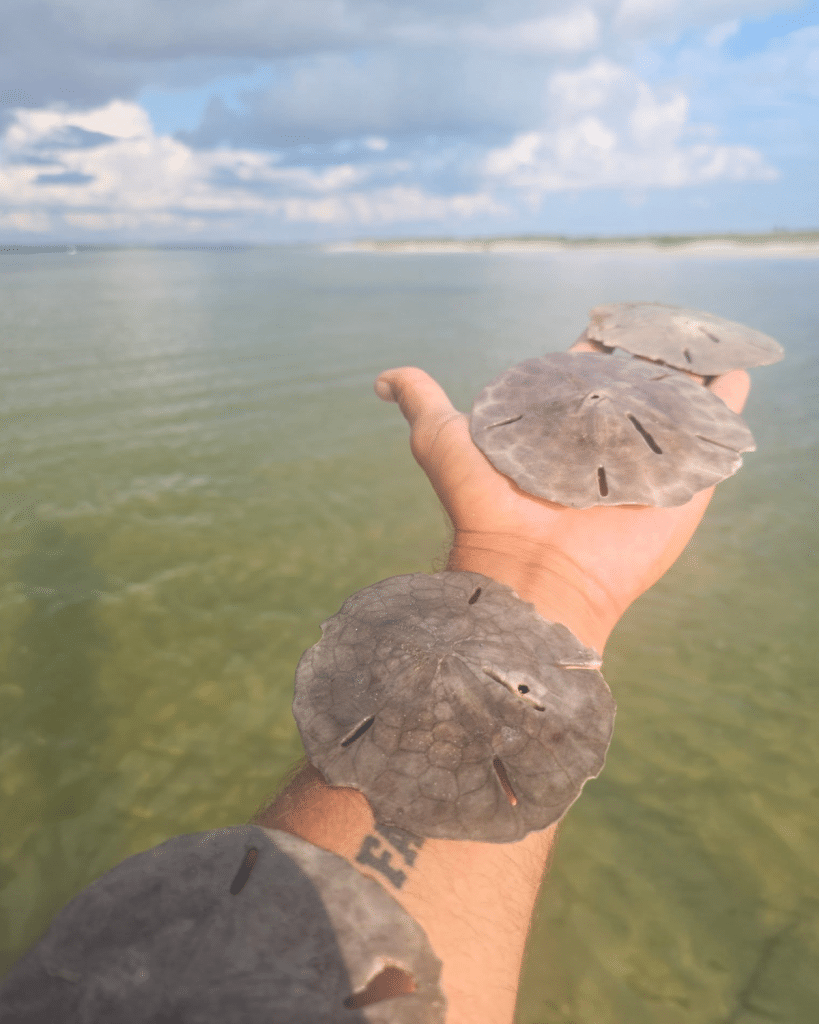
- Dark brown, purplish, or olive green in color
- Covered in a soft, fuzzy layer of tiny spines that may still be moving slightly
- Often found partially buried in sand, with only part of its body visible
- Slightly heavier and denser than a dead, bleached shell
A dead sand dollar (the kind safe to keep) is:
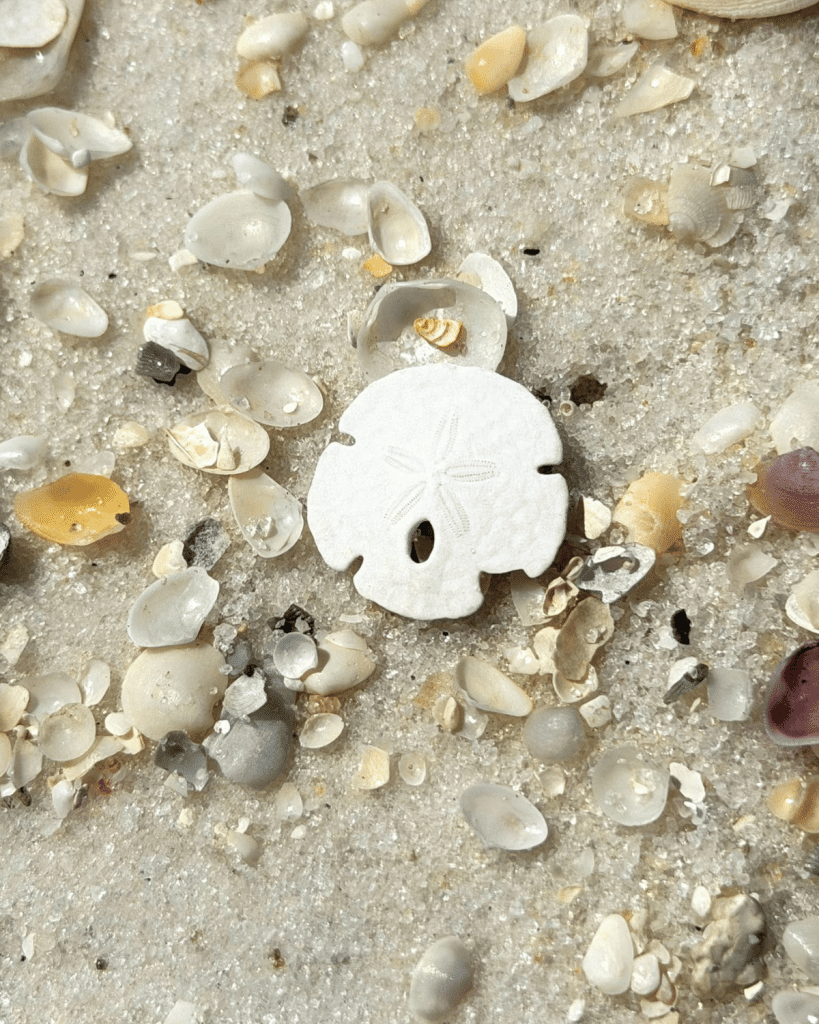
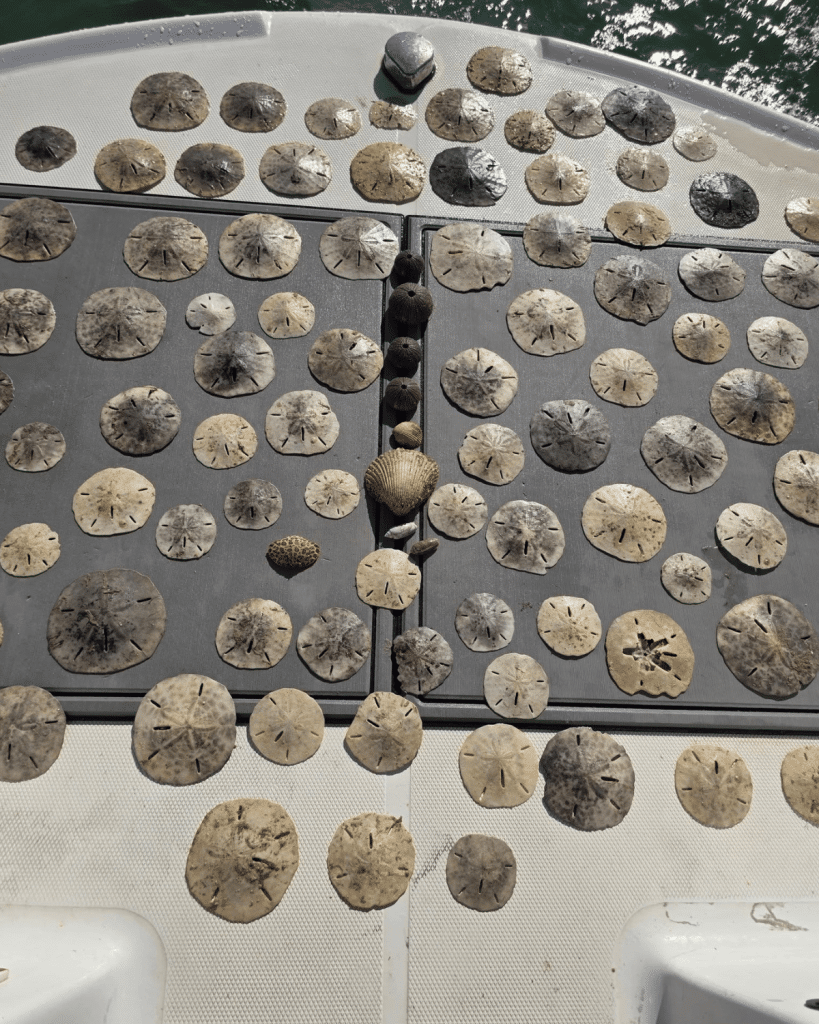
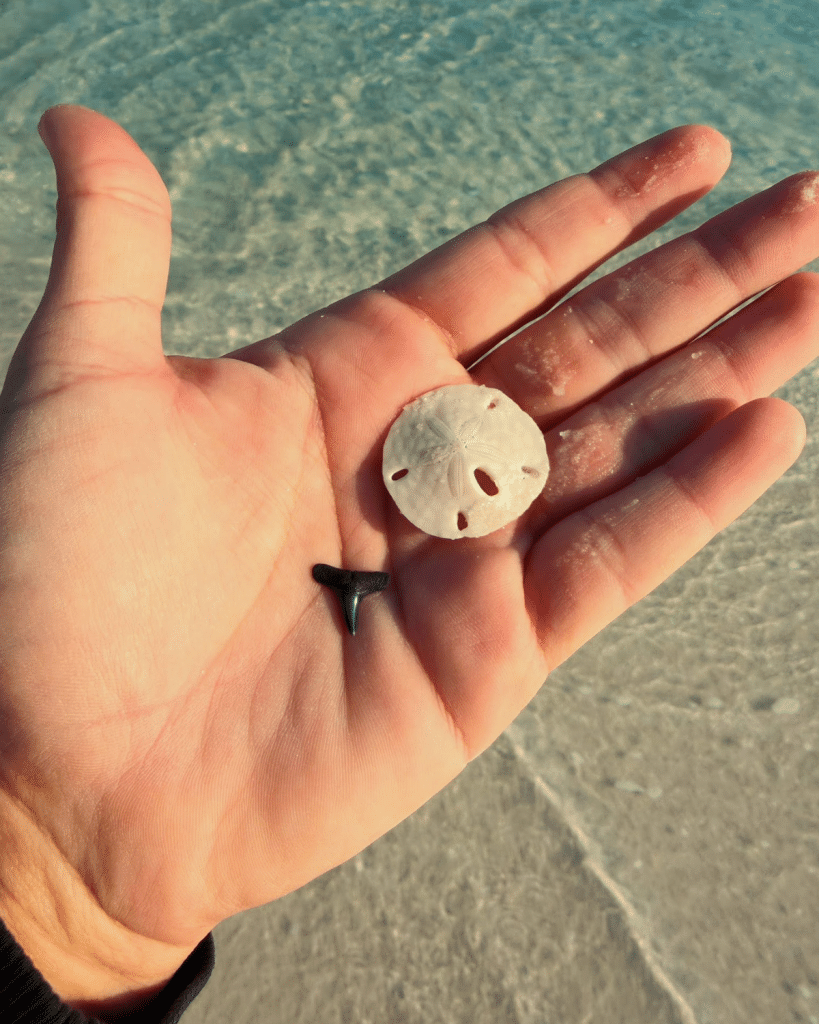
- White or pale gray
- Smooth and hard, with no spines or fuzzy texture remaining
- Dry and lightweight, since it is just the bleached skeletal test
- Usually found loose on the dry sand
If what you are holding still has color and texture to it, it is alive and needs to go back in the water exactly where you found it. Sand dollars cannot flip themselves over, so it is important to place them back down right side up, with the fuzzy, spine-covered side facing down into the sand. A sand dollar left upside down can struggle to bury itself and may die as a result.
Why You Should Only Take Dead Sand Dollars
Sand dollars are a frequent target for souvenir hunters, and it is easy to understand why. They are beautiful, lightweight, and feel like a perfect memory of a beach trip. The problem is that a live sand dollar removed from the water will not survive, and removing too many from one area can affect the local marine population over time.
Collecting only the dead, bleached sand dollars that wash up on dry sand protects the population that keeps the ecosystem balanced. Sand dollars play an important role in the Gulf Coast environment by filtering organic material from the sand and serving as a food source for animals like sea stars and certain fish.
A simple rule covers nearly every situation: if it has any color or texture left, leave it in the water. If it is bleached white and dry, it is safe to take home.
Sand Dollar Species Found in Panama City Beach
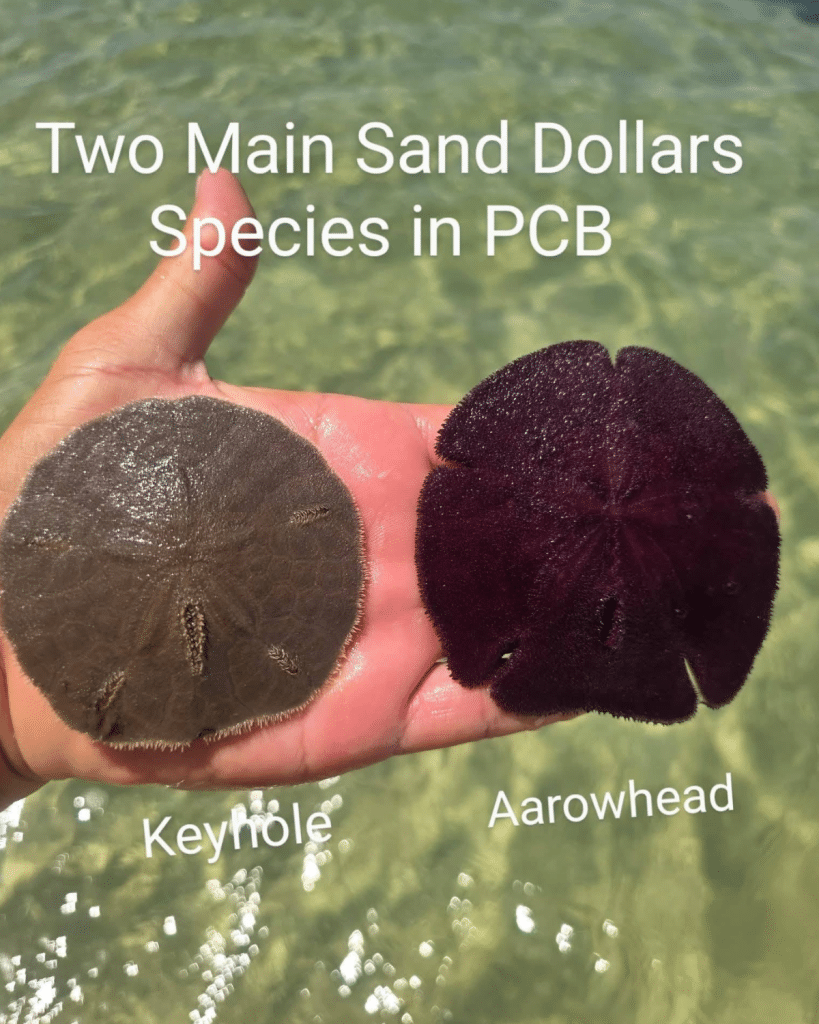
While there are several species of sand dollars along the Gulf Coast, there are two species you are most likely to come across in Panama City Beach.
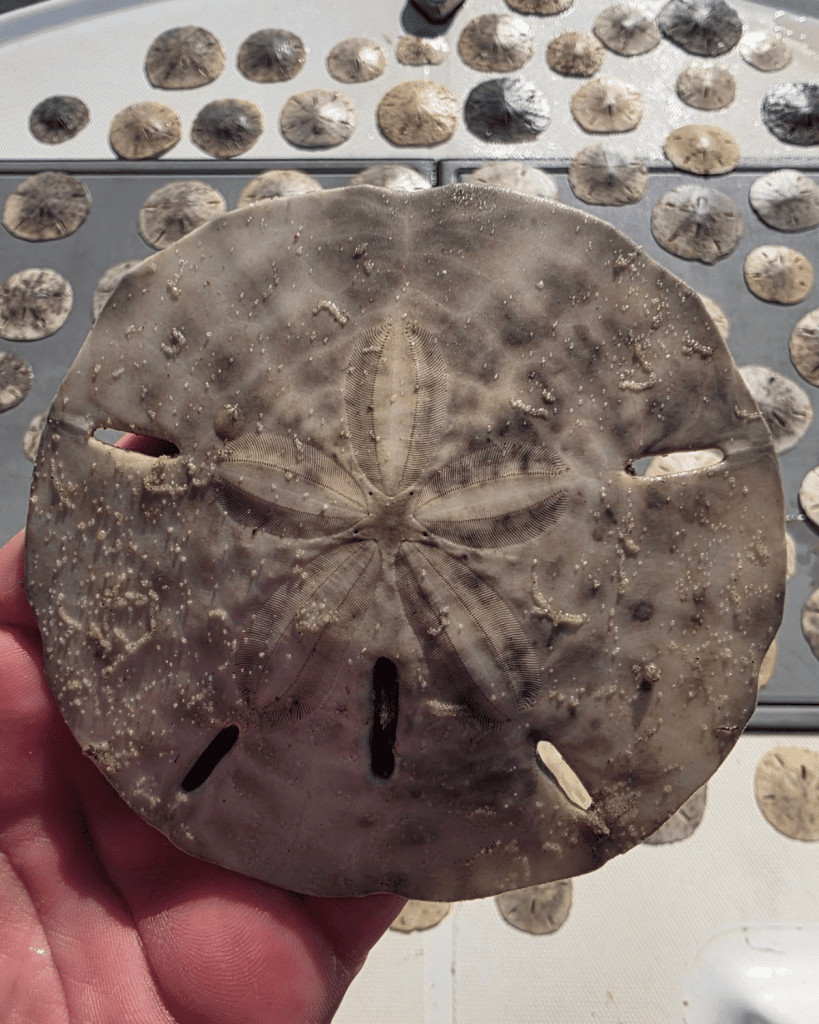
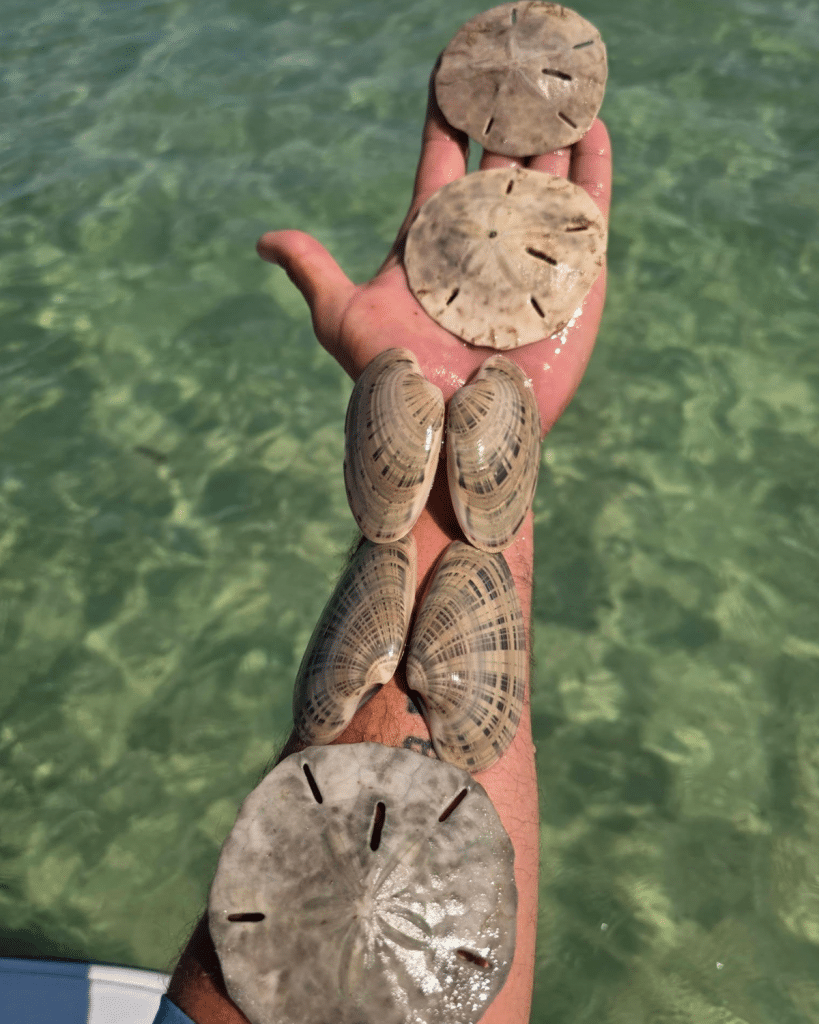
Keyhole sand dollars get their name from the small, slot-like openings, or “keyholes,” that run through their flat, round bodies. These openings help water and sediment move through the sand dollar as it burrows and feeds, and they are one of the easiest features to use for identification once you know what to look for.
Arrowhead sand dollars have a more elongated, oval shape compared to the classic round outline most people picture, with a petal pattern that tapers slightly to resemble an arrowhead. They are commonly found in the same sandy flats as keyhole sand dollars, often within the same beds.
Both species share the same basic biology, including the live versus dead differences covered above, so the same rules apply no matter which one you find.
Where to Find Sand Dollars in Panama City Beach
Sand dollars favor calm, shallow water with a sandy bottom, which makes much of the Panama City Beach coastline a good spot to look.
- Shell Island: The undeveloped shoreline and shallow flats around Shell Island are a reliable spot for both live and dead sand dollars.
- St. Andrews State Park: The protected cove offers calmer water, which is ideal habitat for sand dollars to settle into the sand.
- Low tide along the Gulf-front beaches: Sand dollars that have washed ashore are often easiest to spot right after the tide goes out.
Wherever you search, take a slow look before assuming a sand dollar is dead. A quick glance at color and texture tells you everything you need to know.
Fun Facts About Sand Dollars
- They are basically flat sea urchins: Sand dollars and sea urchins belong to the same class of animals, but sand dollars evolved a flattened body shape for burrowing in sand instead of clinging to rock.
- Five-pointed design: Flip a sand dollar over and you will see a five-petal pattern, a feature shared across the entire echinoderm family, including sea stars.
- They eat by filtering: Sand dollars feed on tiny particles of organic material, plankton, and algae that they filter directly out of the sand and water around them.
- Strength in numbers: Sand dollars often live in large groups called beds, which can include hundreds of individuals in a single area.
- Built-in burying tool: The short spines covering a living sand dollar help it dig into the sand and anchor itself against currents.
- A skeleton: The bleached “shell” most people recognize is actually the sand dollar’s internal skeleton, called a test, left behind after the animal has died and decomposed.
How to Respectfully Collect Sand Dollars
1. Check for Color and Texture First
Before picking anything up, take a close look. Any color, fuzziness, or movement means the sand dollar is alive and should stay in the water.
2. Return Live Sand Dollars Gently
If you do pick up a live sand dollar by mistake, place it back in the water in the same general area, in the same orientation it was resting in.
3. Only Keep What’s Already Dry and Bleached
Dead sand dollars found well above the waterline on dry sand are the safest and most sustainable to collect.
4. Teach Kids the Difference Early
Sand dollar hunting is a great way to introduce kids to marine biology basics, and teaching them to check for life before collecting builds habits that protect the beach for future visitors.
See Sand Dollars and More with Flippin’ Awesome Adventures
Sand dollars, sea turtles, dolphins, and stingrays are just a few of the residents waiting to be discovered in St. Andrews Bay. Led by marine biologist Captain Chris, our trips highlight responsible wildlife viewing and teach guests how to interact with marine life, including sand dollars, in ways that protect the ecosystem for years to come.
Ready to experience Flippin’ Awesome Adventures for yourself? Join Captain Chris, a marine biologist with over 15 years of experience studying marine ecosystems around the world, on a private excursion through St. Andrews Bay. We specialize in hands-on learning and respectful, educational wildlife viewing that turns a simple beach day into a story worth telling.
Book your Flippin’ Awesome Adventure today and discover sand dollars, dolphins, and the wonders of Shell Island for yourself.
Frequently Asked Questions About Sand Dollars in Panama City Beach
Are there sand dollars in Panama City Beach?
Yes, sand dollars in Panama City Beach are common along the shallow, sandy areas of the coastline, including near Shell Island and St. Andrews State Park.
Can I take home sand dollars home from Panama City Beach?
Yes, you can take home sand dollars that are already dead, meaning the bleached, white skeletons found dry on the sand. Live sand dollars, which are dark in color and covered in soft spines, should always be left in the water.
How can you tell if a sand dollar is alive or dead?
A live sand dollar is dark brown, purple, or olive green and covered in a soft, fuzzy layer of short spines, while a dead sand dollar is white, smooth, and lightweight with no spines remaining.
Is it illegal to take live sand dollars in Panama City Beach
Removing live sand dollars is discouraged because they will not survive once taken from the water, and doing so can impact local populations. Only bleached, dead sand dollars found on dry sand should be collected.
Where is the best place to find sand dollars in Panama City Beach?
Shell Island, St. Andrews State Park, and the shallow flats along the Gulf-front beaches are some of the best places to find sand dollars in Panama City Beach, especially right after low tide.
What is the best time to find sand dollars in Panama City Beach?
The best time to find sand dollars in Panama City Beach is early morning before beach traffic picks up, or during low tide when more dry sand is exposed and visible.
What do sand dollars eat?
Sand dollars feed by filtering tiny organic particles, plankton, and algae out of the sand and surrounding water as they move along the seafloor.
What family of animals do sand dollars belong to?
Sand dollars are echinoderms, the same family of animals that includes sea biscuits, sea urchins, and sea stars. They share traits like radial symmetry and a hard internal skeleton called a test.
What are the most common species of sand dollars in Panama City Beach?
The two most common species of sand dollars in Panama City Beach are keyhole sand dollars and arrowhead sand dollars.