
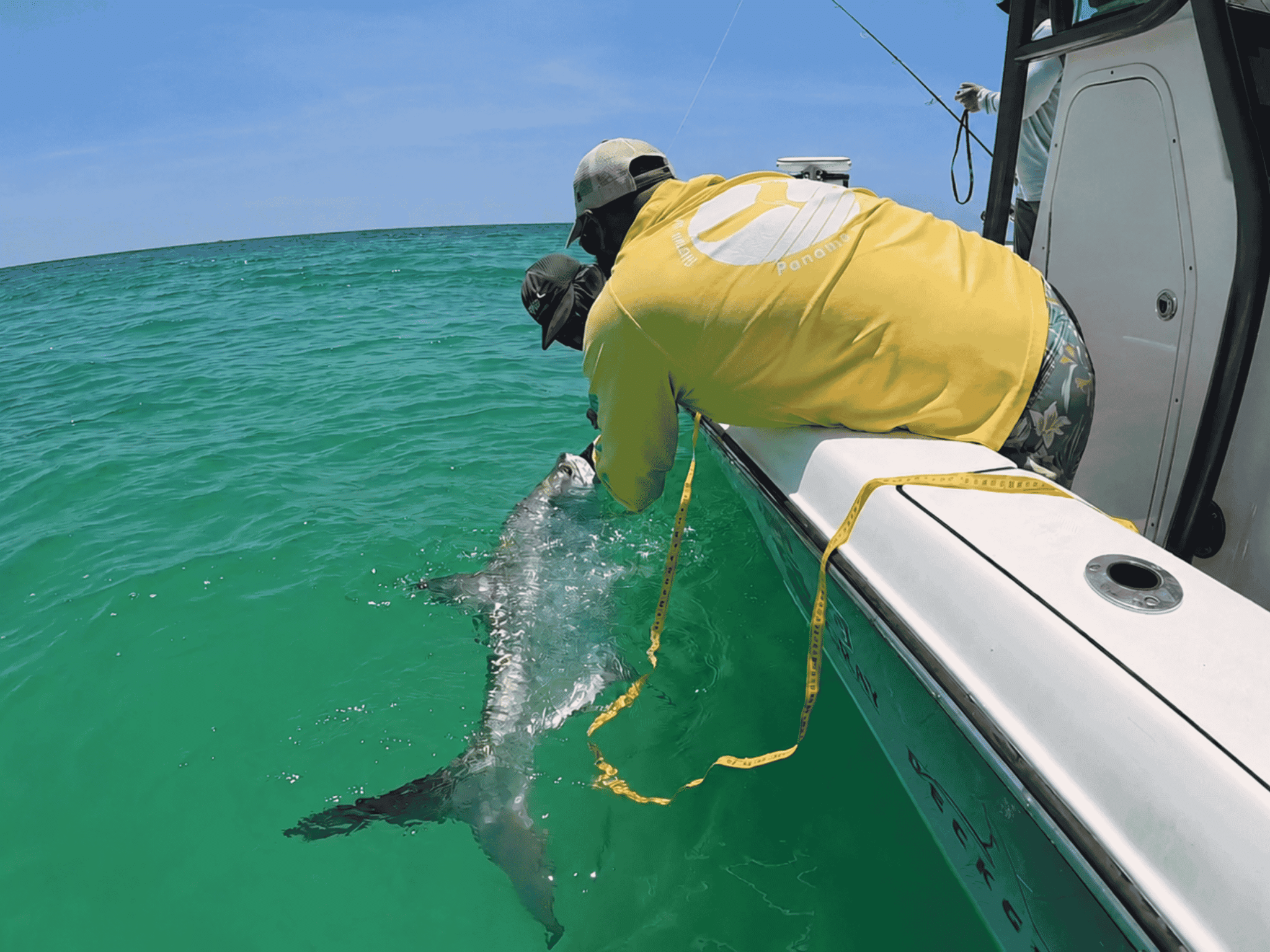
Most days, Capt. Chris is out on the water leading dolphin and Shell Island excursions with Flippin’ Awesome Adventures. But every so often, his marine biology background takes him to a different kind of trip on the Gulf, one focused entirely on research. Recently, Capt. Chris took a day off from running tours to join the crew of the Sea Screamer and take part in the Silver Scale Tarpon Tournament, brought on specifically as the marine biologist on board responsible for tarpon tagging and data collection.
For Capt. Chris, days like this aren’t a departure from his work as a marine biologist, they’re an extension of it. Running dolphin excursions through St. Andrews Bay keeps him connected to the day-to-day life of the bay, while opportunities like the Silver Scale Tournament let him step into a more research-focused role, working directly with anglers and fellow captains to gather data that benefits tarpon conservation across the region. Both roles draw on the same underlying knowledge and the same genuine curiosity about how marine life behaves in the wild.
Tarpon Tagging in Panama City Beach
A Day on the Water, A Different Role
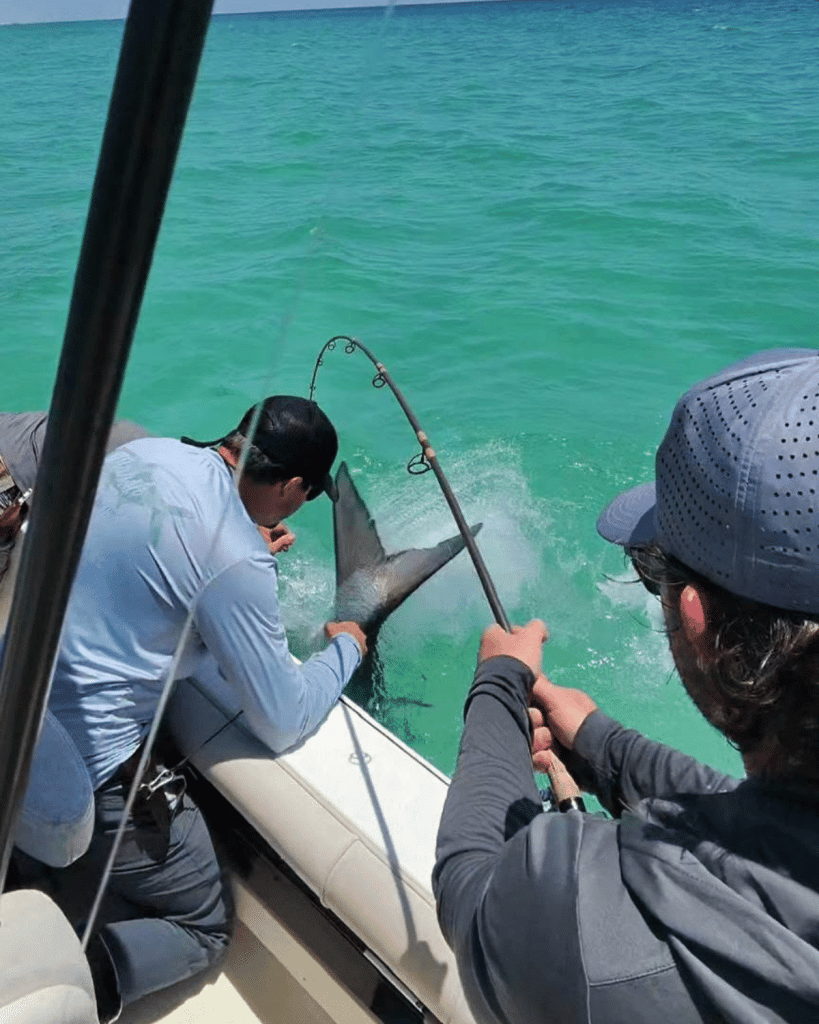
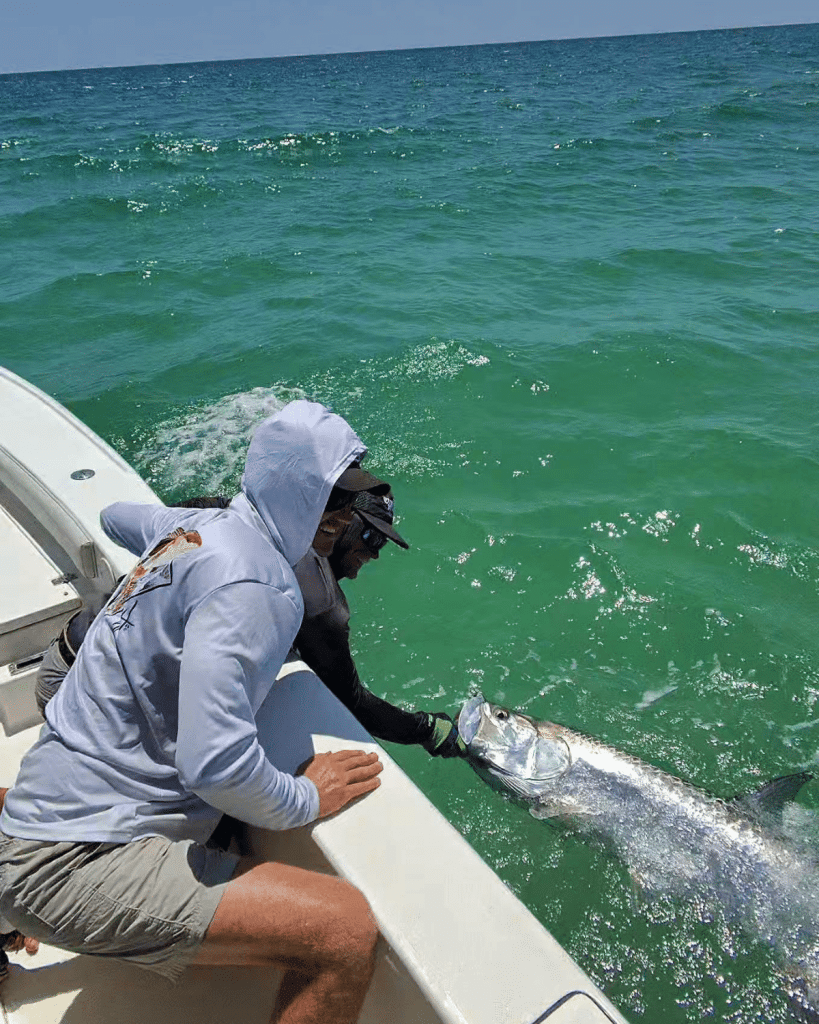
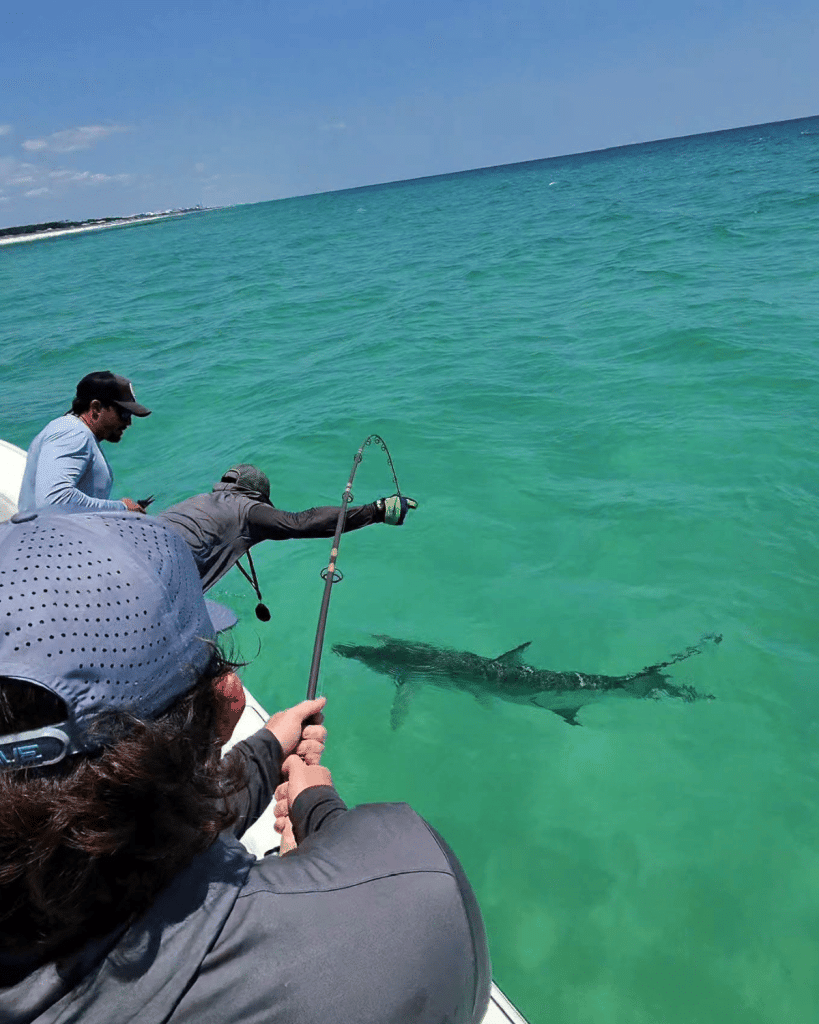
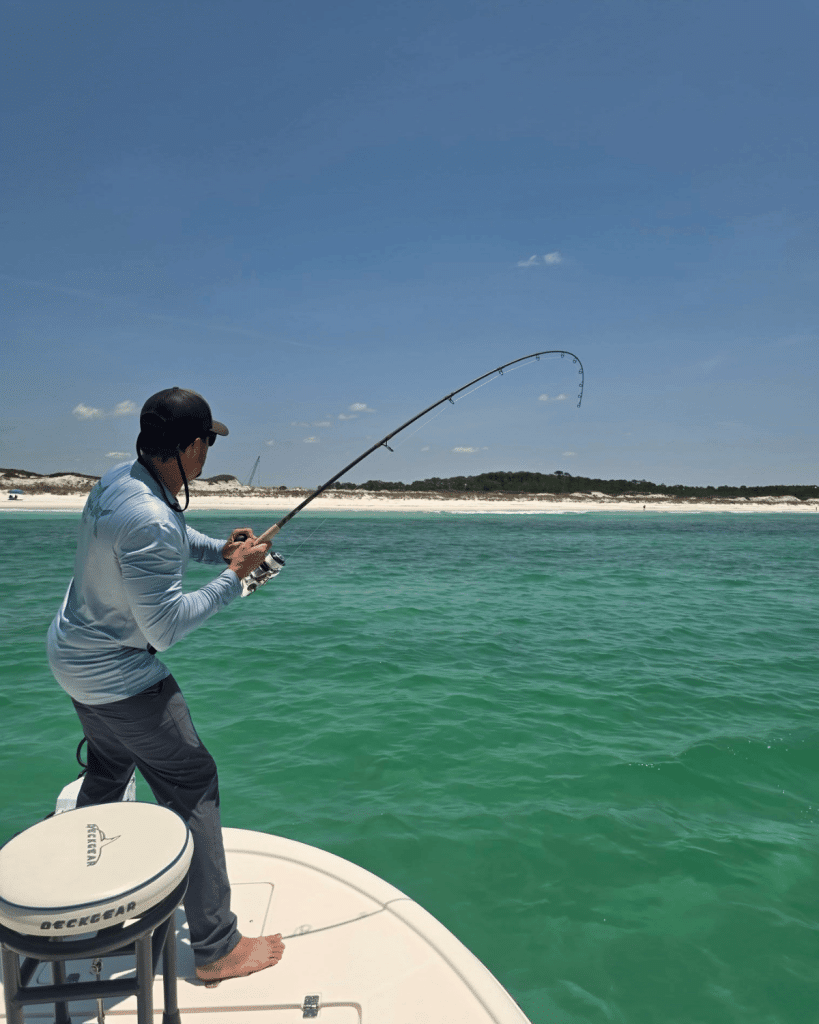
For this trip, Capt. Chris was there in a purely scientific capacity, serving as the onboard marine biologist responsible for measuring, tagging, and collecting data on every tarpon caught and released throughout the event. Captain Greg Gladden of Complete Inshore Charters worked the rods, putting his fishing skills to the test, and ultimately took first place in the tournament.
Over the course of the day, working through a range of sea conditions, Capt. Chris tagged six of the eleven tarpon caught during the tournament. Each fish that was caught went through the same process: a quick, careful measurement, the placement of a tag, and the recording of data before the tarpon was released back into the water.
What Tarpon Tagging Actually Looks Like
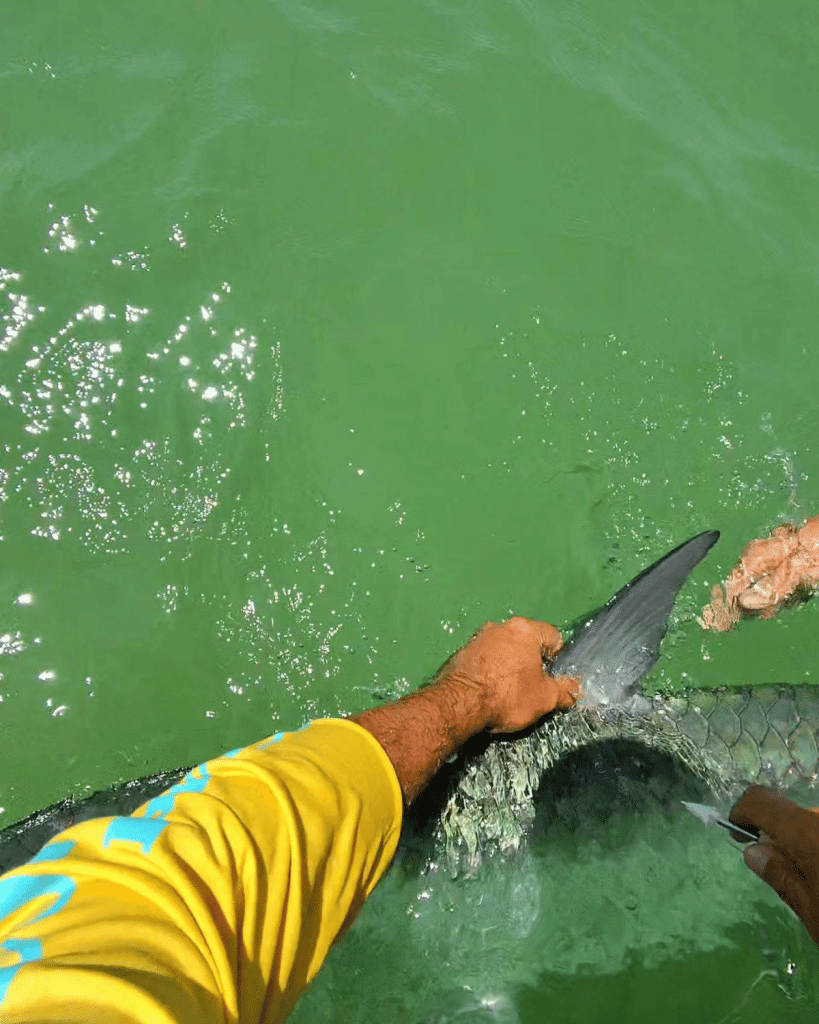
Tarpon tagging is a fast, precise process designed to minimize stress on the fish while still collecting useful data. Once a tarpon is brought alongside the boat, the goal is to work as efficiently as possible, since tarpon are powerful, high-energy fish that handle time out of the water far better when that time is kept to a minimum.
The general process typically includes the following steps:
- Quick assessment: Before anything else, Capt. Chris evaluates the fish’s condition and how it was caught, since this affects handling decisions in the moments that follow.
- Measurement: The tarpon’s length is recorded, providing a data point that can later be compared to measurements taken if the same fish is ever recaptured.
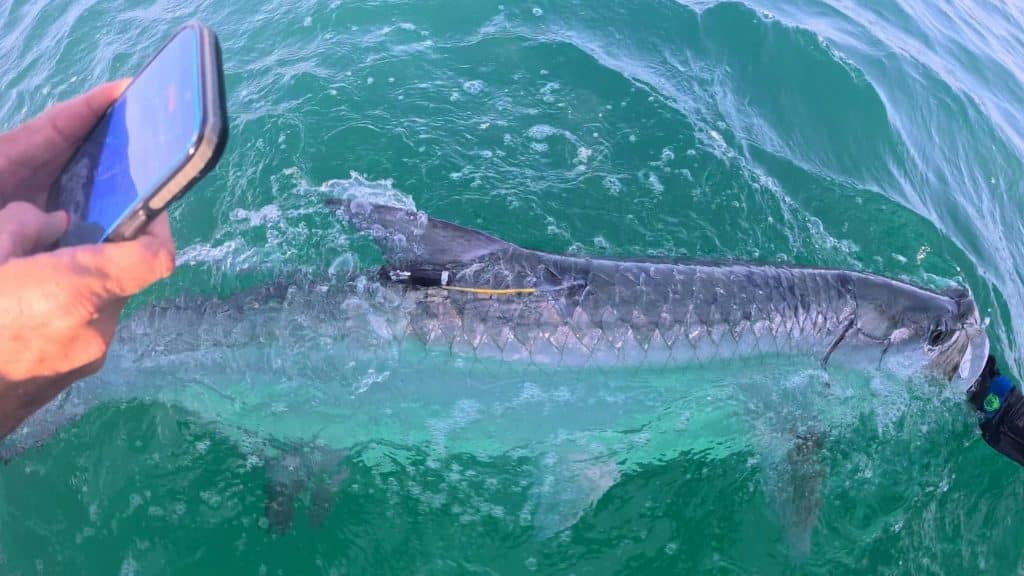
- Tag placement: A small, uniquely numbered tag is inserted near the fish’s dorsal area, designed to stay in place through normal swimming and feeding without harming the animal.
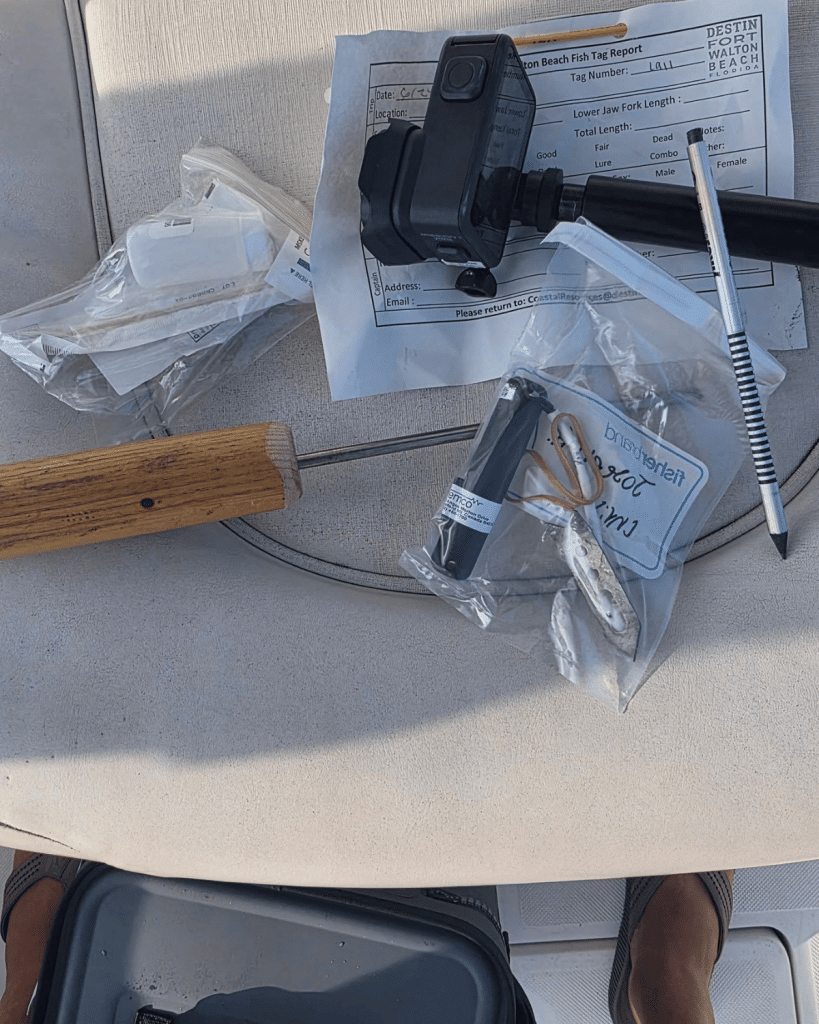
- Data logging: Details such as location, water conditions, and the tag’s identification number are recorded immediately, creating a record tied to that specific tarpon.
- Release: The tarpon is returned to the water as quickly as possible, ideally swimming away strongly, which is one of the best signs that the process caused minimal stress.
Why Tagging Tarpon Matters
Tagging is one of the most valuable tools researchers have for understanding how tarpon move, grow, and behave over time. Every tag placed on a fish carries a unique identifier, and if that same fish is ever caught again, whether days, months, or years later, the data collected at that second encounter can be compared against the original tagging information.
This process helps researchers piece together patterns that would be nearly impossible to study any other way, including:
- Migration routes and how far individual tarpon travel over time
- Growth rates between tagging and recapture
- General health and condition of tarpon populations in the Gulf
- How tarpon respond to different sea conditions and handling during catch and release
None of this research would be possible without anglers and charter captains willing to participate in tournaments structured around catch, tag, and release rather than catch and keep.
Tarpon present a particularly interesting subject for tarpon tagging research in Panama City Beach and along the broader Gulf Coast. They are a long-lived species, with some individuals reaching ages well beyond what most anglers would expect from a game fish, and they are known for traveling significant distances along the Gulf and Atlantic coastlines throughout the year. Because tarpon are typically released rather than harvested, much of what scientists know about their movement and life cycle comes directly from tagging programs like the one Capt. Chris took part in during the Silver Scale Tournament. Every tag placed adds another small piece to a much larger picture of how this species uses Gulf Coast waters across seasons and years.
Anglers, Captains, and Researchers Working Together
Events like the Silver Scale Tarpon Tournament highlight something Capt. Chris is passionate about: the partnership between anglers, charter captains, and researchers. Tournaments built around tagging and data collection give fishing crews the chance to showcase real skill on the water while directly contributing to a better scientific understanding of tarpon populations.
It’s a model that benefits everyone involved. Anglers and captains get to compete and demonstrate their abilities, researchers gain valuable, real-world data that would be difficult to collect otherwise, and the tarpon themselves are released back into the Gulf to continue contributing to the population.
Capt. Chris described the day as a chance to get back to tagging and do something he genuinely loves, working alongside other fishing professionals who share an interest in both the sport and the science behind it.
This kind of collaboration is becoming more common across the Gulf Coast, as more tournaments and charter operations recognize the long-term value of catch, tag, and release formats. Rather than competing for the largest fish to bring to the dock, anglers in these events compete based on skill, technique, and the number of fish successfully caught, tagged, and released, often within strict time windows and handling guidelines designed to protect the fish. For researchers, having access to skilled anglers and experienced captains during a tournament setting means a much larger amount of data can be collected in a single day than would typically be possible through standard research trips alone.
Why This Kind of Research Matters for the Future of Tarpon Fishing
Tarpon are a catch and release species across most of Florida, prized by anglers but not typically harvested for food. That makes long-term population data difficult to collect through traditional fishery monitoring methods, which often rely heavily on data gathered when fish are brought to the dock. Tagging programs fill that gap, giving researchers a way to track a species that otherwise leaves very little trace once it swims away from a boat.
The information gathered during tournaments like the Silver Scale event feeds into a much larger body of research used by marine biologists and fishery managers along the Gulf Coast. Understanding tarpon migration patterns, for example, can help inform decisions about habitat protection in the areas tarpon rely on most throughout the year. Growth rate data collected through repeated tagging and recapture can also help researchers estimate the age structure of the broader population, offering insight into whether a fishery is healthy or facing pressure.
For Capt. Chris, contributing to this kind of research is part of a broader commitment to understanding and protecting the same waters he spends his career working in. The dolphins, sea turtles, and stingrays guests see on a Flippin’ Awesome Adventures trip share the same Gulf Coast ecosystem that tarpon depend on, and healthy, well-understood fish populations are part of what keeps that entire system functioning.
Want to Chase Tarpon Yourself?
If reading about the Silver Scale Tournament has you wanting to chase a tarpon of your own, Captain Greg Gladden and the team at Complete Inshore Charters can make that happen. Capt. Greg’s tournament-winning performance speaks for itself, and his charter offers the kind of fishing experience built around real skill on the water.
Tarpon fishing has a reputation for good reason. Known as the silver king among anglers, tarpon are powerful, acrobatic fish capable of putting up a serious fight once hooked, often leaping and rolling at the surface in a way that makes them one of the most exciting catches on the Gulf Coast. Landing one, even briefly before release, is the kind of experience that tends to stick with anglers for years.
More Than a Dolphin Tour
Days like this are part of what sets Capt. Chris apart as a guide. His 15 years of marine biology experience carries directly into the work he does on the water, whether he is narrating a dolphin sighting for guests on a Flippin’ Awesome Adventures trip or tagging tarpon for ongoing Gulf research.
That same depth of knowledge and hands-on experience is what guests get every time they book a private excursion with us. Whether you’re interested in dolphins, Shell Island, or the smaller critters featured throughout our Critter Corner series, you’re learning from someone who studies these ecosystems far beyond what a typical tour guide would know.
It’s easy to see a dolphin tour as just another vacation activity, but for Capt. Chris, every trip is connected to the same broader curiosity about marine life that takes him out tagging tarpon on his days off. Guests benefit from that curiosity directly, getting access to insight and field knowledge that comes from someone actively engaged in marine science, not someone simply reciting facts from a script.
Book your Flippin’ Awesome Adventure today and experience the Gulf Coast with a marine biologist who lives this work, both on and off the boat.
Frequently Asked Questions About Tarpon Tagging in Panama City Beach
What is tarpon tagging?
Tarpon tagging is a research process in which a marine biologist measures a caught tarpon, places a small uniquely numbered tag near the dorsal area, and records data such as location and water conditions before the fish is released. If the same fish is caught again in the future, the tag allows researchers to compare data and track the tarpon’s growth, movement, and behavior over time.
Why is tarpon tagging important?
Tarpon tagging is one of the few ways researchers can study tarpon long-term since they are a catch and release species and rarely harvested. The data collected helps scientists understand migration routes, growth rates, and overall population health along the Gulf Coast.
Is tarpon tagging done in Panama City Beach?
Yes, tarpon tagging takes place in and around Panama City Beach waters. Capt. Chris participated in the Silver Scale Tarpon Tournament as the onboard marine biologist, tagging six of the eleven tarpon caught during the event in the waters off the Gulf Coast.
Does tarpon tagging hurt the fish?
Tarpon tagging is designed to cause minimal stress or harm. The process is kept as brief as possible, the tag is small and inserted near the dorsal area, and the fish is returned to the water quickly, ideally swimming away strongly within moments of being tagged.
Where can I go tarpon fishing in Panama City Beach?
For tarpon fishing in Panama City Beach, Captain Greg Gladden of Complete Inshore Charters is an excellent choice. Capt. Greg demonstrated his skills during the Silver Scale Tarpon Tournament, taking first place on the same day Capt. Chris handled the tagging.
What is the Silver Scale Tarpon Tournament?
The Silver Scale Tarpon Tournament is a catch, tag, and release fishing tournament in which anglers, captains, and researchers collaborate on the water. Rather than keeping fish, participants tag and release tarpon while collecting scientific data, making it a model for conservation-focused competitive fishing.