
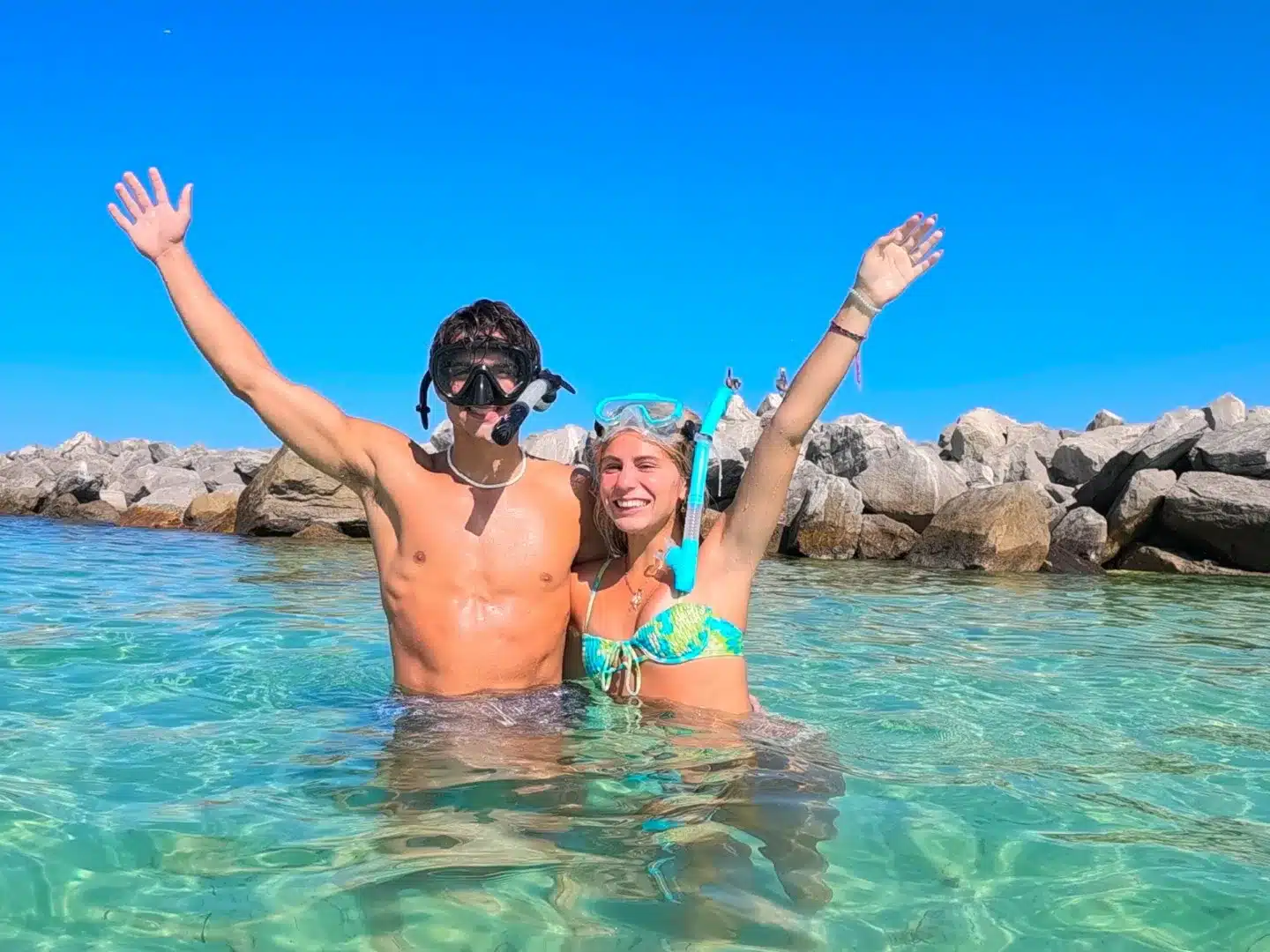
Eco tours in Panama City Beach let you explore marine life responsibly with a certified marine biologist as your guide.
Imagine floating in crystal-clear Gulf waters while tropical fish dart beneath you, a southern stingray glides across the sandy bottom, and seagrass meadows stretch out like an underwater garden. That is a typical Shell Island snorkeling session, and it happens just minutes from Panama City Beach.
Most visitors come to Shell Island for the pristine white sand beaches and world-class shelling. But just below the surface, an entire underwater world is waiting to be explored. From the rock jetties at St. Andrews Pass (called one of the best snorkeling spots in West Florida) to hidden seagrass coves on the island’s southern tip, Shell Island delivers marine life encounters that most people only expect from nature documentaries.
Captain Chris, a certified marine biologist with 20+ years of experience on these waters, has been guiding snorkelers to Shell Island’s best underwater spots since before most tour companies in the area even offered snorkeling as part of their trips. Here is everything you need to know before you get in the water.
In This Guide
- What Makes Shell Island Snorkeling So Special
- 4 Best Spots to Snorkel at Shell Island
- Marine Life You Will See in the Water
- Best Time of Year to Snorkel Shell Island
- What to Bring on Your Snorkeling Trip
- Safety Tips for Snorkeling Shell Island
- Why Flippin’ Awesome Adventures Is Your Best Choice
- Book Your Shell Island Snorkeling Adventure
- Frequently Asked Questions
What Makes Shell Island Snorkeling So Special
Shell Island is a 7-mile uninhabited barrier island with no roads, no buildings, and no beach chair rentals. It is only accessible by boat, which means the underwater environment stays remarkably healthy compared to developed shorelines. The surrounding waters are part of the St. Andrews Aquatic Preserve, a protected area covering over 10,530 acres of seagrass habitat.
Three species of seagrass thrive in the surrounding waters: Cuban shoal grass, manatee grass, and turtle grass. These underwater meadows serve as nurseries for juvenile fish, feeding grounds for sea turtles, and shelter for everything from shrimp and scallops to stingrays and redfish. When you snorkel Shell Island, you are not just swimming over sand. You are exploring one of the most biologically productive marine ecosystems on the Florida Gulf Coast.
The water clarity during calm summer days often rivals spots much farther south, and the mix of sandy shallows, rocky structure, and seagrass beds means every Shell Island snorkeling session feels different depending on where Captain Chris takes you.
The 4 Best Spots to Snorkel at Shell Island
Not all snorkeling at Shell Island is the same. The island stretches 7 miles, and the marine life, water depth, and bottom structure change dramatically depending on where you drop in. Here are the four spots Captain Chris recommends most.
1. The East Jetty
The East Jetty is, according to Florida State Parks, one of the best snorkeling spots in West Florida. The rocks create an artificial reef structure that attracts an incredible concentration of marine life. Expect to see angelfish, sheepshead, redfish, and the occasional octopus tucked into the crevices. Coral and sponge formations grow on the rocks, giving the whole scene an almost tropical reef feel.
The East Jetty is best for confident swimmers comfortable with mild currents. Captain Chris always checks the tide and current conditions before bringing guests here, and he knows exactly when and where the conditions will be calmest.
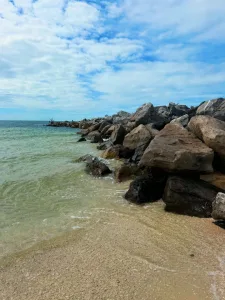
Snorkeling the East Jetty at Shell Island, one of the best snorkeling spots in West Florida.
2. The Kiddie Pool Jetties
If you have younger snorkelers in the group or first-timers who want to ease into it, the Kiddie Pool Jetties are the perfect starting point. The natural rock formations create calm, sheltered pools where the water is shallower and more protected. Kids love it because they can see fish and crabs up close without worrying about current or depth.
Do not let the name fool you. Adults enjoy this spot just as much. The rocks still attract the same variety of marine life found at the East Jetty, just in a more relaxed setting. This is also a great spot for Captain Chris to run Critter Corner, the hands-on marine biology portion of every Flippin’ Awesome tour.
3. Seagrass Beds Around Spanish Ante
The seagrass beds around Spanish Ante are where the snorkeling gets truly special. Three species of seagrass thrive in this area (Cuban shoal grass, manatee grass, and turtle grass), and together they support one of the richest concentrations of marine life around Shell Island. Southern stingrays cruise the sandy patches between grass beds, juvenile fish school in the safety of the blades, and sea turtles sometimes visit to graze.
This area is quieter and less visited than the jetties, which means the marine life is often less skittish. Captain Chris considers the seagrass beds around Spanish Ante one of Shell Island’s best kept underwater secrets.
Snorkeling the seagrass beds around Shell Island, home to stingrays, juvenile fish, sea turtles, and more.
4. The Northern Sand Bars
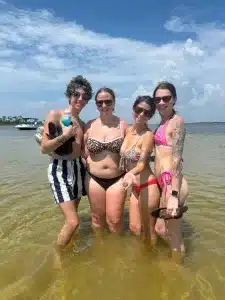
On the bay side of Shell Island, the northern sand bars are perfect for wading, exploring, and easy snorkeling. The water is calm, shallow (often waist-deep at low tide), and protected from Gulf swells. Sand bars emerge during low tide, creating natural pools where kids can explore safely.
The sandy bottom might look quiet at first glance, but look closer. Hermit crabs scurry between shells, sand dollars dot the bottom, and juvenile fish dart through the shallows. It is a great spot for finding live shells and watching hermit crabs negotiate real estate deals (they are surprisingly aggressive negotiators).
Marine Life You Will See in the Water
Shell Island snorkeling puts you face-to-face with an impressive variety of Gulf Coast marine life. Here is what to watch for beneath the surface:
- Southern Stingrays and Spotted Eagle Rays are some of the most exciting encounters. They glide across sandy bottoms and are commonly spotted in the seagrass beds around Spanish Ante and the northern sand bars.
- Tropical and Game Fish including angelfish, sheepshead, redfish, mullet, and trout are found around the jetties and seagrass beds.
- Sea Turtles (loggerhead and green) visit the seagrass beds to feed. Sightings are not guaranteed, but they are an exciting possibility, especially in warmer months.
- Octopus occasionally appear tucked into jetty rock crevices. Spotting one is rare but flippin’ awesome when it happens.
- Juvenile Fish school in the seagrass nurseries by the thousands, creating shimmering clouds of movement.
- Crabs, Shrimp, and Scallops hide in the grass and along the bottom.
- Sand Dollars and Sea Stars are found on sandy bottoms, especially around the northern sand bars.
- Coral and Sponge Formations grow on the jetty rocks, adding color and texture to the underwater landscape.
A note about dolphins: You will very likely see bottlenose dolphins during your trip to Shell Island. They are spotted on nearly every tour. However, dolphins are observed from the boat, not while snorkeling. Federal law protects wild dolphins, and responsible observation means enjoying them from a respectful distance. Captain Chris, as a marine biologist, ensures every dolphin encounter follows NOAA marine life viewing guidelines.
Best Time of Year to Snorkel Shell Island
Shell Island snorkeling is available year-round, but conditions vary by season:
- Peak Season (May through September): Water temperatures climb from 75°F into the high 80s and can reach 90°F in midsummer. Visibility is at its best during calm periods. This is prime time for the fullest variety of marine life.
- Spring and Fall (March through April, October through November): Water temperatures range from 68°F to 78°F. Comfortable for most snorkelers without a wetsuit. Fewer crowds mean more relaxed conditions on the water.
- Winter (December through February): Snorkeling is still possible, but water temperatures drop into the 60s. A wetsuit or rash guard is recommended. Marine life is less active, but the trade-off is having the island practically to yourself.
The best single tip for visibility: go on a calm day. Wind and wave action stir up sediment, reducing clarity. Captain Chris monitors conditions daily and will always pick the best available snorkeling spot based on that day’s wind, tide, and water clarity.
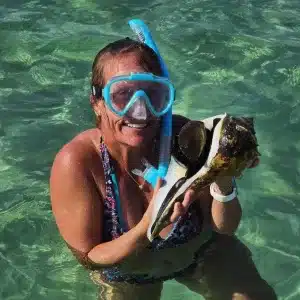
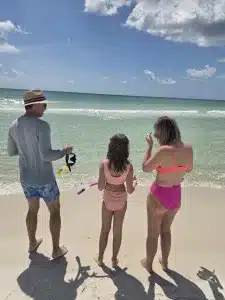
Guests find incredible shells while snorkeling the waters around Shell Island.
What to Bring on Your Snorkeling Trip
Every Flippin’ Awesome Adventures tour includes masks, snorkels, and life jackets, so the essential gear is covered. Here is what to pack from your end:
- Sunscreen (reef-safe formulas are recommended to protect the marine life you are there to enjoy)
- Towel and swimwear
- Camera or waterproof phone case (you will want photos)
- Water and snacks (there are no shops on Shell Island)
- Water shoes (optional but helpful for the rocky jetty areas)
- Rash guard (optional, great for sun protection and cooler water)
Alcohol is welcome on board with a valid ID. Soft coolers and bags are encouraged. Captain Chris provides ice and cooler space on the boat.
Safety Tips for Snorkeling Shell Island
No snorkeling experience is necessary on a Flippin’ Awesome tour. Captain Chris and the crew provide guidance for every skill level. That said, a few tips will make your experience even better:
- Do the stingray shuffle. When walking in sandy shallows, shuffle your feet along the bottom instead of stepping. This gives stingrays a heads-up to move out of the way. (Read more in our stingray guide.)
- Watch for jellyfish. They are part of the ecosystem. Captain Chris checks conditions and will let you know if any are in the area.
- Never touch or harass marine life. Look, observe, and enjoy. Leave everything as you found it.
- Life jackets are available for all ages. No judgment. They make snorkeling more relaxing because you can float without effort and focus on what is below you.
- Trust the captain. Captain Chris picks the snorkeling spot each day based on real-time conditions: wind, tide, current, and visibility. If he says the jetties are not ideal today, it is because he knows a better spot for you.
Why Flippin’ Awesome Adventures Is Your Best Choice
Plenty of boats can take you to Shell Island. The difference is what happens when you get there.
Captain Chris is a certified marine biologist and scuba instructor with over 1,000 locally logged dives and 20+ years on these waters. He does not just drop you off at the beach and wait on the boat. Every tour includes hands-on marine education, guided snorkeling to the best spots for that day’s conditions, and the kind of wildlife knowledge that turns a good trip into an unforgettable one.
Every Flippin’ Awesome tour is private. That means your group only, no strangers, no crowded party boat energy. And if you are traveling with a larger crew, the large group boat fits up to 12 guests on a single vessel, so your whole family or friend group stays together instead of splitting across multiple boats.
With over 600 five-star reviews (and not a single rating below 5 stars), guests consistently say the same thing: the marine biology expertise is what sets this tour apart from everything else in Panama City Beach.
As featured on Good Morning America, Flippin’ Awesome Adventures is the real deal.
Book Your Shell Island Snorkeling Adventure
Ready to explore Shell Island’s underwater world with a marine biologist as your guide? The 3-hour private tour (from $419) is the most popular option and gives you the best combination of dolphin watching, snorkeling, and Shell Island beach time. If you want the full marine biology deep dive, the 4-hour Marine Biology Package (from $569) is the ultimate experience.
All tours are private. All include snorkel gear, life jackets, and marine science equipment. Groups of up to 12 guests fit on one boat.
Book your Flippin’ Awesome Adventure today!
Phone: (850) 276-4796
Captain Chris P.S.
One of my favorite things to watch is when a guest spots a stingray in the water for the very first time. You can see that split second of “whoa, what is THAT” on their face. But then it clicks. They already learned about stingrays during Critter Corner on the boat. They know what they are looking at, they know the stingray shuffle, and they know there is nothing to worry about. That nervous moment turns into pure excitement. That right there is why I do this. Come find out what your life’s porpoise is. I will be on the boat with the bad jokes and the good science.
Frequently Asked Questions About Shell Island Snorkeling
Do I need snorkeling experience to snorkel at Shell Island?
Not at all. Captain Chris provides all the gear and guidance you need. Many guests on Flippin’ Awesome tours are snorkeling for the first time, and the calm, shallow areas on the bay side of Shell Island are perfect for beginners of all ages.
How do I get to Shell Island for snorkeling?
Shell Island is only accessible by boat. There is no bridge or road. A private tour with Flippin’ Awesome Adventures takes you directly to the best snorkeling spots, and Captain Chris chooses the location based on that day’s conditions.
Is snorkeling at Shell Island safe for kids?
Yes. The Kiddie Pool Jetties and the northern sand bars offer calm, shallow water that is ideal for children. Life jackets are available in child and adult sizes, and Captain Chris keeps a close eye on conditions to make sure every guest is comfortable and safe.
What if the water is not clear enough to snorkel?
Captain Chris monitors wind, tide, and water conditions daily. If visibility is low at one spot, he knows alternative locations with better clarity. On rare days when conditions are not suitable for snorkeling, the tour focuses on dolphin watching, shelling, and Shell Island exploration instead.
Can I snorkel with dolphins at Shell Island?
No. Swimming with wild dolphins is illegal under the Marine Mammal Protection Act. Dolphins are observed and enjoyed from the boat at a respectful distance. Captain Chris, as a marine biologist, follows all federal and state wildlife protection guidelines on every tour.