
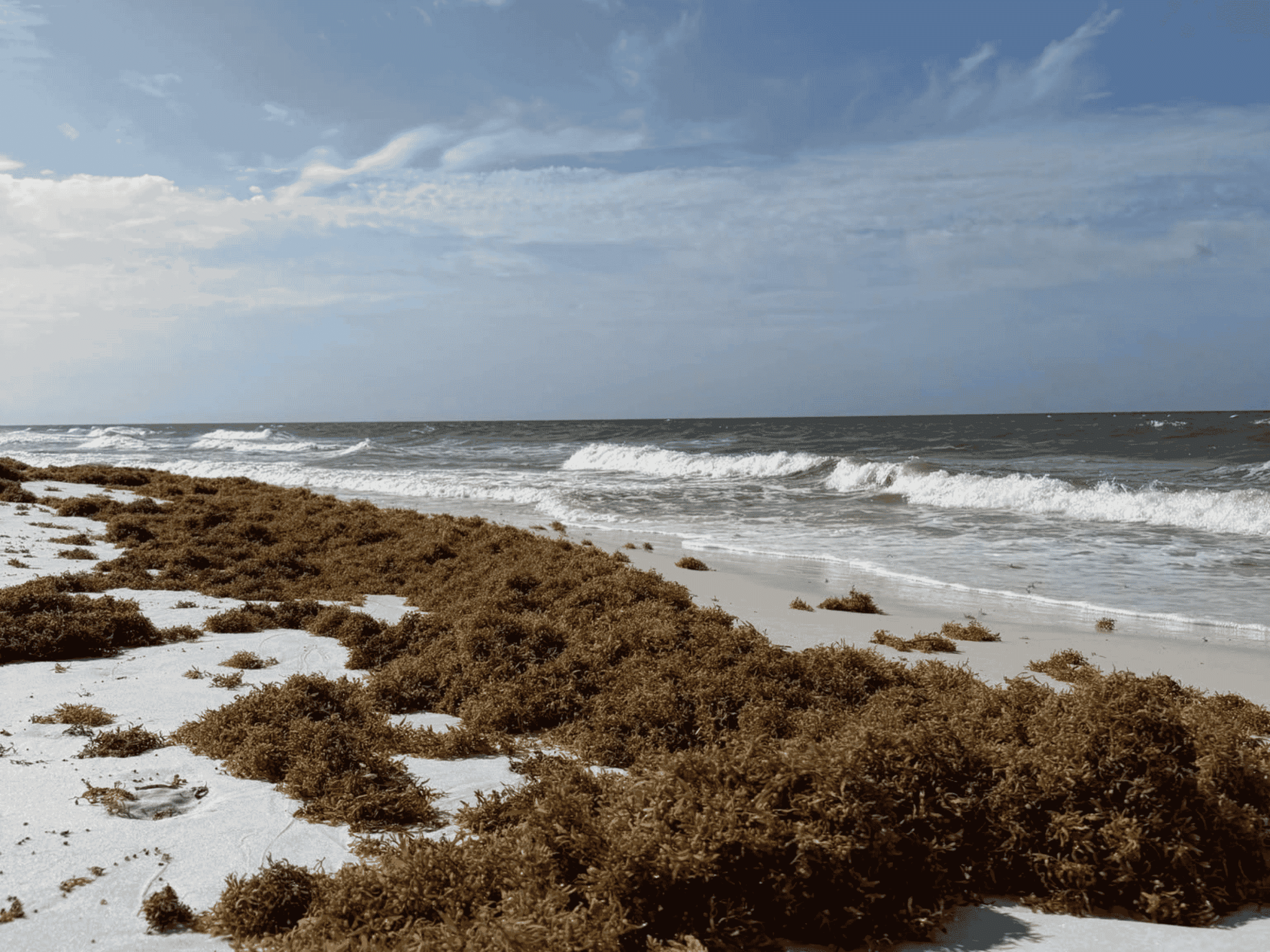
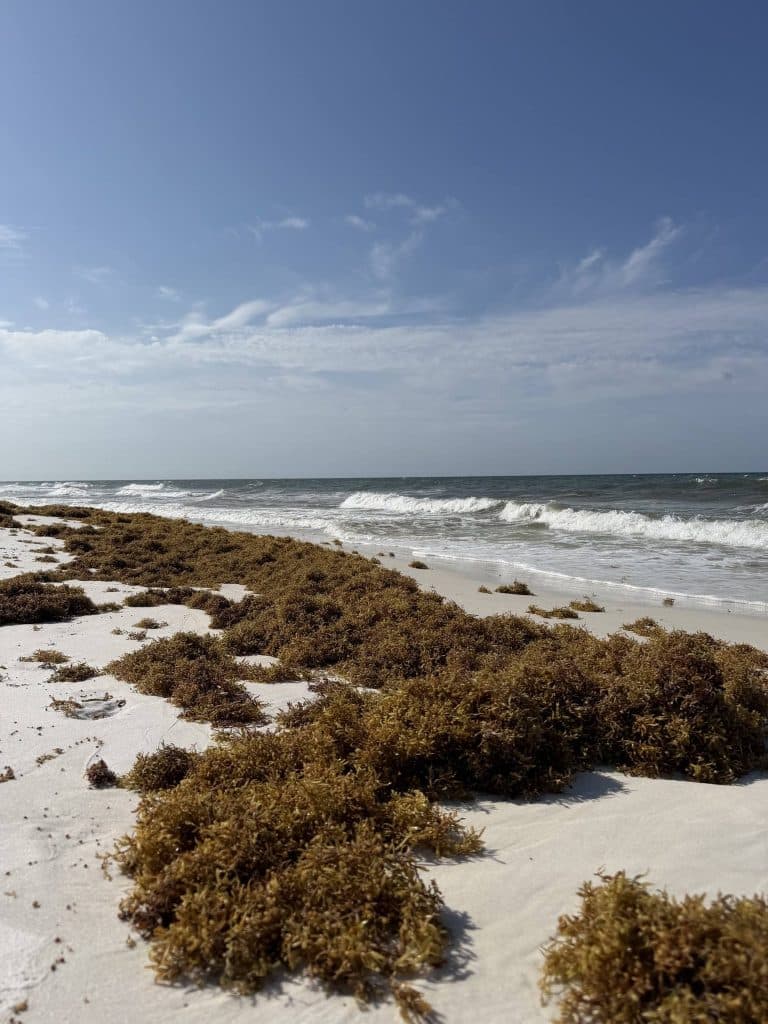
Every summer, visitors to Panama City Beach encounter something that can catch them off guard: patches of brown seaweed washing up along the shoreline and collecting near Shell Island. That seaweed is sargassum, and it has arrives on Florida’s Gulf Coast shores at some point every year. Despite its reputation as a nuisance, sargassum is one of the most ecologically important organisms, and understanding what it actually is changes the way most people see it entirely.
At Flippin’ Awesome Adventures, Capt. Chris approaches sargassum in Panama City Beach the same way he approaches every part of the Gulf Coast ecosystem: with genuine curiosity and respect for the science behind it. This guide covers what sargassum is, where it comes from, why it matters, and what it means for your time on the water in Panama City Beach.
Sargassum in Panama City Beach
Will Sargassum Affect My Dolphin Tour?
The short answer is rarely, and never enough to cancel the fun. Our excursions primarily run through St. Andrews Bay, where the water stays clear year-round and sargassum has little to no presence. Dolphin activity in the bay is completely unaffected by sargassum season, and getting out on the water with us is one of the best ways to leave any shoreline buildup behind.
On trips that venture out into the Gulf, sargassum may occasionally be visible on the surface depending on the time of year and current conditions. When it is, Capt. Chris treats it as part of the experience rather than an obstacle. He often pulls a handful from the water to show guests what is actually living inside it, tiny crabs, shrimp, juvenile fish, and sometimes species rarely seen any other way. What looks like a clump of seaweed on the surface turns out to be a small, thriving ecosystem, and that is exactly the kind of moment our trips are built around.
What Is Sargassum?
Sargassum is a genus of free-floating brown macroalgae, a type of seaweed, that lives and travels entirely on the ocean’s surface rather than anchoring itself to the seafloor. Unlike most seaweed, which grows attached to rocks or reef structure, sargassum spends its entire life drifting with currents, kept afloat by small gas-filled structures called pneumatocysts that function like tiny balloons.
There are two primary species of sargassum that travel into Gulf of Mexico waters: Sargassum natans and Sargassum fluitans. Both are golden-brown in color and feature small, berry-like air bladders along their stems. In open water, sargassum forms dense, tangled mats that can stretch across large areas of the ocean’s surface, creating a floating habitat unlike almost anything else in the marine world.
Sargassum is not a product of pollution, runoff, or declining water quality. It is a naturally occurring seaweed that has existed for millions of years, washing up on the shores of Florida and other Gulf Coast states long before any of those beaches had names.
Where Does Sargassum in Panama City Beach Come From?
The largest concentration of sargassum in the world is found in the Sargasso Sea, a region of the North Atlantic bounded not by land but by four major ocean currents, including the Gulf Stream. This is the only sea on earth with no land borders, and sargassum is so abundant there that early European sailors wrote about it in their logs, sometimes fearing it would entangle their ships.
From the Sargasso Sea, sargassum drifts with ocean currents through the Caribbean and into the Gulf of Mexico, eventually reaching the shores of Florida, the Gulf Coast states, and other parts of the tropics. This journey can take weeks or months, covering thousands of miles before the seaweed makes landfall. So while Panama City Beach sits on the Gulf of Mexico, the sargassum washing up on our shores started its journey far out in the Atlantic, carried here by a chain of currents that connects the two bodies of water.
In recent decades, a large belt of sargassum has developed in the tropical Atlantic known as the Great Atlantic Sargassum Belt. This belt stretches from West Africa to the Gulf of Mexico and has expanded significantly, driven in part by changes in ocean temperatures and nutrient levels. While this increase means more sargassum washing ashore in some years, the seaweed itself remains the same natural organism it has always been.
A Floating Ocean Nursery
Out in the open Atlantic and Gulf, sargassum mats serve a role that researchers and conservation organizations consider genuinely critical to the health of ocean ecosystems. NOAA officially classifies sargassum mats as Essential Fish Habitat, a designation reserved for areas particularly important to the life cycles of commercially and ecologically significant species.
In the open ocean, a sargassum mat is an oasis. The surrounding water is often clear, warm, and relatively featureless, which makes the dense, tangled structure of a sargassum mat a rare and valuable resource for small fish, invertebrates, and juvenile animals looking for food, shelter, and protection from predators. The mat functions like a reef in open water, providing physical structure where almost none exists naturally.
Species that use sargassum as nursery habitat include mahi mahi, amberjack, wahoo, bluefin tuna, swordfish, blue marlin, and a wide range of smaller fish that form the base of the food web. For many of these species, sargassum provides critical cover during the most vulnerable juvenile stages of their development, and the health of their adult populations is connected to the availability of this habitat early in their lives.
The Wildlife That Depends on Sargassum
The diversity of life found in and around a sargassum mat is one of the most remarkable aspects of this seaweed. More than 145 species of marine invertebrates have been documented living in sargassum, many of which have evolved to match the seaweed’s golden-brown color almost perfectly, making them nearly invisible to predators.
Sea turtles are among the most well-known animals that rely on sargassum, particularly during their early years. After hatching and reaching the ocean, young sea turtles, including loggerheads, greens, and Kemp’s ridleys, enter what researchers call the “lost years,” a period of open-ocean drifting during which they are rarely observed and poorly understood. During this phase, sargassum mats provide food, shelter, and a resting place for turtles that are still too small to defend themselves from larger predators.
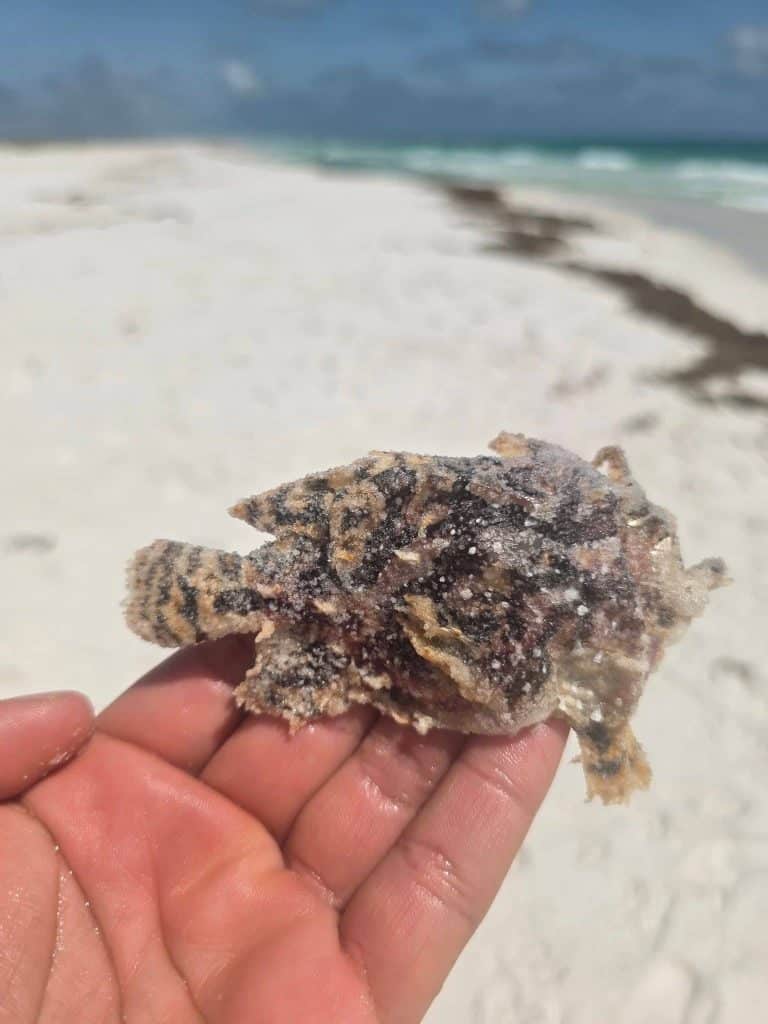
Other animals commonly found in association with sargassum include filefish, pipefish, and the sargassum frogfish, a species that has evolved a body shape and coloring that mimics the seaweed itself so closely that it is nearly impossible to spot without a trained eye. Crabs, shrimp, and sea slugs round out a community of organisms that have built their lives around this floating habitat.
Ocean explorer Sylvia Earle, one of the most respected marine biologists in the world, has called sargassum the golden floating rainforest of the Atlantic, a description that captures both the richness and the fragility of this ecosystem.
How Sargassum Feeds the Beach
Sargassum does not stop being ecologically useful once it washes ashore. When sargassum reaches the beach and begins to break down, it releases nutrients back into the sand that act as a natural fertilizer for coastal vegetation, particularly the dune plants that anchor and stabilize the shoreline.
Healthy dunes are a critical part of what protects coastlines from storm surge and erosion. The plants that grow on those dunes, sea oats, beach morning glory, and similar species, depend on a steady supply of organic nutrients in the sand, and sargassum has been providing that supply to Gulf Coast beaches for centuries.
As sargassum decomposes, it also supports a community of small organisms including amphipods, insects, and bacteria that break down the organic material and in turn become food for shorebirds. The sanderlings, willets, and other shorebirds you see walking the waterline early in the morning are often feeding on exactly these organisms, drawn to the beach by the nutrients sargassum brings with it.
It is one connected system. The seaweed that looks out of place on the sand is, in fact, exactly where it is supposed to be, doing exactly what it has done for thousands of years.
Sargassum and Panama City Beach Visitors
For visitors to Panama City Beach, sargassum is most noticeable when it collects along the shoreline or washes up in larger quantities following certain wind and current patterns. The amount of sargassum on any given stretch of beach can change significantly from day to day, as wind and tides redistribute patches along the coastline.
The Gulf water itself is not affected by shoreline sargassum. St. Andrews Bay remains clear and active regardless of what is happening along the beach, and dolphin activity in the bay continues year-round without interruption. Getting out on the water during a sargassum event is one of the best ways to leave it behind entirely and experience the clear, open bay that makes Panama City Beach one of the most beautiful destinations on the Gulf Coast.
Sargassum is also worth a closer look when you encounter it, rather than walking past. A handful of sargassum pulled from the water near a mat may contain small crabs, tiny shrimp, pipefish, or other animals that most people never get a chance to see up close. Capt. Chris often takes this opportunity during trips to show guests exactly what is living in the seaweed, turning an unexpected encounter with sargassum into one of the most memorable moments of the trip.
Tips for Visiting During Sargassum Season
- Walk the waterline early in the morning. Sargassum patches shift with wind and tides, and an early walk often reveals stretches of clear sand before the day’s activity begins.
- Look past the surf zone. The water beyond the immediate shoreline and into the open Gulf is typically clear and unaffected by what is on the beach.
- Watch for shorebirds. Sargassum days are often excellent for birdwatching, as shorebirds gather to feed on the small organisms breaking down in the seaweed.
- Get out on the water. A boat excursion through St. Andrews Bay puts you in clear, open water quickly and gives you a completely different perspective on the coastline.
- Look at it closely before walking past. The animals living in a handful of sargassum are worth a moment of curiosity. What looks like a clump of brown seaweed often turns out to be a small, thriving ecosystem.
Panama City Beach is a remarkable place to spend time on the water, sargassum and all. If you want to see the Gulf Coast ecosystem up close, on its own terms, and with the context to understand what you are actually looking at, book a trip with Flippin’ Awesome Adventures. Capt. Chris brings the same marine biology background to a sargassum explanation as he does to a dolphin sighting or a sea turtle encounter, because every part of this ecosystem is connected, and every part of it is worth understanding.
Book your Shell Island Panama City Beach tour with Flippin’ Awesome
Ready to experience Shell Island like never before? Book your private tour with Flippin’ Awesome Adventures and let us show you the best of Panama City Beach’s hidden gem. From dolphin watching and snorkeling to unforgettable shelling with your own marine biologist guide, we’ll make sure your day is fun, educational, and filled with memories that last a lifetime. Book your Shell Island adventure today and get ready for a flippin’ awesome time on the water!
Frequently Asked Questions
What is sargassum and why does it wash up on Panama City Beach?
Sargassum in Panama City Beach is a naturally occurring free-floating brown seaweed that originates primarily in the Sargasso Sea and travels to Gulf Coast shores via Atlantic and Gulf currents. It has been washing up on Florida beaches for thousands of years and is not a sign of pollution or poor water quality.
Is sargassum in Panama City Beach harmful?
No, sargassum in Panama City Beach is not harmful. It’s a natural part of the Gulf Coast ecosystem and plays an important role in both open-ocean marine life and coastal beach health. It has no negative effect on water quality or swimming safety.
Does sargassum affect dolphin tours in Panama City Beach?
No, sargassum in Panama City Beach does not affect dolphin activity or boat excursions in St. Andrews Bay. Dolphins remain active in the bay year-round, and getting out on the water is one of the easiest ways to leave shoreline sargassum behind entirely.
Is it safe to swim in Panama City Beach when sargassum is present?
Yes, swimming is generally safe when sargassum is present. The open water beyond the surf zone is typically clear and unaffected by shoreline accumulations. Walking the waterline in the morning can also help locate clearer stretches of sand and water.
What lives in sargassum?
Sargassum mats support more than 145 species of marine invertebrates, as well as juvenile fish, sea turtles, crabs, shrimp, and specialized species like the sargassum frogfish. It serves as essential nursery habitat for a wide range of commercially and ecologically important fish species.
When is sargassum season in Panama City Beach?
Sargassum typically arrives along the Gulf Coast during the warmer months, generally from late spring through early fall, though timing and quantity can vary from year to year depending on ocean current patterns and wind conditions.
Does sargassum help the beach?
Yes. When sargassum breaks down on shore, it releases nutrients that fertilize dune plants, helps stabilize the shoreline, and supports the small organisms that shorebirds feed on. It has been contributing to the health of Gulf Coast beaches for centuries.